About 184 minutes
The Boy Volunteers on the Belgian Front — Reading Companion
School Stories
42,181 recorded words. 0 minutes difference from this book's estimate.
View Gutenberg source #56195
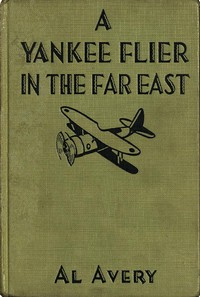
For A Yankee Flier in the Far East — Background and Themes, the stored edition analysis reports 42,111 words, 3 hr 4 min estimated reading time, and 16 detected text sections.
The text analysis averages about 11.5 words per sentence, while the detected sections provide another way to judge how the source is divided.
Project Gutenberg metadata also associates the work with “Fighter pilots -- Juvenile fiction,” connecting these edition facts with the source record’s subject description.
Explore this collection
These alternatives are selected using recorded categories and estimated reading time.
About 184 minutes
School Stories
42,181 recorded words. 0 minutes difference from this book's estimate.
View Gutenberg source #56195About 211 minutes
School Stories
48,449 recorded words. 27 minutes difference from this book's estimate.
View Gutenberg source #65271About 225 minutes
School Stories
51,730 recorded words. 41 minutes difference from this book's estimate.
View Gutenberg source #55964Search stored excerpts and compare books → Choose by your preferences →
Choices use stored catalog measurements. Estimates vary with reading speed. A shared category is a catalog label, not a claim that two books have the same argument or literary quality.
Search reads excerpt text stored with this catalog and links to its associated Gutenberg record. The connection is stored in the site database; this tool does not recheck that every excerpt is word-for-word identical to that external record. Excerpt search does not cover every chapter and does not verify historical publication dates.
Catalog snapshot checked: 2026-09-26. Coverage: 90 public books, 90 available source excerpts.
Calculated from edition completeness, EPUB availability, text structure and catalogue metadata. Not a user rating.
Total of 100 points, scaled to a 2.5-5.0 range. Editions with an empty description or a missing EPUB file are not scored.
Public-domain source text
The source text is kept in the dedicated reader, separate from this catalogue record and its commentary.
The novel opens not with aerial combat but with two RAF officers wilting in the Singapore heat. Lieutenant O'Malley, a lanky Irishman with a “flaming red hair seldom disturbed by a comb,” laments he cannot eat a slab of berry pie, while his companion, ace pilot March Allison, drawls with “insolent mockery.” This initial scene of lethargy and banter establishes a voice that mixes self-deprecating humor with a hint of danger—a tone that quickly gives way to the stark violence of the jungle.
Later, the narrative shifts to Stan Wilson, an American flier captured by Siamese guards and brought before the warlord Te Nuwa. The setting transforms from a humid mess hall to a decaying temple filled with “leering idols” and “a foul odor of dampness and decay.” Here, the story’s central tension emerges: a clash between the straightforward, physical strength of the Yankee flier and the cunning, ritualistic methods of his captors.
The excerpts display a deliberate contrast in tone between the opening chapters and the later captivity scenes. In Singapore, the dialogue is laced with ironic banter: O'Malley calls the heat “as close to Hades as I iver plan to get,” while Allison mocks his own inactivity. The prose is leisurely, dwelling on sweat, damp cushions, and the “glamorous East” as a rest cure. Once the action moves to the jungle, the language becomes terse and sensory: “little yellow men,” “grease lamp,” “wild-eyed, wild-haired men.” The setting itself shifts from the marble buildings of Singapore to a temple with “glass eyes gleaming in the flickering light.” This juxtaposition suggests a world where the comforts of colonial outposts are a thin veneer over a more dangerous, alien reality.
The excerpts introduce two distinct antagonists: the German agent Munson and the Siamese lord Te Nuwa. Munson is a brutal, direct threat—he whips out a “German automatic” and demands Stan be killed. Te Nuwa, by contrast, operates with theatrical politeness, calling Stan an “honored guest” and insisting “I allow no blood to be spilled on my grounds.” Their conflict over how to dispose of Stan reveals a deeper tension: Munson represents a Western-style, ruthless efficiency, while Te Nuwa prefers “the ways of the East,” employing dacoits and ritual. This split mirrors the broader war setting, where the Allies face not only a conventional enemy but also local powers with their own agendas. The narrative thus weaves a web of betrayal that extends beyond simple battlefield loyalties.
Stan Wilson is repeatedly defined by his physical presence. The Siamese guards admire his “terrible strength” and the way his “fists shot out, inflicting black eyes and swollen jaws.” Even in captivity, he braces for a fight, drawing back his fists “as the first move for a bid for freedom.” This emphasis on raw physicality contrasts with the cunning of his captors and the mockery of his fellow pilots. The narrative uses Stan’s body as a marker of his American identity—direct, forceful, and out of place in a world of shadows and indirection. Yet the excerpts also show that strength alone is insufficient: he is overpowered by numbers and led through a “maze of columns” where he cannot track his course. The story thus balances the ideal of the rugged individual against the reality of a hostile, labyrinthine environment.
Readers should attend to how the novel builds its world through sensory detail—the heat, the stench, the flickering lamps—rather than through extensive exposition. The excerpts offer only fragments of the plot, but they reveal a pattern of contrasts: between Allied and enemy, between open combat and covert manipulation, between the straightforward and the ritualistic. The narrative voice shifts from ironic to urgent, and the setting from colonial comfort to jungle menace. These elements suggest a story that is as much about the psychology of survival as about aerial warfare.
There’s something about Stan Wilson’s wary watch over that sweltering Singapore rest cure that reminds me of the quiet, patient pacing in old school stories—the way a game’s rhythm can hold its own kind of tension. That same unhurried build lingers in Double Play: A Story of School and Baseball — Edition Insights, a gentler sort of waiting, but no less real for it.
Capture what you thought, learned, and would like to remember.