About 255 minutes
Secrets of Radar — Background and Themes
School Stories
58,615 recorded words. 14 minutes difference from this book's estimate.
View Gutenberg source #58073
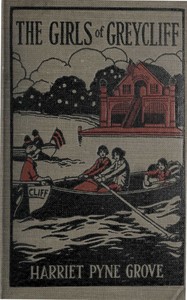
The Girls of Greycliff — Story, Setting & Ideas can be approached with a clearer sense of reading commitment from its source measurements: 55,384 words, 4 hr 1 min estimated reading time, and 22 detected text sections.
The text analysis averages about 15.1 words per sentence, while the detected sections provide another way to judge how the source is divided.
Project Gutenberg metadata also associates the work with “Boarding schools -- Juvenile fiction,” connecting these edition facts with the source record’s subject description.
Explore this collection
These alternatives are selected using recorded categories and estimated reading time.
About 255 minutes
School Stories
58,615 recorded words. 14 minutes difference from this book's estimate.
View Gutenberg source #58073About 225 minutes
School Stories
51,730 recorded words. 16 minutes difference from this book's estimate.
View Gutenberg source #55964About 211 minutes
School Stories
48,449 recorded words. 30 minutes difference from this book's estimate.
View Gutenberg source #65271Search stored excerpts and compare books → Choose by your preferences →
Choices use stored catalog measurements. Estimates vary with reading speed. A shared category is a catalog label, not a claim that two books have the same argument or literary quality.
Search reads excerpt text stored with this catalog and links to its associated Gutenberg record. The connection is stored in the site database; this tool does not recheck that every excerpt is word-for-word identical to that external record. Excerpt search does not cover every chapter and does not verify historical publication dates.
Catalog snapshot checked: 2026-09-26. Coverage: 90 public books, 90 available source excerpts.
Calculated from edition completeness, EPUB availability, text structure and catalogue metadata. Not a user rating.
Total of 100 points, scaled to a 2.5-5.0 range. Editions with an empty description or a missing EPUB file are not scored.
Public-domain source text
The source text is kept in the dedicated reader, separate from this catalogue record and its commentary.
The first chapter of The Girls of Greycliff drops readers directly into the chaos of a new term: “Again the big halls at Greycliff were full of laughter and chatterings.” The narrative voice is brisk and affectionate, tracking the reunion of friends Hilary, Lilian, and Betty through rapid dialogue and physical comedy—a girl sliding down a banister into the dean. The opening establishes a world where school routines (trunks, inclines, bannisters) are as vivid as the characters’ banter. The mystery element surfaces obliquely: Betty, who has had an “experience” on a previous trip, hesitates to share it, and a cave is mentioned with unease. The story thus balances lighthearted camaraderie with hints of concealed knowledge, inviting readers to watch for how the ordinary school setting will accommodate the extraordinary.
The opening pages are dominated by the physical and social geography of the school. The building itself is a character: “wide steps,” “wide veranda,” “big halls,” and a curved banister that invites mischief. The girls’ reunion is marked by affectionate nicknames (“Lil,” “Hil”) and overlapping chatter that conveys intimacy without exposition. Grove uses small details—a taxi driver, a newspaper used as a sled, a trunk bumping up inclines—to ground the scene in sensory reality. The dialogue reveals that the group has a history: Betty and Isabel have been on a trip they are reluctant to discuss, and a cave is mentioned as a site of potential danger. The reader is left to wonder what happened there, and why Betty, who “suggested that the last trip should not be talked about,” now feels compelled to tell the story. This tension between the cheerful surface and an unspoken secret is the engine of the early chapters.
In a later excerpt, Betty decides to share the tale of the cave with a group of friends, including Isabel, Cathalina, and others. The narrative notes that “the story did not lose anything in Isabel’s vivid description,” and that “nothing was omitted except Betty’s recognition of the chief actor, of which no one except Cathalina knew.” This is a crucial detail: Betty holds back a piece of information, creating a private knowledge gap between her and the reader. The cave is thus not just a setting but a narrative device—a locus of withheld revelation. The excerpt does not reveal what Betty saw or who the “chief actor” is, but the careful omission signals that the mystery will unfold gradually. Readers should pay attention to what characters choose not to say, as the gaps in dialogue are as telling as the words spoken.
A long middle section centers on a mundane but revealing episode: the girls’ struggle with a fast clock and a looming Latin lesson. Hilary insists the clock is “twenty minutes fast,” but the bell rings earlier than expected, causing confusion. The scene is filled with the texture of schoolwork—translating Cicero, comparing notes, complaining about the “very learned gentleman who edited the text.” The clock becomes a symbol of the tension between order and chaos in boarding school life. The girls’ debate over timekeeping is also a subtle character study: Hilary is confident but wrong, Betty is methodical, and the group’s collaborative study session shows how they rely on each other. This passage grounds the mystery in the everyday, suggesting that the story’s suspense will emerge from within the routines of classes, schedules, and friendship.
Grove’s prose is efficient and dialogue-heavy, with little interior monologue. The narrative voice is third-person but often adopts the girls’ colloquialisms (“You scamp!”, “Isn’t it great?”). The structure alternates between broad group scenes and intimate conversations, moving from the general hubbub of the hall to the specific dynamics of Lakeview suite. The excerpts show a preference for showing over telling: character relationships are revealed through action (embracing, sliding down banisters) and speech rather than description. The mystery is introduced not through a dramatic event but through a withheld story and a cautious remark. For a first reading, this means the clues are embedded in the characters’ interactions and the small discrepancies between what they say and what they know. The reader is invited to become a detective alongside the girls, parsing dialogue for hidden meanings.
As you read The Girls of Greycliff, note how Grove uses the rhythms of school life—classes, meals, study sessions—to build a framework for the mystery. The cave and Betty’s secret are not isolated incidents but are woven into the fabric of daily routine. Pay attention to the moments when characters fall silent or change the subject; these are the hinges of the plot. The story rewards a careful reader who tracks who knows what and when they reveal it.
Sometimes a place holds more than we first notice—Greycliff’s cave and staircase felt like that, secrets tucked into ordinary routines. I found myself thinking of how a baseball diamond can feel the same way, quiet until someone remembers what happened there. Double Play: A Story of School and Baseball — Edition Insights brought that feeling back, gently, like an old photograph.
Use these questions to collect your thoughts before moving on.