About 297 minutes
The Boy Traders; Or, The Sportsman's Club Among the Boers — Themes and Context
School Stories
68,111 recorded words. 1 minutes difference from this book's estimate.
View Gutenberg source #56868
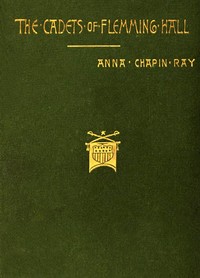
For The Cadets of Flemming Hall — Reading Companion, the stored edition analysis reports 68,463 words, 4 hr 58 min estimated reading time, and 21 detected text sections.
The text analysis averages about 20.0 words per sentence, while the detected sections provide another way to judge how the source is divided.
Project Gutenberg metadata also associates the work with “Friendship -- Juvenile fiction,” connecting these edition facts with the source record’s subject description.
Explore this collection
These alternatives are selected using recorded categories and estimated reading time.
About 297 minutes
School Stories
68,111 recorded words. 1 minutes difference from this book's estimate.
View Gutenberg source #56868About 314 minutes
School Stories
72,173 recorded words. 16 minutes difference from this book's estimate.
View Gutenberg source #56752About 255 minutes
School Stories
58,615 recorded words. 43 minutes difference from this book's estimate.
View Gutenberg source #58073Search stored excerpts and compare books → Choose by your preferences →
Choices use stored catalog measurements. Estimates vary with reading speed. A shared category is a catalog label, not a claim that two books have the same argument or literary quality.
Search reads excerpt text stored with this catalog and links to its associated Gutenberg record. The connection is stored in the site database; this tool does not recheck that every excerpt is word-for-word identical to that external record. Excerpt search does not cover every chapter and does not verify historical publication dates.
Catalog snapshot checked: 2026-09-26. Coverage: 90 public books, 90 available source excerpts.
Calculated from edition completeness, EPUB availability, text structure and catalogue metadata. Not a user rating.
Total of 100 points, scaled to a 2.5-5.0 range. Editions with an empty description or a missing EPUB file are not scored.
Public-domain source text
The source text is kept in the dedicated reader, separate from this catalogue record and its commentary.
Anna Chapin Ray opens her 1892 novel The Cadets of Flemming Hall with a preface that situates the story within the tradition of schoolboy tales from Tom Brown at Rugby onward, yet insists that “every school has its slightly different atmosphere.” The author credits a teacher, a boy friend who critiqued athletics, and an artist with “thorough and practical knowledge of cadet life,” grounding the fiction in lived experience. The narrative itself begins with a group of cadets traveling home for the holidays, and the excerpt shows Ray’s eye for social dynamics: passengers on the train “quietly compare notes on their preferences,” while the boys remain oblivious to the scrutiny. The writing balances brisk action with small, telling details—a banjo pulled from its green bag, a country dame’s loud verdict that she prefers “the little lame one.”
The holiday journey excerpt reveals Ray’s method of distributing attention among a cast of boys. The narrative names Leon, Harry, Alex, Max, and Louis, but it does not give them equal weight. Instead, the passage sorts them by the reactions of onlookers: “the older men declared themselves in favor of roguish Max, the mothers beamed on steady Alex, the young girls pronounced Louis ‘so elegant.’” The classification is external, almost choral, and it leaves Leon—the boy who receives the letter—without a spectator’s verdict. Later, at the Arnold home, the focus narrows to Alex’s refusal to leave Leon for social pleasures, a choice that defines his character through action rather than description. Ray lets the reader infer Alex’s loyalty from what he does not do, a restraint that contrasts with the boisterous train scene.
A single letter drives the holiday episode. Leon tears it open, reads it, and exclaims “Good for daddy!” before rushing off to find Alex. The note is a reply to Leon’s request to bring Alex home, and it returns “a most cordial invitation.” Ray uses the letter to set the plot in motion without exposition: the reader learns the boys’ plan through Harry’s act of picking up the discarded note. The device is efficient, but it also establishes a pattern of communication—letters arrive, are read, and trigger movement. The preface mentions a Harrow song that closes the story, suggesting that written or sung texts may recur as structural markers. In the excerpt, the letter is a private message that becomes shared news, and its effect is immediate: “little urging was needed to make Alex consent.”
Ray repeatedly places her cadets in situations where they are watched. At the theatre, Dorothy enters “followed by the three cadets, all in full uniform,” and the people around them smile. On the train, the boys form “a noisy, gay group” while passengers abandon their own concerns to observe them. The cadets are aware of their effect: they cheer departing schoolmates, play the banjo, and “are by no means impressed” by the attention. Yet the author undercuts this performance with the country dame’s remark about “the little lame one,” a moment that punctures the group’s self-regard. The uniform is both a marker of belonging and a costume that invites judgment. Ray’s preface thanks an artist for “thorough and practical knowledge of cadet life,” hinting that the details of dress and drill are meant to be accurate, not merely decorative.
Readers approaching The Cadets of Flemming Hall should attend to the way Ray uses secondary characters—the country dame, the smiling passengers, Dorothy—as a chorus that comments on the boys without their knowledge. The novel’s interest lies less in military discipline than in the social negotiations among friends and strangers. The preface warns that the tale is not all told, and the excerpts suggest that Ray’s sympathies are with the quiet, steady figures like Alex rather than the roguish ones who catch the crowd’s eye.
I finished The Cadets of Flemming Hall the other night and found myself thinking about how quiet Alex’s steadiness felt against Max’s wildness. There’s something about school friendships that leaves a mark. It reminded me of another old tale, Double Play: A Story of School and Baseball — Edition Insights, where the same gentle pull between loyalty and mischief lingers long after the last page. I keep returning to that feeling.
Your answers remain private and are stored only in this browser.