About 301 minutes
The Daring Twins: A Story for Young Folk — A Reader’s Guide
Young Readers
69,080 recorded words. 50 minutes difference from this book's estimate.
View Gutenberg source #53735
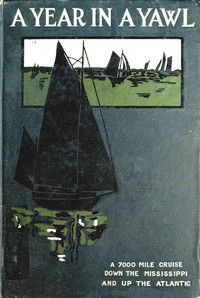
This digital edition of A Year in a Yawl A True Tale of the Adventures of Four Boys in a Thirty-foot Yawl — Context and Discussion is described by source-level measurements including 80,580 words, 5 hr 51 min estimated reading time, and 21 detected text sections.
The text analysis averages about 19.5 words per sentence, while the detected sections provide another way to judge how the source is divided.
Project Gutenberg metadata also associates the work with “Sailing -- Juvenile fiction,” connecting these edition facts with the source record’s subject description.
Explore this collection
These alternatives are selected using recorded categories and estimated reading time.
About 301 minutes
Young Readers
69,080 recorded words. 50 minutes difference from this book's estimate.
View Gutenberg source #53735About 288 minutes
Young Readers
66,192 recorded words. 63 minutes difference from this book's estimate.
View Gutenberg source #53460About 240 minutes
Young Readers
55,194 recorded words. 111 minutes difference from this book's estimate.
View Gutenberg source #56743Search stored excerpts and compare books → Choose by your preferences →
Choices use stored catalog measurements. Estimates vary with reading speed. A shared category is a catalog label, not a claim that two books have the same argument or literary quality.
Search reads excerpt text stored with this catalog and links to its associated Gutenberg record. The connection is stored in the site database; this tool does not recheck that every excerpt is word-for-word identical to that external record. Excerpt search does not cover every chapter and does not verify historical publication dates.
Catalog snapshot checked: 2026-09-26. Coverage: 90 public books, 90 available source excerpts.
Calculated from edition completeness, EPUB availability, text structure and catalogue metadata. Not a user rating.
Total of 100 points, scaled to a 2.5-5.0 range. Editions with an empty description or a missing EPUB file are not scored.
Public-domain source text
The source text is kept in the dedicated reader, separate from this catalogue record and its commentary.
Russell Doubleday opens A Year in a Yawl with four boys lying under an apple tree, studying a map. The scene establishes a pattern of concrete, technical language: Kenneth Ransom traces a route with a “stubby carpenter’s pencil,” and the others respond with skeptical, colloquial dialogue—“I don’t believe you could do it anyway, Ken.” This blend of precise nautical planning and casual boyhood speech runs through the excerpts, grounding the adventure in both practical detail and natural conversation.
Doubleday uses dialogue to distinguish the four boys without explicit description. Kenneth speaks with determined confidence: “I can and will make that trip.” Clyde Morrow offers cautious admiration: “It took considerable gumption to plan and build a craft like yours alone.” Arthur, meanwhile, punctures enthusiasm with blunt realism: “But what are we going to do with them now?”—a line that follows a scheme to sell turtle meat. The exchanges feel unforced, with contractions and interjections (“Holy smoke,” “By George”) that keep the tone youthful. Even the mate’s threat to make the boat “fast to a ten-ton anchor” mixes humor with seamanship.
Doubleday’s descriptions of sailing are rich with specific sounds and movements. When the boys get underway, the reader hears “the cheep, cheep of the halliard blocks,” “the metallic clink of the ratchet on the capstan,” and “the slap, slap of the little waves against the yacht’s sides.” The sequence is methodical: Frank’s cry “She’s broke!” is followed by the whirr of jib halliards and the creak of blocks as the mainsail is sheeted home. Such precise vocabulary—halliard, capstan, sheeted home—is never explained, implying a readership comfortable with or curious about nautical terms. The effect is immersive, placing the reader on deck.
The excerpts reveal a pattern of incident and recovery. A turtle-hunting expedition nearly loses the dinghy (“His Nibs”), which Arthur must swim to retrieve. Later, the boys preserve turtle meat by salting and drying it in the rigging—a practical solution that Kenneth jokes might make the yacht “as fragrant as a sponge-fishing boat.” Each episode introduces a problem (escaping dinghy, surplus meat) and resolves it through resourcefulness, often with a touch of humor. The chapter titles in the contents—such as “Riding a Monster Turtle” and “Fighting a Man-eating Shark”—suggest this episodic structure continues throughout the voyage.
Doubleday treats the environment as an active force, not a backdrop. The Gulf coast features “graceful palms and sturdy live oaks,” while Captive Island is “a low-lying strip of land that just showed above the surface.” The sea itself is described through its effects: the yacht “heeled to the fresh breeze,” and the sunrise “glorified” the anchored Gazelle. Even the weather is specific—an “icy storm off ‘Sunny’ Baton Rouge” and “sailing with frozen rigging” indicate the boys encounter harsh conditions. The setting is never generic; it is named, observed, and felt through the crew’s physical responses.
Doubleday’s authorial choices—colloquial dialogue, technical sailing language, episodic structure, and vivid setting—work together to create a sense of authentic boyhood adventure. Readers attentive to these elements will find the narrative grounded in the practical realities of a year-long voyage, from navigating icy rivers to drying turtle meat in the rigging. The excerpts suggest a book that values competence and humor over melodrama.
Reading about those four boys in their yawl, I kept thinking of the open-water restlessness in Larry Dexter and the Stolen Boy; or, A Young Reporter on the Lakes — Reading Notes. Different crafts, even different eras, yet both carry that same quiet hum of youthful independence—the way a horizon, even a familiar lake one, seems to hold a promise you cannot quite name.
Use these questions to collect your thoughts before moving on.

![Cover of Atom Mystery [Young Atom Detective] — Reading Companion](https://axepu.com/storage/media/covers/pg53269.jpg)