About 301 minutes
The Daring Twins: A Story for Young Folk — A Reader’s Guide
Young Readers
69,080 recorded words. 13 minutes difference from this book's estimate.
View Gutenberg source #53735
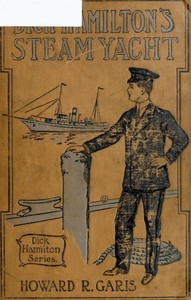
This digital edition of Dick Hamilton's Steam Yacht; Or, A Young Millionaire and the Kidnappers — Key Ideas to Explore is described by source-level measurements including 66,192 words, 4 hr 48 min estimated reading time, and 7 detected text sections.
The text analysis averages about 14.7 words per sentence, while the detected sections provide another way to judge how the source is divided.
Project Gutenberg metadata also associates the work with “Millionaires -- Juvenile fiction,” connecting these edition facts with the source record’s subject description.
Explore this collection
These alternatives are selected using recorded categories and estimated reading time.
About 301 minutes
Young Readers
69,080 recorded words. 13 minutes difference from this book's estimate.
View Gutenberg source #53735About 240 minutes
Young Readers
55,194 recorded words. 48 minutes difference from this book's estimate.
View Gutenberg source #56743About 351 minutes
Young Readers
80,580 recorded words. 63 minutes difference from this book's estimate.
View Gutenberg source #56792Search stored excerpts and compare books → Choose by your preferences →
Choices use stored catalog measurements. Estimates vary with reading speed. A shared category is a catalog label, not a claim that two books have the same argument or literary quality.
Search reads excerpt text stored with this catalog and links to its associated Gutenberg record. The connection is stored in the site database; this tool does not recheck that every excerpt is word-for-word identical to that external record. Excerpt search does not cover every chapter and does not verify historical publication dates.
Catalog snapshot checked: 2026-09-26. Coverage: 90 public books, 90 available source excerpts.
Calculated from edition completeness, EPUB availability, text structure and catalogue metadata. Not a user rating.
Total of 100 points, scaled to a 2.5-5.0 range. Editions with an empty description or a missing EPUB file are not scored.
Public-domain source text
The source text is kept in the dedicated reader, separate from this catalogue record and its commentary.
The catalog entries for Dick Hamilton's Steam Yacht list millionaires, yachts, and kidnapping as primary subjects, but the excerpts suggest the book is less a thriller and more a lighthearted adventure with a strong dose of nautical superstition and character comedy. The opening chapters establish Dick as a capable, wealthy young man who buys a yacht and invites friends, but the plot quickly veers into a subplot involving a superstitious sailor named Widdy, who insists a mermaid is haunting the vessel. This tension between the promised kidnapping plot and the actual focus on maritime humor and mystery is the book's defining feature.
The most vivid passages in the excerpts do not involve kidnappers but rather the old sailor Widdy, who becomes convinced a mermaid is aboard. When he hears cries for help from the after compartment, he refuses to investigate, declaring, “it ain't healthy to help mermaids.” Captain Barton scoffs, but Dick takes the report seriously. This incident, which occupies a full chapter, showcases the book’s reliance on folk belief and comic relief. Widdy’s language—calling the yacht “doomed” and invoking Davy Jones—creates a distinct voice that contrasts with Dick’s rational, problem-solving demeanor. The mermaid subplot is not a mere aside; it drives the discovery of the missing newsboy, Tim Muldoon, hidden in the shaft tunnel. The book thus uses superstition as a narrative engine, not just decoration.
Tim Muldoon, a newsboy who stows away, is found injured in the propeller shaft tunnel after days of being presumed drowned. His rescue is the emotional climax of the excerpts. Dick’s cry, “It's him! Get a lantern and help him out!” reveals that the young millionaire had been searching for Tim all along. Tim’s weak whisper, “I—I thought no one would ever come,” and his sprained ankle and head injury ground the story in physical peril. Yet the rescue is handled briskly, with Captain Barton acting as “a sort of doctor and surgeon combined.” The scene balances tension with matter-of-fact seamanship. Notably, the kidnapping subject is barely visible here; Tim’s disappearance is an accident, not a crime. The catalog label “kidnapping” may refer to a later plot thread not present in these excerpts, but the text as sampled focuses on accidental entrapment and rescue.
Dick Hamilton’s status as a millionaire is established in the title and preface, but the excerpts treat his wealth as a simple fact rather than a source of conflict. He buys a steam yacht without fuss, and his friends join him without comment on class. The preface mentions “the wrong young man was spirited away” and “the surprising rescue at sea,” but the sampled chapters show no direct confrontation with kidnappers. Instead, the narrative energy goes into technical details of the yacht, the crew’s dynamics, and the mermaid scare. Uncle Ezra Larabee, listed as a plot element in the preface, does not appear in the excerpts. This suggests the book may be more episodic than the catalog subjects imply, with wealth functioning as a convenient premise rather than a central theme. Readers expecting a sustained kidnapping thriller will find a looser, more adventure-driven story.
Readers approaching Dick Hamilton's Steam Yacht should set aside expectations of a taut kidnapping drama. The book, as evidenced by the excerpts, is a leisurely boys' adventure that mixes nautical lore, character humor, and a rescue plot. The catalog subjects are accurate but incomplete; the real texture lies in Widdy’s superstitions, the yacht’s machinery, and Dick’s calm leadership. For those interested in early twentieth-century children’s series fiction, this volume offers a clear example of how adventure stories of the period balanced action with comic relief and technical detail.
There’s something about a young millionaire and his crew battling both kidnappers and a stubborn belief in mermaids that made me think of another odd, offbeat story—The Adventures of a Marmotte Sold for the Distressed Irish — Background and Themes—where the absurd premise somehow carries a quiet, human weight. Both feel like relics of an era when adventure didn’t need to be plausible, just earnest.
Create a short personal record of your experience with this book.

![Cover of Atom Mystery [Young Atom Detective] — Reading Companion](https://axepu.com/storage/media/covers/pg53269.jpg)