About 138 minutes
Atom Mystery [Young Atom Detective] — Reading Companion
Young Readers
31,518 recorded words. 36 minutes difference from this book's estimate.
View Gutenberg source #53269
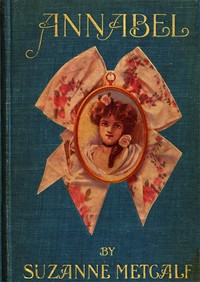
The source record for Annabel: A Novel for Young Folks — Inside the Classic measures this digital text at 39,852 words, 2 hr 54 min estimated reading time, and 22 detected text sections.
The text analysis averages about 17.4 words per sentence, while the detected sections provide another way to judge how the source is divided.
Project Gutenberg metadata also associates the work with “Family -- Juvenile fiction,” connecting these edition facts with the source record’s subject description.
Explore this collection
These alternatives are selected using recorded categories and estimated reading time.
About 138 minutes
Young Readers
31,518 recorded words. 36 minutes difference from this book's estimate.
View Gutenberg source #53269About 120 minutes
Young Readers
27,384 recorded words. 54 minutes difference from this book's estimate.
View Gutenberg source #61654About 118 minutes
Young Readers
27,010 recorded words. 56 minutes difference from this book's estimate.
View Gutenberg source #61401Search stored excerpts and compare books → Choose by your preferences →
Choices use stored catalog measurements. Estimates vary with reading speed. A shared category is a catalog label, not a claim that two books have the same argument or literary quality.
Search reads excerpt text stored with this catalog and links to its associated Gutenberg record. The connection is stored in the site database; this tool does not recheck that every excerpt is word-for-word identical to that external record. Excerpt search does not cover every chapter and does not verify historical publication dates.
Catalog snapshot checked: 2026-09-26. Coverage: 90 public books, 90 available source excerpts.
Calculated from edition completeness, EPUB availability, text structure and catalogue metadata. Not a user rating.
Total of 100 points, scaled to a 2.5-5.0 range. Editions with an empty description or a missing EPUB file are not scored.
Public-domain source text
The source text is kept in the dedicated reader, separate from this catalogue record and its commentary.
The novel opens with Will Carden scraping his feet at the kitchen door of the “big house,” a vegetable basket in hand. The cook, Nora, calls him “Masther Willyum” and recalls the Cardens’ former standing, prompting Will to flush and insist he be judged by what he is, not what his family has been. This early scene establishes a central tension: the boy’s present labor against the memory of lost gentility. Baum anchors the conflict in concrete details—the bloom on the peas, the proper closing of a screen door—rather than abstract commentary.
Nora’s speech is rendered in a thick Irish dialect: “Oo, misery! but them pays is illegant.” Will, by contrast, speaks standard English. This linguistic divide marks the social gulf between servant and employer, yet Nora’s affectionate tone and Will’s polite deference complicate the hierarchy. When Will asks not to be called “master,” he signals discomfort with the class assumptions embedded in language. The cook’s reply—“I used to know the Cardens, when they didn’t have to raise vegetables to earn a living”—exposes a shared history that makes the present arrangement awkward for both.
In a later excerpt, two men—the doctor and Mr. Williams—discuss a man who “was too big a man to be suppressed for long” and who would surely have tried to communicate with his wife and children. The doctor notes that Mr. Jordan always collects the Carden mail. The exchange ends with a “startled” gaze “not without a gleam of horror.” The missing father is never named in the excerpts, but the conversation implies a mystery: why no letter ever came, and who might have intercepted it. This thread, woven through the novel, gives the domestic scenes an undertow of suspense.
When Annabel returns from school, Will is struck by her changed appearance: longer skirts, a knot of red hair, vanished freckles. The narrator notes that “these sudden blossomings of young girls are often subjects of wonder.” Will’s reaction mixes amazement with “strange embarrassment.” Annabel herself dismisses the new formality—“Fudge! … you won’t catch me getting swell”—and insists on the old ease. Yet the physical details (the neat knot, the fair skin) suggest a shift that cannot be undone by words alone. The scene captures the awkwardness of adolescence and the tension between growing up and staying the same.
Readers attentive to small gestures—how a door is closed, how a name is spoken, how a letter is collected—will find Baum’s craft in the margins of the plot. The novel rewards a slow reading that notices the weight of a single word or the significance of a missed communication. These details, rather than grand events, carry the story’s emotional and dramatic force.
Reading Annabel, I was struck by how a servant’s pride can quietly shape a household, and it made me think of another story where a missing person lingers in the background, unspoken yet heavy. There’s a similar tenderness in how small, precise gestures reveal class and longing in Larry Dexter and the Stolen Boy; or, A Young Reporter on the Lakes — Reading Notes, which I once picked up and never forgot.
Save your reaction, strongest insight, and memorable passage.
![Cover of Atom Mystery [Young Atom Detective] — Reading Companion](https://axepu.com/storage/media/covers/pg53269.jpg)