About 288 minutes
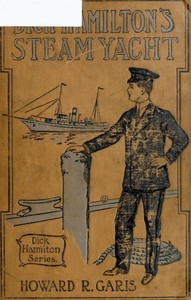
Dick Hamilton's Steam Yacht; Or, A Young Millionaire and the Kidnappers — Key Ideas to Explore
Young Readers
66,192 recorded words. 13 minutes difference from this book's estimate.
View Gutenberg source #53460
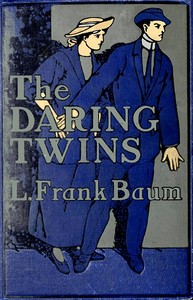
For The Daring Twins: A Story for Young Folk — A Reader’s Guide, the stored edition analysis reports 69,080 words, 5 hr 1 min estimated reading time, and 35 detected text sections.
The text analysis averages about 15.3 words per sentence, while the detected sections provide another way to judge how the source is divided.
Project Gutenberg metadata also associates the work with “Orphans -- Juvenile fiction,” connecting these edition facts with the source record’s subject description.
Explore this collection
These alternatives are selected using recorded categories and estimated reading time.
About 288 minutes
Young Readers
66,192 recorded words. 13 minutes difference from this book's estimate.
View Gutenberg source #53460About 351 minutes
Young Readers
80,580 recorded words. 50 minutes difference from this book's estimate.
View Gutenberg source #56792About 240 minutes
Young Readers
55,194 recorded words. 61 minutes difference from this book's estimate.
View Gutenberg source #56743Search stored excerpts and compare books → Choose by your preferences →
Choices use stored catalog measurements. Estimates vary with reading speed. A shared category is a catalog label, not a claim that two books have the same argument or literary quality.
Search reads excerpt text stored with this catalog and links to its associated Gutenberg record. The connection is stored in the site database; this tool does not recheck that every excerpt is word-for-word identical to that external record. Excerpt search does not cover every chapter and does not verify historical publication dates.
Catalog snapshot checked: 2026-09-26. Coverage: 90 public books, 90 available source excerpts.
Calculated from edition completeness, EPUB availability, text structure and catalogue metadata. Not a user rating.
Total of 100 points, scaled to a 2.5-5.0 range. Editions with an empty description or a missing EPUB file are not scored.
Public-domain source text
The source text is kept in the dedicated reader, separate from this catalogue record and its commentary.
L. Frank Baum, best known for his Oz fantasies, opens The Daring Twins with a scene of domestic bustle: Aunt Hyacinth scolds the children in dialect, and the five young Darings scramble for cakes before school. The voice is brisk, colloquial, and lightly humorous—a tone that soon gives way to something far more somber. By the later chapters, the narrative has narrowed to Phœbe’s solitary, trembling vigil as she spies on the housekeeper Elaine counting gold by candlelight. The shift from communal chatter to isolated dread is the book’s most striking structural move.
The opening chapters move at a leisurely, almost episodic pace. Dialogue dominates: the children tease one another, and Aunt Hyacinth’s dialect (“Now you-all stop dat a-foolin’”) establishes a warm, regional texture. Baum lingers on breakfast routines and school preparations, letting the reader settle into the Darings’ crowded household. But as the story progresses, the tempo tightens. By the time Phœbe climbs down from her hiding place, the prose becomes taut and sensory: “limbs were getting numb,” “knees knocked together tremblingly,” “she stuck obstinately to her post.” The earlier chatter vanishes, replaced by internal monologue and physical detail. This acceleration from social comedy to psychological suspense is deliberate and effective.
Phœbe’s narration carries the emotional core of the later excerpts. Her discovery of the hidden gold is rendered not as triumph but as a burden: “There was no sleep for the girl that night.” Baum gives her a precise, almost legalistic reasoning as she pieces together the miser’s scheme—the trapdoor, the cupboard, the false report of poverty. Yet her reaction is visceral: “scorn and resentment,” “shame,” “an abominable, inhuman passion.” She decides to keep the secret even from her brother Phil, a choice that isolates her within the family. The language here is stripped of ornament, relying on short declarative sentences and repeated phrases (“and yet—and yet—”) to convey her turmoil. This interior focus marks a clear departure from the earlier, more external storytelling.
Baum builds suspense through a handful of recurring physical details. The sound of gold being “slid across the table” is mentioned multiple times, first as a puzzling noise, later as a confirmed horror. Candles appear in both the opening and the discovery scene—Aunt Hyacinth’s breakfast cakes are replaced by Elaine’s “leer of cunning” by candlelight. The hidden spaces—the trap in the floor, the cupboard behind the mantel—become architectural metaphors for the family’s concealed troubles. Even the landscape shifts: the crowded kitchen gives way to a silent valley where Phœbe walks “hoping the morning air would cool her throbbing brain.” These repeated motifs anchor the reader in a world where nothing is quite as open as it first seems.
Readers coming from Baum’s Oz books will find a different register here: less whimsy, more moral weight. The excerpts suggest a novel that rewards attention to its pacing—how quickly the tone can darken, and how much weight a single character’s perspective can carry. Pay particular attention to the moments when the narrative slows down: those are where the real story hides.
That Daring family’s quiet desperation stuck with me long after I closed the book, especially Phœbe’s lonely secret-keeping. It reminded me of another story I stumbled upon, one where the child narrator carries a similar weight of worry and wonder. There is something tender about how both books treat a young person’s courage, not as grand heroics but as small, brave moments. Wings and Stings: A Tale for the Young — Text and Context lingered with me the same way.
Use these questions to collect your thoughts before moving on.
![Cover of Atom Mystery [Young Atom Detective] — Reading Companion](https://axepu.com/storage/media/covers/pg53269.jpg)