1

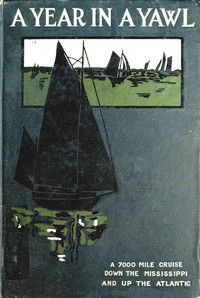
A Year in a Yawl A True Tale of the Adventures of Four Boys in a Thirty-foot Yawl — Context and Discussion
(6 User reviews)
1793
Project Gutenberg
2018
Not confirmed
Sailing -- Juvenile fiction; Yachts -- Juvenile fiction; Seafaring life -- Juvenile fiction; Yachting -- Juvenile fiction; Sailing ships -- Juvenile fiction; Florida -- Description and travel -- Juvenile fiction
Readers of public-domain and historical texts
Project Gutenberg digital edition
en
Edition facts
Words
80,580
Reading time
351 min
Text sections
21
This digital edition of A Year in a Yawl A True Tale of the Adventures of Four Boys in a Thirty-foot Yawl — Context and Discussion is described by source-level measurements including 80,580 words, 5 hr 51 min estimated reading time, and 21 detected text sections.
The text analysis averages about 19.5 words per sentence, while the detected sections provide another way to judge how the source is divided.
Project Gutenberg metadata also associates the work with “Sailing -- Juvenile fiction,” connecting these edition facts with the source record’s subject description.
Source:
Project Gutenberg record #56792
An editorial note on Russell Doubleday's 1901 adventure, examining how the author uses specific nautical diction, dialogue, and sensory description to convey the four boys' year-long yawl voyage. Observations are drawn from the opening map scene, turtle-hunting episode, and underway sequences, without claims beyond the excerpts.
Editorial Edition Score
4.9/5
★★★★★
★★★★★
Calculated from edition completeness, EPUB availability, text structure and catalogue metadata. Not a user rating.
How this score is calculated
- Description quality20 pts
- Title & short description10 pts
- Source metadata20 pts
- Text length15 pts
- Chapters / structure15 pts
- EPUB file integrity20 pts
Total of 100 points, scaled to a 2.5-5.0 range. Editions with an empty description or a missing EPUB file are not scored.
Edition quality
Read the Text
For an instant all three boys were silent. The thought of the adventure to be had tingled in their veins.
“I’ll go!” suddenly exclaimed Arthur Morrow, who had hitherto been comparatively calm, jumping to his feet to shake Ransom’s hand. Almost at the same moment, Clyde, his cousin, and Frank Chauvet grabbed Kenneth and shouted, “I, too,” in unison.
“Good!” was Ransom’s only comment as he extricated himself from the grasp of his impetuous friends. But his face was shining, and his eyes said what his voice for a minute could not express.
Kenneth had been at work on a boat for some time when the foregoing conversation took place. He had planned her himself, plotting out her lines with great care and with all the enthusiasm of a boy who has the means at last to carry out a long-cherished idea.
She was to be thirty feet over all, twenty-two feet on the water-line, nine feet wide, and three feet draught with her centre-board up. His idea was to make her yawl-rigged and as strong and staunch as good material and careful workmanship could ensure.
For a workshop he had to be content with a woodshed at the back of his father’s house, a good three-fourths of a mile from the Lake shore of St. Joseph, Michigan.
Fortunately, he was able to get some extra fine white oak, well seasoned, from a nearby mill; and though it was tough and tried the temper of his home-made tools, this very toughness and hardness stood the young ship-builder and his crew in good stead later.
He built a steaming-box to bend the ribs and planking of his boat out of rough lumber, and made an old stove, with a section of big pipe plugged up at both ends, serve as a boiler to make the steam. Thus equipped, he began the work unaided of building a thirty-foot yacht in which to cruise around on Lake Michigan and the waters tributary to it. With great labor and care the keel was steamed, bent, and laid on the blocks; then one by one the ribs were put in place. It was slow work, but it was extremely interesting to this young naval architect and ship-builder, and as his boat grew his ideas enlarged. To be a naval architect had been his ambition ever since he had left high school. To become a designer and builder of ships was his aim in life, and as he worked alone at his little ship, he wondered how he was going to get the experience that would be needed to design vessels for various uses and differing conditions. About lake craft he knew something, but of ocean and river vessels he was entirely ignorant. He made up his mind that he must see and study the different kind of craft in their native waters.
One day, as he was working on the planking of his boat, the inspiration came to him. He had pulled the plank out of the long steam-box, hot, damp, and more or less pliable, and with great labor made it fast to the cut-water with a hand vise. As he bent the plank from rib to rib he secured it until it was in place and followed the designed curve. He stood a minute facing the bow to see if the curve was true. It really began to look like a boat and less like a skeleton.
“This is going to be a pretty smart craft,” he said to himself as he eyed his work lovingly. “She’ll be strong and handy, roomy and seaworthy, and fit to go most anywhere.”
“By Jove!” he said aloud, slapping his knee by way of emphasis, and sitting down suddenly.
“Why not?” The idea was so bold that he hardly dared to think of it. Sail to the ocean in a craft only thirty feet long? Impossible; but why? He could hardly wait to secure the plank permanently, he was so anxious to look at a map and see if there was a possible route to the salt sea that his vessel could follow.
The rest of that day was spent in studying maps, and for a good part of the night Kenneth and his father discussed it.
“Yes, it is possible,” Mr. Ransom said at length; “but I doubt if it has ever been done before, and certainly never by so small a boat.”
“But, father,” the boy pleaded, “can I go? You know what I want to do and why I want to go. It would mean a whole lot to me; it would be experience I can get in no other way.”
Russell Doubleday opens A Year in a Yawl with four boys lying under an apple tree, studying a map. The scene establishes a pattern of concrete, technical language: Kenneth Ransom traces a route with a “stubby carpenter’s pencil,” and the others respond with skeptical, colloquial dialogue—“I don’t believe you could do it anyway, Ken.” This blend of precise nautical planning and casual boyhood speech runs through the excerpts, grounding the adventure in both practical detail and natural conversation.
Dialogue as Characterization
Doubleday uses dialogue to distinguish the four boys without explicit description. Kenneth speaks with determined confidence: “I can and will make that trip.” Clyde Morrow offers cautious admiration: “It took considerable gumption to plan and build a craft like yours alone.” Arthur, meanwhile, punctures enthusiasm with blunt realism: “But what are we going to do with them now?”—a line that follows a scheme to sell turtle meat. The exchanges feel unforced, with contractions and interjections (“Holy smoke,” “By George”) that keep the tone youthful. Even the mate’s threat to make the boat “fast to a ten-ton anchor” mixes humor with seamanship.
Nautical Diction and Sensory Detail
Doubleday’s descriptions of sailing are rich with specific sounds and movements. When the boys get underway, the reader hears “the cheep, cheep of the halliard blocks,” “the metallic clink of the ratchet on the capstan,” and “the slap, slap of the little waves against the yacht’s sides.” The sequence is methodical: Frank’s cry “She’s broke!” is followed by the whirr of jib halliards and the creak of blocks as the mainsail is sheeted home. Such precise vocabulary—halliard, capstan, sheeted home—is never explained, implying a readership comfortable with or curious about nautical terms. The effect is immersive, placing the reader on deck.
Structure of Episodic Peril
The excerpts reveal a pattern of incident and recovery. A turtle-hunting expedition nearly loses the dinghy (“His Nibs”), which Arthur must swim to retrieve. Later, the boys preserve turtle meat by salting and drying it in the rigging—a practical solution that Kenneth jokes might make the yacht “as fragrant as a sponge-fishing boat.” Each episode introduces a problem (escaping dinghy, surplus meat) and resolves it through resourcefulness, often with a touch of humor. The chapter titles in the contents—such as “Riding a Monster Turtle” and “Fighting a Man-eating Shark”—suggest this episodic structure continues throughout the voyage.
Setting as Active Presence
Doubleday treats the environment as an active force, not a backdrop. The Gulf coast features “graceful palms and sturdy live oaks,” while Captive Island is “a low-lying strip of land that just showed above the surface.” The sea itself is described through its effects: the yacht “heeled to the fresh breeze,” and the sunrise “glorified” the anchored Gazelle. Even the weather is specific—an “icy storm off ‘Sunny’ Baton Rouge” and “sailing with frozen rigging” indicate the boys encounter harsh conditions. The setting is never generic; it is named, observed, and felt through the crew’s physical responses.
Doubleday’s authorial choices—colloquial dialogue, technical sailing language, episodic structure, and vivid setting—work together to create a sense of authentic boyhood adventure. Readers attentive to these elements will find the narrative grounded in the practical realities of a year-long voyage, from navigating icy rivers to drying turtle meat in the rigging. The excerpts suggest a book that values competence and humor over melodrama.
Reading about those four boys in their yawl, I kept thinking of the open-water restlessness in Larry Dexter and the Stolen Boy; or, A Young Reporter on the Lakes — Reading Notes. Different crafts, even different eras, yet both carry that same quiet hum of youthful independence—the way a horizon, even a familiar lake one, seems to hold a promise you cannot quite name.
Ava Jones
1 month agoJack Allen
1 month agoDylan Perez
3 weeks agoVictoria Harris
1 month agoThere are no comments for this eBook.
Reader reflection
Before you leave, reflect on the book
Use these questions to collect your thoughts before moving on.
Your progress
0
/
10
2
Was reading this book enjoyable?
3
Would you encourage someone else to read it?
4
How easy was the book to follow?
5
Did the book give you something worth debating?
6
Did the book deliver what you hoped for?
7
How closely did the book connect with your experience?
8
How original did the book feel?
9
Which lesson or insight stayed with you?
10

![Cover of Atom Mystery [Young Atom Detective] — Reading Companion](https://axepu.com/storage/media/covers/pg53269.jpg)

Evelyn Hill
3 weeks ago