1

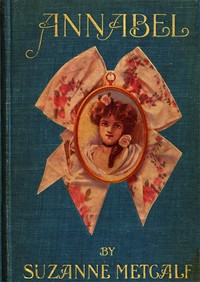
Annabel: A Novel for Young Folks — Inside the Classic
(7 User reviews)
1429
Project Gutenberg
2016
Not confirmed
Family -- Juvenile fiction; Mystery and detective stories; Fraud -- Juvenile fiction; Young women -- Social life and customs -- Juvenile fiction
Readers of public-domain and historical texts
Project Gutenberg digital edition
en
Edition facts
Words
39,852
Reading time
174 min
Text sections
22
The source record for Annabel: A Novel for Young Folks — Inside the Classic measures this digital text at 39,852 words, 2 hr 54 min estimated reading time, and 22 detected text sections.
The text analysis averages about 17.4 words per sentence, while the detected sections provide another way to judge how the source is divided.
Project Gutenberg metadata also associates the work with “Family -- Juvenile fiction,” connecting these edition facts with the source record’s subject description.
Source:
Project Gutenberg record #53196
In L. Frank Baum's Annabel, a vegetable-boy's pride clashes with a cook's memory of his family's former status. The novel traces class tension, a missing father, and a girl's transformation through precise details of speech, gesture, and setting.
Editorial Edition Score
4.8/5
★★★★★
★★★★★
Calculated from edition completeness, EPUB availability, text structure and catalogue metadata. Not a user rating.
How this score is calculated
- Description quality20 pts
- Title & short description10 pts
- Source metadata20 pts
- Text length15 pts
- Chapters / structure15 pts
- EPUB file integrity20 pts
Total of 100 points, scaled to a 2.5-5.0 range. Editions with an empty description or a missing EPUB file are not scored.
Edition quality
Read the Text
ILL MEETS WITH A REBUKE.
“Here are your vegetables, Nora,” said Will Carden, as he scraped his feet upon the mat before the kitchen door of the “big house.”
“Come in, Masther Willyum,” called the cook, in her cheery voice.
So the boy obeyed the summons and pushed open the screen door, setting his basket upon the white table at Nora’s side.
“Oo, misery! but them pays is illegant,” she said, breaking open a green pod and eating the fresh, delicious contents. “Why, Masther Willyum, the bloom is on ’em yet.”
“I picked them myself, Nora,” the boy answered, with a pleased laugh, “and only a little while ago, at that. And you’ll find the tomatoes and the celery just as nice, I’m sure.”
“They can’t be bate,” responded the cook, emptying the basket and handing it to him. “Sure, I don’t know whatever we’d do widout yez to bring us the grans stuff, Masther Willyum.”
“I wish,” said he, hesitatingly, “you wouldn’t call me ‘master,’ Nora. Call me Will, as everyone else does. I’m not old enough to have a handle to my name, and I’m not much account in the world,--yet.”
Nora’s round, good natured face turned grave, and she looked at the boy with a thoughtful air.
“I used to know the Cardens,” she said, “when they didn’t have to raise vegetables to earn a living.”
Will flushed, and his eyes fell.
“Never mind that, Nora,” he answered, gently. “We’ve got to judge people by what they are, not by what they have been. Good bye!” and he caught up his basket and hastily retreated, taking care, however, to close the screen door properly behind him, for he knew the cook’s horror of flies.
“Poor boy!” sighed Nora, as she resumed her work. “It ain’t his fault, at all at all, that the Cardens has come down in the wurruld. But down they is purty close to the bottom, an’ it ain’t loikly as they’ll pick up ag’in in a hurry.”
Meantime the vegetable boy, whistling softly to himself, passed along the walk that led from the back of the big house past the stables and so on to the gate opening into the lane. The grounds of the Williams mansion were spacious and well kept, the lawns being like velvet and the flower beds filled with artistic clusters of rare blooming plants. A broad macadamed driveway, edged with curbs of dressed stone, curved gracefully from the carriage porch to the stables, crossing the lawn like a huge scroll.
At one side of this a group of children played upon the grass--two boys and three girls--while the nurse who was supposed to have charge of the smallest girl, as yet scarcely more than a baby, sat upon a comfortable bench engaged in reading a book.
As Will passed, one of the little girls lay flat upon the ground, sobbing most dismally, her golden head resting upon her outstretched arms. The boy hesitated an instant, and then put down his basket and crossed the lawn to where the child lay, all neglected by her companions.
“What’s wrong, Gladie?” he asked, sitting on the grass beside her.
“Oh, Will,” she answered, turning to him a tear-stained face, “m--my d--d--dolly’s all bwoke, an’ Ted says she’ll h--h--have t’ go to a h--h--hospital, an’ Ma’Weeze an’ Wedgy says they’ll m--m--make a f--fun’ral an’ put dolly in the c--cold gwound, an’ make her dead!” and the full horror of the recital flooding her sensitive little heart, Gladys burst into a new flood of tears.
“Don’t you worry about it, Gladie,” he said, in a comforting tone. “We’ll fix dolly all right, in less than a jiffy. Where is she, and where’s she broke?”
Hope crept into the little face, begot of a rare confidence in the big boy beside her. Gladys rolled over upon the grass, uncovering a French doll of the jointed variety, dressed in very elaborate but soiled and bedraggled clothes and having a grimy face and a mass of tangled hair. It must have been a pretty toy when new, but the doll had never won Gladys’ whole heart so long as it remained immaculate and respectable. In its present disreputable condition it had become her dearest treasure, and when she handed the toy to Will Carden and showed him where one leg was missing from the knee down, a fresh outburst of grief convulsed her.
“Her l--leg is all b--bwoke!” she cried.
“That’s bad,” said Will, examining the doll carefully. “But we’ll play I’m the doctor, come to make her well. Where’s the other piece, Gladie?”
The novel opens with Will Carden scraping his feet at the kitchen door of the “big house,” a vegetable basket in hand. The cook, Nora, calls him “Masther Willyum” and recalls the Cardens’ former standing, prompting Will to flush and insist he be judged by what he is, not what his family has been. This early scene establishes a central tension: the boy’s present labor against the memory of lost gentility. Baum anchors the conflict in concrete details—the bloom on the peas, the proper closing of a screen door—rather than abstract commentary.
Dialect and Social Distance
Nora’s speech is rendered in a thick Irish dialect: “Oo, misery! but them pays is illegant.” Will, by contrast, speaks standard English. This linguistic divide marks the social gulf between servant and employer, yet Nora’s affectionate tone and Will’s polite deference complicate the hierarchy. When Will asks not to be called “master,” he signals discomfort with the class assumptions embedded in language. The cook’s reply—“I used to know the Cardens, when they didn’t have to raise vegetables to earn a living”—exposes a shared history that makes the present arrangement awkward for both.
The Missing Father as a Structural Absence
In a later excerpt, two men—the doctor and Mr. Williams—discuss a man who “was too big a man to be suppressed for long” and who would surely have tried to communicate with his wife and children. The doctor notes that Mr. Jordan always collects the Carden mail. The exchange ends with a “startled” gaze “not without a gleam of horror.” The missing father is never named in the excerpts, but the conversation implies a mystery: why no letter ever came, and who might have intercepted it. This thread, woven through the novel, gives the domestic scenes an undertow of suspense.
Annabel’s Transformation and Will’s Discomfort
When Annabel returns from school, Will is struck by her changed appearance: longer skirts, a knot of red hair, vanished freckles. The narrator notes that “these sudden blossomings of young girls are often subjects of wonder.” Will’s reaction mixes amazement with “strange embarrassment.” Annabel herself dismisses the new formality—“Fudge! … you won’t catch me getting swell”—and insists on the old ease. Yet the physical details (the neat knot, the fair skin) suggest a shift that cannot be undone by words alone. The scene captures the awkwardness of adolescence and the tension between growing up and staying the same.
Readers attentive to small gestures—how a door is closed, how a name is spoken, how a letter is collected—will find Baum’s craft in the margins of the plot. The novel rewards a slow reading that notices the weight of a single word or the significance of a missed communication. These details, rather than grand events, carry the story’s emotional and dramatic force.
Reading Annabel, I was struck by how a servant’s pride can quietly shape a household, and it made me think of another story where a missing person lingers in the background, unspoken yet heavy. There’s a similar tenderness in how small, precise gestures reveal class and longing in Larry Dexter and the Stolen Boy; or, A Young Reporter on the Lakes — Reading Notes, which I once picked up and never forgot.
Noah Brown
3 weeks agoThere are no comments for this eBook.
Reader reflection
How will you remember this book?
Save your reaction, strongest insight, and memorable passage.
Your progress
0
/
10
2
How much did you enjoy the reading experience?
3
Is this a title you would suggest to others?
4
What was the reading difficulty like?
5
How original did the book feel?
6
What was the strongest part of the book?
7
Did it raise ideas you would like to talk about?
8
How useful were the ideas in this book?
9
What changed or sharpened your thinking?
10
![Cover of Atom Mystery [Young Atom Detective] — Reading Companion](https://axepu.com/storage/media/covers/pg53269.jpg)



Olivia Thomas
1 month ago