1

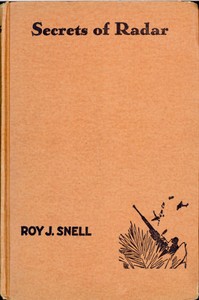
Secrets of Radar — Background and Themes
(6 User reviews)
1556
Project Gutenberg
2018
Not confirmed
War stories; Spies -- Juvenile fiction; World War, 1939-1945 -- Juvenile fiction; Radar -- Juvenile fiction
Readers of public-domain and historical texts
Project Gutenberg digital edition
en
Edition facts
Words
58,615
Reading time
255 min
Text sections
9
The source record for Secrets of Radar — Background and Themes measures this digital text at 58,615 words, 4 hr 15 min estimated reading time, and 9 detected text sections.
The text analysis averages about 10.4 words per sentence, while the detected sections provide another way to judge how the source is divided.
Project Gutenberg metadata also associates the work with “War stories,” connecting these edition facts with the source record’s subject description.
Source:
Project Gutenberg record #58073
In this 1944 wartime adventure, a WAC named Gale operates radar in the India-Burma theater. The narrative shifts between technical radar practice and personal tension, using pidgin dialect and rapid-fire dialogue to convey the urgency of defending a hidden air base.
Editorial Edition Score
4.7/5
★★★★★
★★★★★
Calculated from edition completeness, EPUB availability, text structure and catalogue metadata. Not a user rating.
How this score is calculated
- Description quality20 pts
- Title & short description10 pts
- Source metadata20 pts
- Text length15 pts
- Chapters / structure15 pts
- EPUB file integrity20 pts
Total of 100 points, scaled to a 2.5-5.0 range. Editions with an empty description or a missing EPUB file are not scored.
Edition quality
Read the Text
he knows about guns,” the other whispered. “What d’you know about that!”
“Now.” The girl straightened up to fix her eyes on the sergeant. “You take it.”
The sergeant took over. The girl held a watch on him. The sergeant was on the spot. A girl had offered him a challenge. As a gentleman he had accepted the challenge. His face tensed as the seconds—one, two, three, four, five—ticked away.
“Now,” came from the girl in a hoarse whisper.
The sergeant’s fingers moved like triggers. Instantly the gun boomed. They waited one, two, three, four, five seconds. Then came the dull roar of the exploding shell.
They waited again—one, two, three, four, five—up to the count of twenty. Fragments of the shell could be heard dropping. And then, at the edge of the cloud appeared a gray shadow that rapidly developed into a black ball.
“By thunder! They got that balloon in the bag!” one of the boys exclaimed.
Turning about, the sergeant held out his hand to the girl. She took it, man to man, a good hearty grip.
“That,” said one of the privates, “is better than the boy chinning the rope. You’d ought to go in for magic, Miss. There’s money in magic.”
The girl smiled, but made no reply. She glanced away at the shadows of the palm tree. The black dwarf was still there. Not knowing why, she shuddered, but she still did not tell him to go away.
The steel ball reached earth some distance away. The first gunner, still a bit of a skeptic, ran over to retrieve it.
“You never touched the steel ball!” he called on the way back.
“But he got the balloon!” the girl insisted. “That was very good indeed for the first try.”
“Thank—O—Thanks.” The sergeant made a bow. “Sometimes the Captain says I’m good and sometimes he says I’m—well, never mind just what he says. It’s not fit language for a lady.”
“I’m no lady,” the girl laughed. “I’m just a soldier, a WAC. So let’s just be nice and natural. Shall we have another try?”
“Oh sure! As many as you like.” The sergeant adjusted his gun.
A telephone attached to a tree jangled.
“I’ll get it.” The first gunner jumped up.
“It’s for you, Sergeant,” he announced a moment later.
“Be right there.” The sergeant was away.
There was a serious, all but stern look on the sergeant’s face when he returned. “Sorry, lady,” he half apologized. “School’s dismissed for today.”
“Why—what—” she began.
He broke in: “Some nasty old Jap bombers are headed this way to mess things up a bit. And did they pick on a swell day to do their stuff! They’ll come hopping out of the clouds, drop their bombs and drop back into the clouds again.”
“Before we get a good crack at ’em,” the first gunner broke in. “The dirty—”
“Lady, you’d better scram,” said the sergeant. “This is no place for you right now.”
“I hear ’em comin’!” The second gunner’s ears were covered by a listening device.
“I’m not leaving,” the girl said, as she shook her hair into a tangled mass. “This may be a man’s war, but they’ll have to put me in the guard house to keep me out of it.”
“Oh! Miss! I’m sorry,” the sergeant exclaimed, “but orders are orders. No ladies.”
“Who’s giving the orders?” she snapped. “You’re a sergeant. I’m a second officer of the WACS. You tell me who’s ranking officer on this gun! I’m staying! And we’re going to get one of those bombers!”
“Get what? Get—” A strange light shone in the sergeant’s eyes like the glint of a diamond. “Last time they got a whole gun crew and one was my particular pal,” he grumbled. He whistled a bar of “Lady Be Good”, then said: “Have it your own way. Let’s get set.”
By this time the enemy planes could be heard rumbling through the overcast.
“They’re heading for the airdrome. We’re practically on the edge of it,” the sergeant explained. “They may take time to wipe us off the map first,” he added as a comforting afterthought.
If the girl heard, she made no sign.
“They’ll circle over the place first, won’t they?” she asked in a matter-of-fact voice.
“That’s what they most generally do,” the sergeant agreed.
“That’s when we’ll get them,” she murmured, as she adjusted her radar set. “They’ve got one-track minds, those Jap pilots have. They circle about in the same track two or three times.”
The opening chapter of Secrets of Radar introduces a WAC named Gale who orders a coolie to run a wire from a cart of radio-like boxes to an anti-aircraft gun. The sergeant’s skeptical “Says who?” and Gale’s crisp reply—“Says the Colonel”—establish a pattern of terse, authority-challenging dialogue. The prose moves quickly, mixing technical jargon (“radar feelers”) with colloquialisms (“an oversize copy of a beautiful gal”). Snell uses pidgin English for the coolie (“You runnee this-a wire backee”) to mark social hierarchy, while the main characters speak in clipped, urgent exchanges that mirror the wartime setting.
Voice and Dialogue as a Marker of Tension
The excerpts show a distinctive reliance on dialogue to advance both plot and character. Gale’s speech is steady and commanding—“You and I are going to do a little practicing”—while the sergeant’s replies are skeptical and grudging. Their exchange about radar is a verbal tug-of-war: the sergeant dismisses the exercise as “a new game for a soldier’s pastime,” but Gale’s calm persistence wins him over. Later, in a quieter scene with Jimmie, the dialogue becomes intimate and solemn. Jimmie’s declaration that Gale’s heart is “the safest place in all the world” contrasts sharply with the earlier military brusqueness. Snell varies sentence length to match mood: short, punchy lines during action (“Get headquarters, quick!”) and longer, softer phrases in personal moments. This vocal shift helps readers track the story’s emotional register without relying on extensive narration.
Pacing Through Technical Detail and Action
Snell alternates between technical descriptions of radar operation and bursts of action. The radar check is rendered in matter-of-fact terms: Gale “sent her radar feelers out into the thin air of a bright, sunshiney day.” Then, abruptly, she detects “something in the air out there far beyond where we can see.” The pace quickens as she counts “more nearly a hundred” aircraft and orders Jan to “Get headquarters, quick!” This rhythm—calm procedure interrupted by sudden crisis—recurs in the excerpts. The earlier balloon-shooting practice also follows this pattern: a slow setup (the sergeant half-asleep) gives way to Gale’s brisk instructions and the implied test of radar accuracy. Snell uses short paragraphs and frequent line breaks to accelerate reading speed during tense moments, while longer descriptive passages slow the tempo for exposition.
Setting and Sensory Details in the India-Burma Theater
The setting is evoked through sparse but effective sensory cues. The air is “hot and moist,” palm trees cast shadows, and a ridge is described as “couldn’t be crossed” yet was crossed. Snell does not linger on landscape; instead, he embeds setting in action. The forest hideout is revealed through Jimmie’s explanation: “This great forest has been cleared of brush… miles of airplane runways.” The reader learns the terrain via dialogue, not description. Similarly, the “temple bells and terror” chapter title hints at local color, but the excerpts focus on military infrastructure—roads, runways, and the lookout station on a hill. This lean approach keeps the narrative focused on the characters’ mission. The only non-military detail is the coolie’s pidgin speech, which briefly signals the local population’s presence without developing them as characters.
Readers should pay attention to how Snell uses dialogue to convey information that a modern narrator might describe directly. The radar technology is explained through argument and demonstration, not lectures. The book’s pace depends on these conversational rhythms, so noting who speaks and how they speak—whether in clipped orders or hesitant whispers—offers a reliable guide to the story’s tension and emotional stakes.
Sometimes a story stays because it’s less about heroes and more about the quiet weight of doing your job well. That’s how Secrets of Radar felt—Gale’s focus and loneliness under pressure. I was reminded of that same gentle ache reading The Cadets of Flemming Hall — Reading Companion, where camaraderie grows slowly, almost unnoticed, until it becomes the whole point. Just a thought I wanted to share.
Carter Anderson
4 weeks agoDavid Williams
1 month agoWyatt Lopez
3 weeks agoLeo Hernandez
1 month ago-

Nicholas Dunn - 1 month ago
I was disappointed with 'Secrets of Radar.' It promises to reveal secrets, but it mostly rehashes well-known historical information without providing fresh insights. The writing is dry and overly technical, making it a chore to read. The diagrams are outdated and not very helpful. For someone already familiar with the basics, there's little new here. I expected a more captivating and detailed exploration, but instead found a monotonous textbook. Not recommended for a light read. -
Chelsea Macias - 1 month ago
This book provides a decent overview of radar technology and its development. It's well-organized and covers key topics, making it a good starting point for those new to the subject. However, some sections are quite technical and may overwhelm a casual reader. The book could benefit from more real-world examples and less jargon. Overall, it's a solid introduction, but not the most approachable for a complete beginner. -
John Ferrell - 1 month ago
Secrets of Radar is a thoroughly researched and engaging book that clearly explains the principles behind radar technology. Written in a way that is accessible to beginners, it covers the history, science, and applications of radar with interesting anecdotes. The diagrams and examples are helpful for visual learners. I consider myself a curious enthusiast, and I found this book both informative and entertaining. A must-read for anyone interested in military or telecommunications history.
Reader reflection
How did this book work for you?
Your answers remain private and are stored only in this browser.
Your progress
0
/
10
2
What was your overall reaction to the book?
3
Would you encourage someone else to read it?
4
How demanding did the text feel?
5
Did you relate to its people, ideas, or situations?
6
How much did the book move you?
7
Did you gain anything practical from the text?
8
What was the strongest part of the book?
9
What did this book teach you most?
10







Isaac Ramirez
3 weeks ago