About 208 minutes
Peggy Plays Off-Broadway — A Closer Reading
Fairy Moral Tales
47,790 recorded words. 19 minutes difference from this book's estimate.
View Gutenberg source #55815
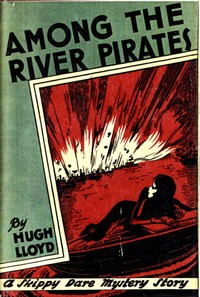
This digital edition of Among the River Pirates: A Skippy Dare Mystery Story — Key Ideas to Explore is described by source-level measurements including 43,297 words, 3 hr 9 min estimated reading time, and 6 detected text sections.
The text analysis averages about 15.4 words per sentence, while the detected sections provide another way to judge how the source is divided.
Project Gutenberg metadata also associates the work with “Detective and mystery stories,” connecting these edition facts with the source record’s subject description.
Explore this collection
These alternatives are selected using recorded categories and estimated reading time.
About 208 minutes
Fairy Moral Tales
47,790 recorded words. 19 minutes difference from this book's estimate.
View Gutenberg source #55815About 162 minutes
Fairy Moral Tales
37,222 recorded words. 27 minutes difference from this book's estimate.
View Gutenberg source #53602About 225 minutes
Fairy Moral Tales
51,733 recorded words. 36 minutes difference from this book's estimate.
View Gutenberg source #52207Search stored excerpts and compare books → Choose by your preferences →
Choices use stored catalog measurements. Estimates vary with reading speed. A shared category is a catalog label, not a claim that two books have the same argument or literary quality.
Search reads excerpt text stored with this catalog and links to its associated Gutenberg record. The connection is stored in the site database; this tool does not recheck that every excerpt is word-for-word identical to that external record. Excerpt search does not cover every chapter and does not verify historical publication dates.
Catalog snapshot checked: 2026-09-26. Coverage: 90 public books, 90 available source excerpts.
Calculated from edition completeness, EPUB availability, text structure and catalogue metadata. Not a user rating.
Total of 100 points, scaled to a 2.5-5.0 range. Editions with an empty description or a missing EPUB file are not scored.
Public-domain source text
The source text is kept in the dedicated reader, separate from this catalogue record and its commentary.
The novel opens with a shabby motorboat towing a dilapidated barge upriver, its engine suspiciously well muffled. The contrast between the worn hull and the silent dignity of its movement immediately signals that appearances are deceptive. The late afternoon sun gilds the skyscrapers across the river, but the focus stays on the barge's incongruously new lettering: Minnie M. Baxter. This detail, along with the father's pride in ownership and Skippy's exclamation that the barge is theirs, establishes a world where shabby possessions are fiercely valued.
The first chapter introduces the river as both a physical setting and a source of narrative pressure. The ferry commuters' annoyance at the slow-moving barge, the father's calm pipe-smoking, and Skippy's struggle with the tiller create a layered scene. The muffled engine—described as suspicious—hints at hidden activity. The father's remark about a missing front cylinder grounds the story in mechanical reality, while the golden light on the Palisades and skyscrapers suggests a world of wealth and order that the barge does not belong to. This opening establishes a rhythm of quiet observation punctuated by small, telling sounds.
Later, unable to sleep after Big Joe's warning about the barge being stuck in mud, Skippy goes on deck before dawn. The description of the basin in dark gray mist and the slinking waters gurgling at high tide creates a mood of isolation. When Skippy lifts a tarpaulin to find stolen ships' supplies, the narrative shifts from atmospheric detail to direct action. He immediately understands the implications—his father had told him about river pirates selling to unscrupulous captains. The searchlight of the police boat falling on him forces a quick decision: he pushes the goods overboard piece by piece. This sequence shows Skippy acting on instinct, not deliberation.
When the police board the barge, Skippy claims Big Joe has been caring for him since noon because of a bad throat. The narrator notes that every river front police officer knows of Skippy's bad throat—it was the reason his father fought his prison sentence. Skippy's pallor is not simulated; it is terrible reality. The inspector, the same man who took Toby away, questions him. Skippy's lie is both a protective act and a reminder of his father's absence. The scene relies on the reader's awareness of Skippy's history, which the text has only hinted at through the earlier mention of his father being taken by the police boat.
Two details recur across the excerpts: muffled engines and the presence of watchers. The opening paragraph emphasizes the engine's suspicious muffling; later, the police boat's searchlight and the tramp of feet on deck signal intrusion. The ferry commuters watch the barge; the police watch the basin. Skippy himself becomes a watcher when he peers under the tarpaulin. These repeated elements create a pattern of surveillance and concealment. The muffled engine, in particular, ties the barge's mechanical state to its moral ambiguity—it is both a practical detail and a symbol of hidden activity.
Readers approaching this mystery should pay attention to the physical details of the river world: the condition of the engine, the state of the tide, the position of the barge in the mud. Fitzhugh builds suspense not through dramatic revelations but through small, concrete observations that accumulate meaning. Skippy's actions are driven by loyalty and fear, and the narrative rewards careful attention to what is seen and heard—and what is deliberately muffled.
That muffled-engine tension, the way Skippy’s quiet lies protect something tender—it stayed with me long after. I found an echo in The Child of the Moat: A Story for Girls. 1557 A.D. — A Closer Reading, where a girl’s silence holds a similar weight. The water, the waiting, the unspoken—both leave you feeling strangely held by their hushed moments.
A brief reflection can help important ideas stay with you longer.