About 300 minutes
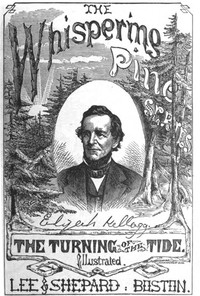
The Turning of the Tide; Or, Radcliffe Rich and His Patients — Key Ideas to Explore
Fairy Moral Tales
68,967 recorded words. 212 minutes difference from this book's estimate.
View Gutenberg source #54772
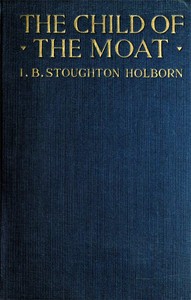
This digital edition of The Child of the Moat: A Story for Girls. 1557 A.D. — A Closer Reading is described by source-level measurements including 117,663 words, 8 hr 32 min estimated reading time, and 36 detected text sections.
The text analysis averages about 18.2 words per sentence, while the detected sections provide another way to judge how the source is divided.
Project Gutenberg metadata also associates the work with “Adventure stories,” connecting these edition facts with the source record’s subject description.
Explore this collection
These alternatives are selected using recorded categories and estimated reading time.
About 300 minutes
Fairy Moral Tales
68,967 recorded words. 212 minutes difference from this book's estimate.
View Gutenberg source #54772About 247 minutes
Fairy Moral Tales
56,582 recorded words. 265 minutes difference from this book's estimate.
View Gutenberg source #52579About 239 minutes
Fairy Moral Tales
54,934 recorded words. 273 minutes difference from this book's estimate.
View Gutenberg source #55335Search stored excerpts and compare books → Choose by your preferences →
Choices use stored catalog measurements. Estimates vary with reading speed. A shared category is a catalog label, not a claim that two books have the same argument or literary quality.
Search reads excerpt text stored with this catalog and links to its associated Gutenberg record. The connection is stored in the site database; this tool does not recheck that every excerpt is word-for-word identical to that external record. Excerpt search does not cover every chapter and does not verify historical publication dates.
Catalog snapshot checked: 2026-09-26. Coverage: 90 public books, 90 available source excerpts.
Calculated from edition completeness, EPUB availability, text structure and catalogue metadata. Not a user rating.
Total of 100 points, scaled to a 2.5-5.0 range. Editions with an empty description or a missing EPUB file are not scored.
Public-domain source text
The source text is kept in the dedicated reader, separate from this catalogue record and its commentary.
The author opens with a defiant preface: “Children like the horrors first and the end all bright.” True to this promise, Chapter I is titled “Hate” and begins with a poem addressed to “sweet children of demurest air,” immediately establishing a direct, almost conspiratorial relationship with the reader. The narrative voice is distinctive—sometimes lyrical, sometimes blunt—and it shifts abruptly between interior monologue and brisk action. In one excerpt, the protagonist Ian disguises himself by pulling out half his eyebrows and the hair above his forehead, a small but telling detail that grounds the story in physical, tangible choices rather than mere plot convenience. The prose moves from brooding sentences like “the strange feeling that had possessed him ever since the day that Aline had talked about it in the secret room” to clipped, urgent dialogue: “From the left,” said his companion, “the one with the dripstone half off.”
The book’s structure is unusual for a children’s story: a single chapter called “Hate” serves as a prologue, and the author warns that grown-ups may skip it. This opening is deliberately gruesome, establishing a world where danger is immediate and moral lines are blurred. The chapter titles themselves trace an emotional arc—from “Hate” through “Secrets,” “Hate and Love,” “Bitterness,” “Death,” “Remorse,” to “The Judgment”—suggesting that the narrative is as concerned with psychological states as with external events. The pacing in these early chapters is slow, weighted by introspection and atmospheric description, before accelerating into the rescue sequences later in the book. Readers should note that the prologue is not representative of the entire work’s tone; it functions as a dark overture that makes the subsequent adventures feel earned.
In the excerpt where Ian attempts to locate the imprisoned Wilfred, the prose shifts into a careful, almost procedural mode. Ian disguises himself, gossips at hostels, and extracts information through casual remarks: “I may as well stretch my legs,” he says, before steering a farm hand past the grange. The author uses short, declarative sentences to convey Ian’s calculations—“He did not dare to linger, but he cautiously inspected the situation”—and then lengthens them when describing the physical obstacles: a moat, an unclimbable elm, a rope from a bed. This alternation between terse action and detailed description creates a rhythm that mirrors Ian’s own tension. The narrative voice remains coolly analytical even in moments of high stakes, which gives the reader the sense of observing a clever, methodical mind at work.
The book includes a floor plan of “Hall Holwick, Yorkshire,” with labeled rooms such as the Solar, Buttery, and Pantry, and a note that the scale is inverted because the approach is from the north. This attention to architectural detail extends into the prose: characters move through spaces defined by moats, battlements, dripstones, and secret rooms. The historical setting is not merely decorative; it shapes the plot. Religious persecution under Mary I is a given, and the characters’ actions are constrained by the physical realities of a 16th-century manor—narrow windows, unclimbable trees, rope beds that can be repurposed. The author does not explain these details; he trusts the reader to absorb them through context. For instance, the phrase “the one with the dripstone half off” identifies a window without elaboration, treating the architecture as a shared language between narrator and audience.
Because the excerpts cover only the early and middle portions of the story, readers should be alert to how the narrative voice evolves across the full thirty chapters. The author’s habit of addressing the reader directly and varying sentence length to match mood is consistent, but the pacing may shift again in later sections. Pay attention to the way physical objects—a rope, a tree, a moat—recur as both practical tools and symbolic anchors. The floor plan is worth consulting; it is not a gimmick but a key to understanding the characters’ movements and the spatial logic of their world.
That rainy afternoon, I finished The Child of the Moat and lingered on how its heroine kept her calm in narrow escapes, always watchful for the next voice. Later, flipping through a forgotten shelf, I found The Turning of the Tide; Or, Radcliffe Rich and His Patients — Key Ideas to Explore, and that same quiet vigilance echoed there, in quieter rooms.
Save your reaction, strongest insight, and memorable passage.