About 247 minutes
Honor Bright: A Story for Girls — Story, Setting & Ideas
Fairy Moral Tales
56,582 recorded words. 53 minutes difference from this book's estimate.
View Gutenberg source #52579
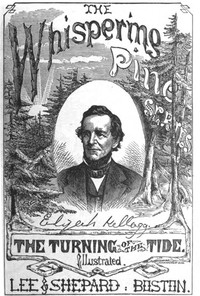
The source record for The Turning of the Tide; Or, Radcliffe Rich and His Patients — Key Ideas to Explore measures this digital text at 68,967 words, 5 hr estimated reading time, and 7 detected text sections.
The text analysis averages about 21.6 words per sentence, while the detected sections provide another way to judge how the source is divided.
Project Gutenberg metadata also associates the work with “Conduct of life -- Juvenile fiction,” connecting these edition facts with the source record’s subject description.
Explore this collection
These alternatives are selected using recorded categories and estimated reading time.
About 247 minutes
Fairy Moral Tales
56,582 recorded words. 53 minutes difference from this book's estimate.
View Gutenberg source #52579About 239 minutes
Fairy Moral Tales
54,934 recorded words. 61 minutes difference from this book's estimate.
View Gutenberg source #55335About 232 minutes
Fairy Moral Tales
53,287 recorded words. 68 minutes difference from this book's estimate.
View Gutenberg source #55213Search stored excerpts and compare books → Choose by your preferences →
Choices use stored catalog measurements. Estimates vary with reading speed. A shared category is a catalog label, not a claim that two books have the same argument or literary quality.
Search reads excerpt text stored with this catalog and links to its associated Gutenberg record. The connection is stored in the site database; this tool does not recheck that every excerpt is word-for-word identical to that external record. Excerpt search does not cover every chapter and does not verify historical publication dates.
Catalog snapshot checked: 2026-09-26. Coverage: 90 public books, 90 available source excerpts.
Calculated from edition completeness, EPUB availability, text structure and catalogue metadata. Not a user rating.
Total of 100 points, scaled to a 2.5-5.0 range. Editions with an empty description or a missing EPUB file are not scored.
Public-domain source text
The source text is kept in the dedicated reader, separate from this catalogue record and its commentary.
The preface of Elijah Kellogg's 1873 novel opens with a professor's assertion that "every person is as lazy as he can be," setting a moral tone that frames the story as a test of character under pressure. The narrative voice that follows is brisk and colloquial, often dipping into the vernacular of rural Maine—as when a local asks the stranger if he is "sparkin' one of the gals" or marvels at a "hog-sty that will fat hogs without corn." These exchanges reveal a community quick to gossip and slow to trust, while the author's own commentary, such as comparing a manly spirit to "Dannemora iron" that defies the furnace, gives the prose a homiletic edge.
The dialogue in the excerpts is marked by regional idioms and a deliberate plainness. When a stranger tells a local he has invented a hog-sty that will fat hogs without corn, the reply is "Massy sakes!"—a contraction that signals both surprise and skepticism. Such phrases are not mere decoration; they establish the setting as a frontier community where directness is valued and pretension is mocked. The narrator, however, shifts between this earthy speech and a more formal, almost sermonizing tone, especially in the preface and in passages describing the Richardsons' industry. This alternation creates a rhythm that mirrors the book's thematic tension between laziness and productive labor.
The pacing of the narrative accelerates noticeably when describing the Richardsons' blacksmith shop. Sentences grow longer and more detailed, listing the tools and tasks: "new mill-chains, dogs, hooks, bands, bolts, and pintles were to be made." The prose becomes a catalog of labor, as if the act of listing itself conveys the energy of the forge. In contrast, the opening scenes of gossip and travel are more leisurely, with dialogue that meanders. This shift in pace is not accidental; it underscores the book's argument that focused work transforms both character and circumstance. The reader feels the quickening pulse of the shop as orders pour in, a tempo that stands in deliberate opposition to the lazy talk of the town.
Certain objects and phrases recur with enough frequency to become motifs. The hog-sty invention is mentioned twice in the excerpts—once in the stranger's boast and again in the gossip that spreads "all over town." The repetition emphasizes how a single odd claim can shape a community's perception. Similarly, the Richardsons' tools—axes, mill-chains, anvils—are named repeatedly, grounding the story in the material world of blacksmithing. Even the phrase "Dannemora iron" from the preface echoes later in the description of the shop's new forges, linking the abstract idea of tempered character to the literal forging of metal. These details give the narrative a tactile weight, reminding the reader that this is a world where things are made and reputations are hammered out.
Readers attentive to Kellogg's handling of voice will notice how the narrator's own judgments—often delivered in asides—color the story without fully controlling it. The gossip about Rich's hog-sty, for instance, is reported with a wry detachment that leaves room for the reader to gauge the townspeople's credulity. Paying attention to who speaks formally and who speaks plainly can reveal the social hierarchies the novel both reinforces and questions. The book rewards a slow reading that savors the cadence of its dialogue and the weight of its physical descriptions.
That rainy afternoon, Kellogg’s Turning of the Tide lingered on how stubborn work—like Dannemora iron—shapes a quiet soul. I closed it feeling the forge’s heat, then wandered accidentally to Honor Bright: A Story for Girls — Story, Setting & Ideas, whose softer trials felt like embers cooling into something just as true.
Capture what you thought, learned, and would like to remember.