About 232 minutes
The Girl Scouts at Miss Allen's School — Background and Themes
Fairy Moral Tales
53,287 recorded words. 7 minutes difference from this book's estimate.
View Gutenberg source #55213
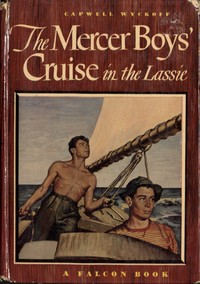
Before opening The Mercer Boys' Cruise in the Lassie — Key Ideas to Explore, the edition data offers a quick orientation: 54,934 words, 3 hr 59 min estimated reading time, and 7 detected text sections.
The text analysis averages about 15.4 words per sentence, while the detected sections provide another way to judge how the source is divided.
Project Gutenberg metadata also associates the work with “Sailing -- Juvenile fiction,” connecting these edition facts with the source record’s subject description.
Explore this collection
These alternatives are selected using recorded categories and estimated reading time.
About 232 minutes
Fairy Moral Tales
53,287 recorded words. 7 minutes difference from this book's estimate.
View Gutenberg source #55213About 247 minutes
Fairy Moral Tales
56,582 recorded words. 8 minutes difference from this book's estimate.
View Gutenberg source #52579About 225 minutes
Fairy Moral Tales
51,733 recorded words. 14 minutes difference from this book's estimate.
View Gutenberg source #52207Search stored excerpts and compare books → Choose by your preferences →
Choices use stored catalog measurements. Estimates vary with reading speed. A shared category is a catalog label, not a claim that two books have the same argument or literary quality.
Search reads excerpt text stored with this catalog and links to its associated Gutenberg record. The connection is stored in the site database; this tool does not recheck that every excerpt is word-for-word identical to that external record. Excerpt search does not cover every chapter and does not verify historical publication dates.
Catalog snapshot checked: 2026-09-26. Coverage: 90 public books, 90 available source excerpts.
Calculated from edition completeness, EPUB availability, text structure and catalogue metadata. Not a user rating.
Total of 100 points, scaled to a 2.5-5.0 range. Editions with an empty description or a missing EPUB file are not scored.
Public-domain source text
The source text is kept in the dedicated reader, separate from this catalogue record and its commentary.
The Mercer Boys' Cruise in the Lassie opens with a mechanic's triumph: Don Mercer straightens up from a marine motor and shouts, "Hooray! That finishes it!" The line is typical of the book's brisk, exclamatory style—dialogue often carries the action forward with minimal narrative padding. Wyckoff favors short, punchy sentences and colloquial banter between the brothers, as when Jim asks, "Are you getting old and talking to yourself, Don?" The exchange establishes a tone of easy camaraderie and practical competence, with technical details ("exhaust pipe," "switch wires") woven naturally into conversation.
Wyckoff uses dialogue not merely to convey information but to drive scenes and reveal character. In the opening chapter, Don and Jim's exchange about the engine—"Every connection hooked up?" / "Everything"—moves the plot forward while showing their shared expertise. Later, the lighthouse keeper's outburst, "The government'll fix you for this, you'll see," is a single line that defines his defiance and the stakes. The gang leader's retort, "Aw, dry up," is equally economical: it establishes his contempt and impatience. Wyckoff rarely uses long speeches; instead, characters speak in bursts that mirror the action's pace.
When Terry Mackson creeps aboard the cruiser, Wyckoff describes his movements with precise, physical detail: "carefully pulling in his oars he quietly paddled the boat nearer," "balancing himself and keeping the nose of the little boat from thumping." The prose focuses on the sensory and mechanical—the risk of a thud, the need to avoid tipping—rather than on Terry's emotions. The result is a tense, objective sequence that lets readers infer the character's fear. Wyckoff also notes the cruiser's broad build, which "would have taken someone with greater weight than Terry Mackson to have tipped it," a factual observation that subtly reassures while maintaining suspense.
Wyckoff differentiates characters by their speech habits. Don and Jim use informal, affectionate terms like "kid" and "boy," reflecting their close bond. The gang members, Benito and Frank, speak in clipped, pragmatic lines: "Guess Marcy ain't coming," "What are we going to do?" Their dialogue is laced with slang ("dry up," "holler") and marked by a lack of elaboration, suggesting a utilitarian mindset. The lighthouse keeper's shrill, formal protest—"Stealin' government property and kidnappin' a lighthouse keeper is a pretty serious crime"—contrasts sharply, highlighting his role as an outsider to the criminals' world.
Wyckoff builds the maritime setting through specific, functional references: the sloop's "companionway," "porthole," "marine motor," and the cruiser's "starboard side" and "afterdeck." These terms are used without explanation, assuming a young reader's familiarity or willingness to infer. The environment is also conveyed through sound and light: the "low murmuring of voices" inside the cruiser, the risk that a "flood of light" from an opened companionway would give Terry away. Such details ground the adventure in a tangible, sensory world, making the setting integral to the plot rather than mere backdrop.
Readers attentive to Wyckoff's craft will notice how he balances technical jargon with colloquial speech, creating a world that feels both authentic and accessible. The excerpts suggest a writer who trusts his audience to follow action through dialogue and physical detail rather than exposition. This editorial note is based solely on the provided text; the full novel may develop these patterns further or introduce new ones.
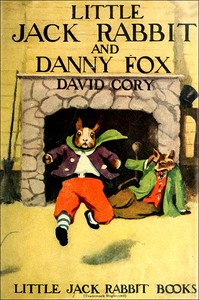
That rainy afternoon, the Mercer Boys’ Cruise in the Lassie had me noticing how plainly Wyckoff wrote dialogue, each line a simple push forward. Oddly, that spareness stayed with me, and I wandered into a gentler sort of tale with Little Jack Rabbit and Danny Fox — A Reader’s Guide, where the sly fox’s words felt just as unadorned, though softer around the edges. One book led to the next, quietly.
Use these questions to collect your thoughts before moving on.