About 225 minutes
Dick Kent, Fur Trader — Themes and Context
Fairy Moral Tales
51,733 recorded words. 17 minutes difference from this book's estimate.
View Gutenberg source #52207
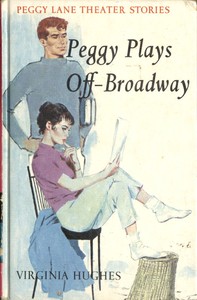
The source record for Peggy Plays Off-Broadway — A Closer Reading measures this digital text at 47,790 words, 3 hr 28 min estimated reading time, and 7 detected text sections.
The text analysis averages about 14.9 words per sentence, while the detected sections provide another way to judge how the source is divided.
Project Gutenberg metadata also associates the work with “Mystery and detective stories,” connecting these edition facts with the source record’s subject description.
Explore this collection
These alternatives are selected using recorded categories and estimated reading time.
About 225 minutes
Fairy Moral Tales
51,733 recorded words. 17 minutes difference from this book's estimate.
View Gutenberg source #52207About 189 minutes
Fairy Moral Tales
43,297 recorded words. 19 minutes difference from this book's estimate.
View Gutenberg source #53695About 232 minutes
Fairy Moral Tales
53,287 recorded words. 24 minutes difference from this book's estimate.
View Gutenberg source #55213Search stored excerpts and compare books → Choose by your preferences →
Choices use stored catalog measurements. Estimates vary with reading speed. A shared category is a catalog label, not a claim that two books have the same argument or literary quality.
Search reads excerpt text stored with this catalog and links to its associated Gutenberg record. The connection is stored in the site database; this tool does not recheck that every excerpt is word-for-word identical to that external record. Excerpt search does not cover every chapter and does not verify historical publication dates.
Catalog snapshot checked: 2026-09-26. Coverage: 90 public books, 90 available source excerpts.
Calculated from edition completeness, EPUB availability, text structure and catalogue metadata. Not a user rating.
Total of 100 points, scaled to a 2.5-5.0 range. Editions with an empty description or a missing EPUB file are not scored.
Public-domain source text
The source text is kept in the dedicated reader, separate from this catalogue record and its commentary.
Virginia Hughes builds Peggy Plays Off-Broadway around a series of tightly scheduled episodes, each governed by a countdown—casting calls, rehearsals, surprise parties—that keeps the narrative moving at a brisk, theatrical pace. The opening chapter, “Cast Call,” immediately establishes this rhythm: Peggy notes that “with only nine roles to be filled” and “fifty or more actresses and actors” vying for them, the pressure is both professional and personal. The story’s structure mirrors the production process itself, moving from auditions to readings to backstage maneuvering, with each section advancing a specific logistical hurdle.
Hughes repeatedly places her characters in spaces defined by waiting: the milling crowd of actors outside the audition room, the folding chairs where hopefuls sit “trying to read,” the restaurant booth where Peggy and her friends plan a surprise party. These settings are not merely backdrops but active constraints. In the first chapter, Peggy’s observation that “most of them just haven’t got a chance” is delivered while she herself is among the waiting, blurring the line between observer and participant. The author uses these interstitial moments to advance both plot and character: Peggy’s reflections on Mallory Seton’s fairness and Randy Brewster’s complicated feelings emerge not during action but during lulls. The waiting spaces become psychological arenas where anxieties about talent, friendship, and fairness are aired.
The excerpts are punctuated by explicit deadlines: “We’re on a tight time schedule,” Greta announces, and the girls must finish shopping “before the stores on Twenty-third Street close.” Hughes structures scenes around countdowns—the party must be set up by ten o’clock, the bakery run must happen after the party shop closes. This temporal pressure gives the domestic planning scenes the same urgency as the theatrical ones. Even the surprise party for Paula is framed as a race against the rehearsal schedule. The author uses clocks and schedules not as mere props but as structural devices that link the professional and personal spheres, suggesting that off-stage life in this world is as rigorously timed as a performance.
The narrative shuttles between three distinct types of locations: the theater (audition room, rehearsal space), commercial establishments (restaurants, party shops, delicatessens), and private apartments (Peggy’s shared home, Paula’s “cold and unlived-in” apartment). Each transition requires negotiation—permission from a superintendent, a key, a plan to “miss rehearsal tonight.” Hughes pays close attention to the logistics of moving characters through New York: the girls “hurried uptown the few blocks to Twenty-third Street,” and the shopkeeper “agreed to stay open a few minutes more.” These details ground the story in a specific urban geography where every errand is a small production. The private apartment, in particular, becomes a stage for transformation, as Peggy and Amy aim to make Paula’s space “cheerful, even if it’s just for an evening.”
Hughes returns to acts of enumeration throughout the excerpts. The opening paragraph tallies “fifty or more actresses” against “nine roles.” Later, the party planning involves counting contributors: “you can tell me how many of the cast members chipped in, and we can put a candle on the cake for every friend Paula has.” The author uses numbers to measure both scarcity (roles, time, money) and abundance (friendship, effort). Even the physical decorations are quantified: “some paper napkins” and “crepe paper and candles and silly decorations.” This habit of counting reflects Peggy’s analytical mind—she is constantly assessing odds, resources, and relationships. The numbers never become overwhelming; instead, they give the story a concrete, almost bookkeeping texture that contrasts with the emotional stakes.
Readers attentive to structure will notice how Hughes uses the physical details of theater production—casting calls, rehearsal schedules, backstage logistics—as a framework for exploring friendship and ambition. The story’s movement between public and private spaces, its reliance on deadlines, and its habit of counting all reinforce the idea that both art and personal relationships require careful staging. The excerpts offer a clear sense of the novel’s method without revealing its full arc, making this a useful entry point for discussing how mid-century children’s fiction dramatized professional worlds.
Reading how Peggy’s fragmented rehearsals hinge on cramped lobbies and ticking clocks, I thought of my own school-play nerves, soothed once by a dusty corner of the library. Peggy Plays Off-Broadway feels like that hush. The same gentle relief came from The Girl Scouts at Miss Allen's School — Background and Themes, where friendship quietly outlasted every logistical snag.
A brief reflection can help important ideas stay with you longer.