About 239 minutes
The Mercer Boys' Cruise in the Lassie — Key Ideas to Explore
Fairy Moral Tales
54,934 recorded words. 8 minutes difference from this book's estimate.
View Gutenberg source #55335
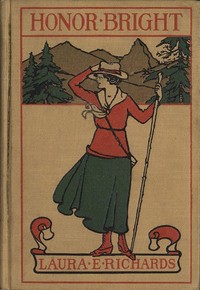
The catalog record for Honor Bright: A Story for Girls — Story, Setting & Ideas provides practical reading context through 56,582 words, 4 hr 7 min estimated reading time, and 42 detected text sections.
The text analysis averages about 12.8 words per sentence, while the detected sections provide another way to judge how the source is divided.
Project Gutenberg metadata also associates the work with “Orphans -- Juvenile fiction,” connecting these edition facts with the source record’s subject description.
Explore this collection
These alternatives are selected using recorded categories and estimated reading time.
About 239 minutes
Fairy Moral Tales
54,934 recorded words. 8 minutes difference from this book's estimate.
View Gutenberg source #55335About 232 minutes
Fairy Moral Tales
53,287 recorded words. 15 minutes difference from this book's estimate.
View Gutenberg source #55213About 225 minutes
Fairy Moral Tales
51,733 recorded words. 22 minutes difference from this book's estimate.
View Gutenberg source #52207Search stored excerpts and compare books → Choose by your preferences →
Choices use stored catalog measurements. Estimates vary with reading speed. A shared category is a catalog label, not a claim that two books have the same argument or literary quality.
Search reads excerpt text stored with this catalog and links to its associated Gutenberg record. The connection is stored in the site database; this tool does not recheck that every excerpt is word-for-word identical to that external record. Excerpt search does not cover every chapter and does not verify historical publication dates.
Catalog snapshot checked: 2026-09-26. Coverage: 90 public books, 90 available source excerpts.
Calculated from edition completeness, EPUB availability, text structure and catalogue metadata. Not a user rating.
Total of 100 points, scaled to a 2.5-5.0 range. Editions with an empty description or a missing EPUB file are not scored.
Public-domain source text
The source text is kept in the dedicated reader, separate from this catalogue record and its commentary.
The opening sentence of Honor Bright is stark: “Honor Bright was twelve years old when her parents died, and left her alone in the world.” The narrator immediately establishes a direct, almost reportorial tone, then softens it with a parenthetical from Soeur Séraphine. This blend of plain statement and gentle commentary recurs throughout the excerpts. The story moves between brisk narration—Honor’s packing, the descent from the châlet—and lingering, sensory passages that slow time, as when Honor says goodbye to her room, naming the carved bedposts Matthew, Mark, Luke, and John. The voice shifts with setting: in the Pension Madeleine it is measured; in the Alps it becomes more colloquial, peppered with French and Swiss-German phrases like Sapperli poppette! and goûter. These changes in pace and language are not decorative; they mirror Honor’s emotional state, quickening with anxiety and slowing with attachment.
The narrative voice in Honor Bright is not uniform. In the Pension Madeleine chapters, the prose is formal and slightly distant: “She was too little to remember the big New York house.” Once Honor reaches the Châlet des Rochers, the dialogue and narration absorb local speech patterns. Gretli’s speech is full of rhetorical questions (“I ask you!”) and French interjections (“hein?”). Zitli uses the exclamation “Sapperli poppette!” and resists calling Honor by her first name, insisting on “Mademoiselle.” These linguistic details do more than add local color; they signal social boundaries and the warmth of the mountain community. The narrator also adopts a playful, ironic tone at times, as when describing Bimbo the goat: “He had the faults of youth, and of his nature.” This variety in voice keeps the reader attuned to shifts in setting and relationship.
Richards controls pace by alternating between brisk action and meditative description. The scene of Honor’s departure from the châlet is compressed: “There was little packing to do… a basket must be packed.” The sentences are short, factual. Then, in the same paragraph, time expands as Honor steals into her room: “How homelike it had grown! how she loved the little bed with its four faces smiling from the posts!” The prose becomes lyrical, with exclamations and a catalog of details—the carvings, the windows, the bare walls. Dialogue also modulates pace. Zitli’s teasing “How then, Mademoiselle? Coming and going, both at once?” provides a moment of lightness before Honor’s tearful confession. The contrast between the swift, almost mechanical packing and the lingering farewell creates an emotional rhythm that underscores Honor’s reluctance to leave.
The excerpts repeatedly foreground naming as a theme. The chapter title “How Honor Found Her New Name” suggests that identity is a central concern. Honor herself insists, “Say ‘Honor,’” when Zitli calls her Mademoiselle, but he refuses. The bedposts are given names—Matthew, Mark, Luke, John—transforming furniture into guardians. Even the goat Bimbo is defended by Gretli with a mock-serious naming of his “faults of youth.” These acts of naming are tied to belonging: Honor is not yet fully accepted into the mountain community, as Zitli’s refusal to use her first name shows. The Swiss setting itself is named repeatedly—Châlet des Rochers, the Alp—as if the landscape must be claimed by language. The narrator’s habit of inserting parenthetical asides (“only, as Soeur Séraphine said”) also functions as a kind of naming, anchoring Honor’s situation in a web of voices.
Readers attentive to language will notice how Richards uses Swiss-French dialect not as mere ornament but as a tool for characterization and pacing. The alternation between formal narration and colloquial dialogue rewards close attention. The excerpts suggest that Honor’s emotional growth is tied to her ability to navigate these different registers. As you read, note how the narrator’s distance or closeness to Honor’s perspective shifts—sometimes observing coolly, sometimes entering her thoughts. This editorial note is based solely on the provided excerpts; the full book may reveal further patterns in voice and tempo.
That rainy afternoon, Honor Bright’s Swiss hills felt almost tangible, her quiet loneliness echoing my own. It made me wonder about other girls finding their footing elsewhere, which is how I stumbled upon The Girl Scouts at Miss Allen's School — Background and Themes. The same gentle warmth was there, a different landscape, the same small courage in belonging.
Build a private reading journal entry for this title.