1

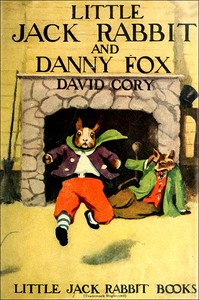
Little Jack Rabbit and Danny Fox — A Reader’s Guide
(6 User reviews)
1024
Project Gutenberg
2016
Not confirmed
Animals -- Juvenile fiction; Rabbits -- Juvenile fiction; Foxes -- Juvenile fiction
Readers of public-domain and historical texts
Project Gutenberg digital edition
en
Edition facts
Words
17,737
Reading time
78 min
Text sections
39
The source record for Little Jack Rabbit and Danny Fox — A Reader’s Guide measures this digital text at 17,737 words, 1 hr 18 min estimated reading time, and 39 detected text sections.
The text analysis averages about 16.0 words per sentence, while the detected sections provide another way to judge how the source is divided.
Project Gutenberg metadata also associates the work with “Animals -- Juvenile fiction,” connecting these edition facts with the source record’s subject description.
Source:
Project Gutenberg record #52905
This editorial note examines how David Cory's story uses repeated spatial patterns—burrow, bramble, meadow, snow—and a rhythmic structure of chase and refuge to build tension in a woodland world where every exit is a risk.
Editorial Edition Score
4.7/5
★★★★★
★★★★★
Calculated from edition completeness, EPUB availability, text structure and catalogue metadata. Not a user rating.
How this score is calculated
- Description quality20 pts
- Title & short description10 pts
- Source metadata20 pts
- Text length15 pts
- Chapters / structure15 pts
- EPUB file integrity20 pts
Total of 100 points, scaled to a 2.5-5.0 range. Editions with an empty description or a missing EPUB file are not scored.
Edition quality
Read the Text
careful,” crowed Cocky Doodle.
Just then the Farmer’s Wife came out of the kitchen door.
“Sure enough,” she said, walking around to the rear of the Big Red Barn where Danny Fox had been the night before.
“He tried to get in there,” said the Farmer, pointing to the hole in the boards which led to Mr. Longtooth’s house. “I guess I’ll nail a board over it,” and he went over to the Toolhouse for a hammer and nails.
“I wish Danny Fox had stayed away,” said Mr. Longtooth Rat when he heard what the Farmer meant to do. “I won’t have any front door in a few minutes just on account of that thieving old fox.”
Then Mr. Longtooth Rat scowled and grumbled some more, forgetting what a thief he was and how willing he had been to open the Henhouse door for Danny Fox.
Yes, sir! When people are willing to help others steal it is because they are stealing things for themselves.
It is a sin to steal a pin, A chicken or a goose. So keep that fox home in his box. Oh, pray, don’t let him loose.
That evening Mrs. Fox said to Danny Fox as he started off for the Old Farm Yard:
“Be sure, my dear, to bring home a chicken.”
“Bring back two,” cried Bushytail and Slyboots, as their father trotted away in the bright moonlight.
It was very still and quiet; only the rustle of the dry leaves on the trees broke the stillness as the old fox ran swiftly down the hillside over to the Shady Forest. At last he came to the Old Farm Yard. Stealing around to the rear of the Big Red Barn, he looked up and down, from one side to the other, but where was Mr. Longtooth Rat’s front door?
“Can I have made a mistake?” said Danny Fox, creeping around the corner. But there was no hole there, either. Danny Fox was puzzled. Yes, indeed, he certainly was puzzled. It was only last night that he had been here, and now, where was the entrance to Mr. Rat’s house?
He was just about to leave when he heard Mr. Longtooth Rat’s voice. It came from the other side of the wall.
“Yes, my dear,” Mr. Longtooth Rat was saying to his wife, “we have lost our front door, and all on account of that old thieving Danny Fox.”
“Be careful what you say about me,” snarled Danny Fox, pressing his nose close to the boards.
“Be careful of what, you old red robber?” squeaked Mr. Longtooth Rat. “You’d better be careful!”
Goodness me! No sooner had he spoken than something snapped under Danny Fox’s foot. Danny Fox was caught. Yes, sir, his foot was caught in a trap. Pull as hard as he could, he couldn’t get it out.
What would Mrs. Fox think when he didn’t come home? What would Bushytail and Slyboots say when there was no Daddy Fox at breakfast?
He pulled and tugged. But, oh dear me. He couldn’t get his foot out. Slowly the night passed, and Cocky Doodle sang his early morning “Cock-a-doodle-do.”
Betsy the Old Gray Mare whinnied in her stall and Cocky Doodle sang over again his “cock-a-doodle-do.” Mr. Merry Sun got out of bed and began to climb up the sky. It grew lighter and pretty soon Henny Penny cackled over her new-laid egg.
Danny Fox gave another tug. Then he looked carefully at the trap. In the dim light he made out a rope fastened to the barn. The next moment Danny Fox was gnawing that rope as fast as he could. At last it broke and he hobbled away, holding up his right forepaw, which was still fast in the iron jaws of the trap.
It took him a long time to reach home. You see, he had only three legs to walk on. His foot hurt him dreadfully, and his leg grew tired holding up the heavy trap. At last, when he came to his den, he was ready to drop.
Now, as soon as Mrs. Fox had looked the trap over carefully, she knew she never could force apart the strong iron jaws that held Danny Fox’s poor foot, but she did think there might be some other way.
The trap was very old and the spring rusty, and the more Mrs. Fox looked at it the more hopeful she became.
“Bring me a stone, Slyboots,” she cried. Carefully placing part of the trap on the front doorstep, she hit the old spring several hard blows. Crack! it went, and the trap fell apart. Danny Fox pulled out his foot without any trouble at all.
From the opening page, David Cory establishes a world defined by thresholds. Little Jack Rabbit looks out from his house in the Old Bramble Patch and sees Danny Fox peeking from behind the Big Chestnut Tree. The scene immediately sets up a pattern of surveillance and concealment that runs through the entire book. Characters are constantly watching, peeping, or hiding—the burrow entrance, the kitchen door, the edge of the patch. Movement between inside and outside is the central drama, and Cory marks each transition with a careful description of who sees whom and from where.
The Burrow as Stage and Sanctuary
The Rabbit family’s home is not just a setting but an active element in the story’s structure. Cory repeatedly brings action back to the burrow, using it as a place of safety, planning, and domestic routine. Mrs. Rabbit stands watch at the kitchen door while Little Jack watches the front; later, the kitchen becomes a warm refuge where Timmy Meadowmouse receives a piece of carrot. The burrow’s interior is described with specific details—a peg for Mr. Rabbit’s fur cap, a pink gingham apron—that ground the fantasy in a recognizable home. Yet safety is never guaranteed: even inside, the family is alert, and Timmy’s nightmare proves that fear follows the characters past the threshold.
Chase and Counter-Chase: The Rhythm of Pursuit
Cory structures the narrative as a series of chases, escapes, and near-misses. Danny Fox is a persistent threat, and the rabbits respond with a repertoire of defensive moves: bolting doors, keeping lookout, digging tunnels. The chase scenes are economical but vivid, often ending with a character gasping for breath. The rhythm is predictable enough to build suspense—readers know Danny Fox will reappear—but varied by the setting: a chase across the Sunny Meadow differs from one in the snow. Cory also uses the chase to introduce allies like Teddy Turtle and Timmy Meadowmouse, who each contribute a new tactic or perspective on evasion.
Snow, Tunnels, and the Changing Landscape
As the story progresses, winter transforms the meadow. Snow covers familiar paths, and characters must adapt. Timmy Meadowmouse’s attempt to tunnel home from the Old Bramble Patch is a key episode: it literalizes the theme of hidden passage and safe return. Cory describes the burrowing with physical precision—mouth full of snow, the advice not to go too far—and the tunnel becomes a fragile link between two safe zones. The snow also alters visibility: tracks are left, hiding places are buried, and the cold adds urgency. The landscape is not a backdrop but an active constraint that shapes every decision.
Repetition and Variation in Dialogue and Song
Cory uses repeated phrases and short songs to create a rhythmic, almost folkloric texture. Mr. Rabbit sings a verse about chickens staying in the henhouse and bunnies not going far in the snow, reinforcing the theme of staying put. Characters often echo warnings: “Don’t go too far,” “Keep a bright lookout.” These repetitions give the story a patterned, oral quality suitable for young readers. At the same time, Cory varies the formula—sometimes the warning is heeded, sometimes ignored—so that the pattern does not become mechanical. The songs also serve as mnemonic devices, marking moments of relative calm before the next threat.
Readers will notice that Cory rarely lets a character move without explaining the spatial logic: who can see whom, how far the distance is, what obstacles lie between. Paying attention to these details reveals a carefully constructed geography of danger and refuge. The book rewards a slow reading that tracks each character’s position relative to the Old Bramble Patch, the Big Chestnut Tree, and the burrow’s doors. The tension lies not in whether the rabbits will escape—the series format assures they will—but in how they will navigate the next crossing of open ground.
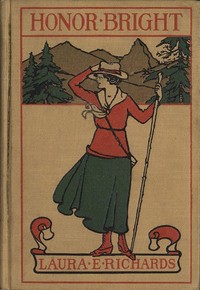
Reading about Little Jack Rabbit’s burrow makes me think of winters at my grandmother’s house, the same safe rooms always closing in. That feeling of space shrinking yet holding me—I found it once in Honor Bright: A Story for Girls — Story, Setting & Ideas, where a girl’s quiet corner becomes her whole world. Such stillness can feel like freedom.
There are no comments for this eBook.
Reader reflection
How did this book work for you?
Your answers remain private and are stored only in this browser.
Your progress
0
/
10
2
What was your overall reaction to the book?
3
Would you encourage someone else to read it?
4
How much effort did this book require?
5
How original did the book feel?
6
What did you think about the pace?
7
Is this a title worth rereading?
8
How did the reading compare with what you expected?
9
In one sentence, what did you learn?
10





Jack Moore
1 month ago