1

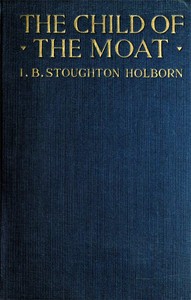
The Child of the Moat: A Story for Girls. 1557 A.D. — A Closer Reading
(8 User reviews)
1069
Project Gutenberg
2016
Not confirmed
Adventure stories; Girls -- Juvenile fiction; Great Britain -- History -- Mary I, 1553-1558 -- Juvenile fiction
Readers of public-domain and historical texts
Project Gutenberg digital edition
en
Edition facts
Words
117,663
Reading time
512 min
Text sections
36
This digital edition of The Child of the Moat: A Story for Girls. 1557 A.D. — A Closer Reading is described by source-level measurements including 117,663 words, 8 hr 32 min estimated reading time, and 36 detected text sections.
The text analysis averages about 18.2 words per sentence, while the detected sections provide another way to judge how the source is divided.
Project Gutenberg metadata also associates the work with “Adventure stories,” connecting these edition facts with the source record’s subject description.
Source:
Project Gutenberg record #53281
A 1906 children's adventure set in 1557 Yorkshire, following a girl's perilous exploits amid religious persecution. The narrative shifts from a gruesome prologue to fast-paced episodes of escape, disguise, and rescue, with a distinctive authorial voice that addresses readers directly and varies sentence rhythm to match tension.
Editorial Edition Score
4.9/5
★★★★★
★★★★★
Calculated from edition completeness, EPUB availability, text structure and catalogue metadata. Not a user rating.
How this score is calculated
- Description quality20 pts
- Title & short description10 pts
- Source metadata20 pts
- Text length15 pts
- Chapters / structure15 pts
- EPUB file integrity20 pts
Total of 100 points, scaled to a 2.5-5.0 range. Editions with an empty description or a missing EPUB file are not scored.
Edition quality
Read the Text
ours. You did not think I would be holding your thigh-bone these forty years after!
“Ha! you loved me, did you? I was a pretty lass then. Yes, you loved me, I know you loved me. You would have died for me, and I loved you, too. But little Sarah loved you and you loved her. I know you loved me most, but I would not have that. ‘I should have controlled myself,’ you say; ha! I was jealous and I hated you. Self-control and love;--no, no, liberty and hate, liberty and hate; and when you were ill I came to see you and I saw the love-light in your eyes. They thought you would get well. Of course you would have got well; but there you were, great big, strong man, weak as a child,--a child! I hate children. Was that it? You tried to push my hands off, as I pressed the pillow on your face, you tried; oh, you tried hard, and I laugh to think of it even now. How I longed to bury my fingers in your throat, but I knew they would leave marks.
“Yes, liberty and hate, ha! ha! I would do it again. See, Oswald!” and she took the brittle bone and viciously snapped it across her knee. “Self-control! love! unselfishness! Never! And that child up at the Hall, Oswald, I must send her after you. I have just frightened Sarah down to you. You can have her now, and that child shall come next. Hate is stronger than love. Liberty, self-will and hate must win in the end.”
The abandoned old wretch stood up and took her stick--she could not stand quite straight--and hobbled with uncanny swiftness across to a newly made child’s grave and began to scrape with her hands; but at that moment she heard the night-watchman coming along the lane; so she rose and walked back to Newbiggin, where she lived.
She opened the door and found the tinder box and struck a light, and then went to a corner where there was an old chest. She unlocked it and peered in and lifted out a bag and shook it. It was full of gold. “Yes,” she said, “money is a good thing, too. How little they know what ‘old Moll o’ the graves’ has got,--old, indeed, Moll is not old! Ah, could not that money tell some strange tales? Love and learning and self-control! Leave all that to the priests. Hate will do for me,--money and liberty are my gods.
“Aha, Aline Gillespie, you little fool, what do you mean by crossing my path? I was a pretty little girl once and you are not going to win the love of Upper Teesdale folk for nothing, I’ll warrant you.”
“I am so tired of this rain,” said Audry, as she rose and crossed the solar[1] and went to the tall bay window with its many mullions and sat down on the window seat. “It is three days since we have been able to get out and no one has seen the top of Mickle Fell for a week. The gale is enough to deafen one,” she added, “while the moat is like a stormy sea,--and just look at the mad dancers in the rain-rings on the water!”
[1] The predecessor of the withdrawing room or drawing room.
It was a terrible day, the river was in spate[2] indeed, carrying down great trees and broken fences and even, now and then, some unfortunate beast that had been swept away in the violence of the storm.
“The High Force must be a wonderful sight though,” she continued, “the two falls must be practically one in all this deluge.”
“I do not altogether mind the rain,” said her little friend; “there is something wonderful about it and I always rather like the sound of the wind; it has a nice eerie suggestion, and makes me think of delightful stories of fairies and goblins and strange adventures.”
“Well, that may be all right for you, Aline, because you can tell magnificent stories yourself; but I cannot, and it only makes me feel creepy and the rain annoys me because I cannot go out. I wish that we had adventures ourselves, but of course nothing exciting ever happens to us.”
“They probably would not really be nice if they did happen. These things are better to read about than to experience.”
The author opens with a defiant preface: “Children like the horrors first and the end all bright.” True to this promise, Chapter I is titled “Hate” and begins with a poem addressed to “sweet children of demurest air,” immediately establishing a direct, almost conspiratorial relationship with the reader. The narrative voice is distinctive—sometimes lyrical, sometimes blunt—and it shifts abruptly between interior monologue and brisk action. In one excerpt, the protagonist Ian disguises himself by pulling out half his eyebrows and the hair above his forehead, a small but telling detail that grounds the story in physical, tangible choices rather than mere plot convenience. The prose moves from brooding sentences like “the strange feeling that had possessed him ever since the day that Aline had talked about it in the secret room” to clipped, urgent dialogue: “From the left,” said his companion, “the one with the dripstone half off.”
A Prologue That Sets the Tone
The book’s structure is unusual for a children’s story: a single chapter called “Hate” serves as a prologue, and the author warns that grown-ups may skip it. This opening is deliberately gruesome, establishing a world where danger is immediate and moral lines are blurred. The chapter titles themselves trace an emotional arc—from “Hate” through “Secrets,” “Hate and Love,” “Bitterness,” “Death,” “Remorse,” to “The Judgment”—suggesting that the narrative is as concerned with psychological states as with external events. The pacing in these early chapters is slow, weighted by introspection and atmospheric description, before accelerating into the rescue sequences later in the book. Readers should note that the prologue is not representative of the entire work’s tone; it functions as a dark overture that makes the subsequent adventures feel earned.
Disguise, Surveillance, and the Rhythm of Suspense
In the excerpt where Ian attempts to locate the imprisoned Wilfred, the prose shifts into a careful, almost procedural mode. Ian disguises himself, gossips at hostels, and extracts information through casual remarks: “I may as well stretch my legs,” he says, before steering a farm hand past the grange. The author uses short, declarative sentences to convey Ian’s calculations—“He did not dare to linger, but he cautiously inspected the situation”—and then lengthens them when describing the physical obstacles: a moat, an unclimbable elm, a rope from a bed. This alternation between terse action and detailed description creates a rhythm that mirrors Ian’s own tension. The narrative voice remains coolly analytical even in moments of high stakes, which gives the reader the sense of observing a clever, methodical mind at work.
The Texture of 1557: Objects, Spaces, and Historical Specificity
The book includes a floor plan of “Hall Holwick, Yorkshire,” with labeled rooms such as the Solar, Buttery, and Pantry, and a note that the scale is inverted because the approach is from the north. This attention to architectural detail extends into the prose: characters move through spaces defined by moats, battlements, dripstones, and secret rooms. The historical setting is not merely decorative; it shapes the plot. Religious persecution under Mary I is a given, and the characters’ actions are constrained by the physical realities of a 16th-century manor—narrow windows, unclimbable trees, rope beds that can be repurposed. The author does not explain these details; he trusts the reader to absorb them through context. For instance, the phrase “the one with the dripstone half off” identifies a window without elaboration, treating the architecture as a shared language between narrator and audience.
Because the excerpts cover only the early and middle portions of the story, readers should be alert to how the narrative voice evolves across the full thirty chapters. The author’s habit of addressing the reader directly and varying sentence length to match mood is consistent, but the pacing may shift again in later sections. Pay attention to the way physical objects—a rope, a tree, a moat—recur as both practical tools and symbolic anchors. The floor plan is worth consulting; it is not a gimmick but a key to understanding the characters’ movements and the spatial logic of their world.
That rainy afternoon, I finished The Child of the Moat and lingered on how its heroine kept her calm in narrow escapes, always watchful for the next voice. Later, flipping through a forgotten shelf, I found The Turning of the Tide; Or, Radcliffe Rich and His Patients — Key Ideas to Explore, and that same quiet vigilance echoed there, in quieter rooms.
James Brown
1 month agoCamila Perez
3 weeks ago-

Kathryn Ferguson - 1 month ago
{'rating': 2, 'text': "While the setting is well-researched, the plot lacks momentum for much of the book. The heroine's voice is earnest but occasionally preachy, and the conflict is resolved too conveniently. The title suggests more mystery than is actually delivered. With more editing and tighter pacing, this could have been a standout, but as is, it feels like a missed opportunity for a truly engaging historical adventure."} -
Nicholas Daniel - 1 month ago
{'rating': 5, 'text': "This historical gem transported me straight to 1557 England, where young Constance navigates the moat's mystery with courage and heart. The richly drawn setting and authentic voice make every page feel alive, while the moral lessons woven into the plot remain relevant today. A perfect read for girls who crave adventure wrapped in history—and for parents who want wholesome literature that inspires. I couldn't put it down and have already recommended it to my daughter and her book club."} -
Steven Wright - 3 weeks ago
{'rating': 3, 'text': 'An intriguing premise with a delightful protagonist, though the pacing sometimes lags in the middle. The historical details are superb, and the story offers a meaningful perspective on duty and friendship. However, the resolution feels a bit rushed, leaving some subplots unexplored. A solid read for young historical fiction fans, but it may not hold the attention of those seeking faster action.'}
Reader reflection
How will you remember this book?
Save your reaction, strongest insight, and memorable passage.
Your progress
0
/
10
2
Did this book hold your interest?
3
How likely are you to recommend this book?
4
How easy was the book to follow?
5
Which part made the strongest impression?
6
How well did it match your expectations?
7
How useful were the ideas in this book?
8
How would you describe its reading pace?
9
Which lesson or insight stayed with you?
10







Grace Nelson
1 month ago