1

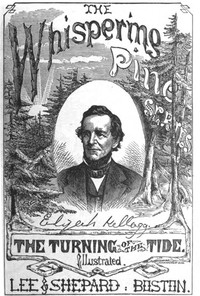
The Turning of the Tide; Or, Radcliffe Rich and His Patients — Key Ideas to Explore
(6 User reviews)
1415
Project Gutenberg
2017
Not confirmed
Conduct of life -- Juvenile fiction; Frontier and pioneer life -- Juvenile fiction; Youth -- Conduct of life -- Juvenile fiction; Success -- Juvenile fiction; Blacksmiths -- Juvenile fiction; Laziness -- Juvenile fiction
Readers of public-domain and historical texts
Project Gutenberg digital edition
en
Edition facts
Words
68,967
Reading time
300 min
Text sections
7
The source record for The Turning of the Tide; Or, Radcliffe Rich and His Patients — Key Ideas to Explore measures this digital text at 68,967 words, 5 hr estimated reading time, and 7 detected text sections.
The text analysis averages about 21.6 words per sentence, while the detected sections provide another way to judge how the source is divided.
Project Gutenberg metadata also associates the work with “Conduct of life -- Juvenile fiction,” connecting these edition facts with the source record’s subject description.
Source:
Project Gutenberg record #54772
Elijah Kellogg's 1873 novel follows Radcliffe Rich, a young man whose invention of a hog-sty that fattens hogs without corn sparks local gossip. The narrative shifts between frontier blacksmithing, college life, and the Richardsons' rise, with a preface arguing that adversity forges character like Dannemora iron.
Editorial Edition Score
4.7/5
★★★★★
★★★★★
Calculated from edition completeness, EPUB availability, text structure and catalogue metadata. Not a user rating.
How this score is calculated
- Description quality20 pts
- Title & short description10 pts
- Source metadata20 pts
- Text length15 pts
- Chapters / structure15 pts
- EPUB file integrity20 pts
Total of 100 points, scaled to a 2.5-5.0 range. Editions with an empty description or a missing EPUB file are not scored.
Edition quality
Read the Text
PAGE THE SMITH OF THE WILDERNESS. 9
EXPERIENCE THE BEST TEACHER. 31
DREW SORE AND SAVAGE. 51
PATIENT, BUT DETERMINED. 63
HE FINDS THE CLUE. 78
A TRADE THE BEST INHERITANCE. 101
A STRIKING CONTRAST. 134
DID NOT COME TO SEE THE WRECK. 142
MORTON'S BUSINESS. 150
WINNING GOLDEN OPINIONS. 160
HOW DAN TOOK HIS MEDICINE. 170
PERIL OF BEING OUT EVENINGS. 180
THE YOUNG SAMARITANS. 192
DAN WANTS TO KNOW HIMSELF. 205
DAN TRAPS LARGE GAME. 214
GOES FOR WOOL, AND GETS SHORN. 222
PROGRESS AND PREJUDICE. 231
SUITING MEANS TO ENDS. 244
THE TURN OF THE TIDE. 260
THE TURNING OF THE TIDE.
THE SMITH OF THE WILDERNESS.
With Rich, the chum and friend of Morton, and who, animated by the contagion of a noble example, became his rival in rank as a scholar and in all athletic sports, his companion in labor, and between whom, though neck and neck in the pursuit of those college honors that each most highly prized, there was never a shadow of jealousy or distrust, while their sympathies met and mingled like fibres of a kindred root, drawing their nutriment from a common soil,--with Rich, refined in all his tastes, of delicate sensibilities, and a playful humor that never stung, sunny tempered, generous, companionable, yet firm in principle as a granite shaft, and whom all Radcliffe idolized, our constant readers are already well acquainted; but the exigencies of this story, and the necessity of imparting information both to them and others, render it imperative that we should speak more definitely respecting his family and home life, to which we have heretofore barely alluded; indeed, we are not aware that we have ever distinguished him by any other name than that of Richardson, and much more frequently made use of the college term, Rich.
His grandfather, with ten other young married men, first broke ground in our hero's native town, then a wilderness, and built their camps on the borders of a stream heavily timbered, soon after the formation of the federal government with Washington as president. They were, with a single exception, poor, having taken up their abode in the wilderness because they wanted a home, and could buy the wild land for ten cents per acre. Full of enterprise, and strong in limb, this little community felt themselves equal to the struggle. They had as yet neither sawmill nor gristmill, though a noble stream fell over the rocks close to their doors, but pounded the corn they raised on burns in large mortars, or went in canoes eleven miles to mill, to a village farther down the stream, where they likewise procured salt. There were neither roads nor horses in the clearing, and at first everything was brought through the woods, in the winter on men's shoulders, walking on snow-shoes, and in summer in canoes or on rafts up the river.
They were accustomed to put the grain and corn belonging to several neighbors into a large canoe, and thus take it down the river to the mill. At length a road was spotted through the woods to the village--that is, a piece of bark and wood was taken off the side of trees with an axe, for a guide to the traveler. The path was crooked, going through those portions of the forest that were thinnest, and winding around obstacles. Occasionally a tree that stood very much in the way was cut, and a log flung across some gully, brook, or mire.
In the early part of winter, when the brooks and swamps were frozen, and the snow deep enough to cover, in some measure, the windfalls, and fill the ravines, and at other times in the latter part of it, when the crust would bear light cattle, they went through the woods with oxen to mill, improved the occasion to obtain articles of absolute necessity, and whenever their stock of bread-stuff fell short, had recourse to the mortar.
At first it was a bitter struggle for existence; the land was covered with a dense forest, and there was neither pasture for cattle in the summer, nor hay to keep them through the winter. In this condition of things, they managed to keep a few cattle by cutting the wild grass that grew in the swamp and along the banks of the river, and felling yellow birch and maple trees in summer for browse. By dint of patient labor, their circumstances improved from year to year; more land was cleared, their stock of cattle increased with the increase of hay and pasture, and they began to keep sheep and horses, to make staves and shingles, cut logs and drive them down the river in spring, and beech withes to bind loads and rafts were exchanged for chains.
The preface of Elijah Kellogg's 1873 novel opens with a professor's assertion that "every person is as lazy as he can be," setting a moral tone that frames the story as a test of character under pressure. The narrative voice that follows is brisk and colloquial, often dipping into the vernacular of rural Maine—as when a local asks the stranger if he is "sparkin' one of the gals" or marvels at a "hog-sty that will fat hogs without corn." These exchanges reveal a community quick to gossip and slow to trust, while the author's own commentary, such as comparing a manly spirit to "Dannemora iron" that defies the furnace, gives the prose a homiletic edge.
The Colloquial Register and Its Effects
The dialogue in the excerpts is marked by regional idioms and a deliberate plainness. When a stranger tells a local he has invented a hog-sty that will fat hogs without corn, the reply is "Massy sakes!"—a contraction that signals both surprise and skepticism. Such phrases are not mere decoration; they establish the setting as a frontier community where directness is valued and pretension is mocked. The narrator, however, shifts between this earthy speech and a more formal, almost sermonizing tone, especially in the preface and in passages describing the Richardsons' industry. This alternation creates a rhythm that mirrors the book's thematic tension between laziness and productive labor.
Pace and the Rhythm of Work
The pacing of the narrative accelerates noticeably when describing the Richardsons' blacksmith shop. Sentences grow longer and more detailed, listing the tools and tasks: "new mill-chains, dogs, hooks, bands, bolts, and pintles were to be made." The prose becomes a catalog of labor, as if the act of listing itself conveys the energy of the forge. In contrast, the opening scenes of gossip and travel are more leisurely, with dialogue that meanders. This shift in pace is not accidental; it underscores the book's argument that focused work transforms both character and circumstance. The reader feels the quickening pulse of the shop as orders pour in, a tempo that stands in deliberate opposition to the lazy talk of the town.
Recurring Details and Their Weight
Certain objects and phrases recur with enough frequency to become motifs. The hog-sty invention is mentioned twice in the excerpts—once in the stranger's boast and again in the gossip that spreads "all over town." The repetition emphasizes how a single odd claim can shape a community's perception. Similarly, the Richardsons' tools—axes, mill-chains, anvils—are named repeatedly, grounding the story in the material world of blacksmithing. Even the phrase "Dannemora iron" from the preface echoes later in the description of the shop's new forges, linking the abstract idea of tempered character to the literal forging of metal. These details give the narrative a tactile weight, reminding the reader that this is a world where things are made and reputations are hammered out.
Readers attentive to Kellogg's handling of voice will notice how the narrator's own judgments—often delivered in asides—color the story without fully controlling it. The gossip about Rich's hog-sty, for instance, is reported with a wry detachment that leaves room for the reader to gauge the townspeople's credulity. Paying attention to who speaks formally and who speaks plainly can reveal the social hierarchies the novel both reinforces and questions. The book rewards a slow reading that savors the cadence of its dialogue and the weight of its physical descriptions.
That rainy afternoon, Kellogg’s Turning of the Tide lingered on how stubborn work—like Dannemora iron—shapes a quiet soul. I closed it feeling the forge’s heat, then wandered accidentally to Honor Bright: A Story for Girls — Story, Setting & Ideas, whose softer trials felt like embers cooling into something just as true.
There are no comments for this eBook.
Reader reflection
What was your reading experience?
Capture what you thought, learned, and would like to remember.
Your progress
0
/
10
2
Was reading this book enjoyable?
3
How likely are you to recommend this book?
4
How much effort did this book require?
5
How distinctive were its ideas or approach?
6
Did any part of the book feel personally relevant?
7
What did you appreciate most?
8
How useful did the reading feel?
9
In one sentence, what did you learn?
10








Grayson Flores
1 month ago