1

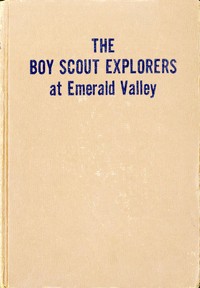
Boy Scout Explorers at Emerald Valley — Story, Setting & Ideas
(6 User reviews)
990
Project Gutenberg
2020
Not confirmed
Explorers (Boy Scouts) -- Juvenile fiction; Colombia -- Juvenile fiction; Emerald mines and mining -- Juvenile fiction
Readers of public-domain and historical texts
Project Gutenberg digital edition
en
Edition facts
Words
46,640
Reading time
203 min
Text sections
8
The catalog record for Boy Scout Explorers at Emerald Valley — Story, Setting & Ideas provides practical reading context through 46,640 words, 3 hr 23 min estimated reading time, and 8 detected text sections.
The text analysis averages about 10.3 words per sentence, while the detected sections provide another way to judge how the source is divided.
Project Gutenberg metadata also associates the work with “Explorers (Boy Scouts) -- Juvenile fiction,” connecting these edition facts with the source record’s subject description.
Source:
Project Gutenberg record #63506
This editorial note examines the narrative voice and pacing in Don Palmer's 1955 Boy Scout adventure, set in Colombia's emerald mines. Observations focus on the shift from domestic observation duty to jungle peril, the use of dialogue for exposition, and the rhythm of action and restraint.
Editorial Edition Score
4.7/5
★★★★★
★★★★★
Calculated from edition completeness, EPUB availability, text structure and catalogue metadata. Not a user rating.
How this score is calculated
- Description quality20 pts
- Title & short description10 pts
- Source metadata20 pts
- Text length15 pts
- Chapters / structure15 pts
- EPUB file integrity20 pts
Total of 100 points, scaled to a 2.5-5.0 range. Editions with an empty description or a missing EPUB file are not scored.
Edition quality
Read the Text
the driver nearly always parked close to the main highway, proceeding through the trees afoot.
Where he went the Scouts never had learned, for foliage blocked their view. But after ten to twenty minutes, he always reappeared and drove away.
“One of these days I’m going to check up on that fellow—” Jack began, but War interrupted.
“Listen!” he exclaimed.
A plane was passing the observation tower, high overhead. Instantly alert, the Scouts determined its altitude and type. Jack went quickly inside to send an aircraft flash message to the filter center.
His telephone contact established, he received the terse “Air Defense, go ahead!”
“Single—multi-jet—very high—” Methodically, Jack went on to complete the message, and hung up immediately after he heard the operator’s clear, “Check, thank you.”
The task completed, he rejoined Warwick on the breezy platform.
“Our relief’s coming,” War remarked, indicating two men who were walking briskly toward the observation tower. “We may as well take off for the Scout meeting.”
After the newcomers had arrived, the Scouts started at a fast pace for the Belton Methodist Church where the meeting of Explorers Post 21 was to be held.
“Step on it,” urged Jack. As crew leader, he made a point of never being tardy for a session.
“I’m practically running now,” Warwick complained, hard pressed to keep up. “What’s the rush? Anything important coming up at tonight’s meeting?”
“We want to talk over that canoe trip to Minnesota. It was postponed when our gang went to Peru instead, but this time it’s all set.”
“I wouldn’t be too sure,” War said pessimistically. “Something may come up. I’ve got one of those dark brown feelings!”
“Oh, you and your feelings!” Jack retorted with a grin.
The pair arrived at the church only three minutes late. Willie Medaugh, a tow-headed youngster of 15, and Ken Dougherty, a serious high school senior, already were in the recreation room which had been fitted up for Scout use.
“Hi!” Jack greeted his friends. “Where’s Hap?” He referred to George (Happy) Livingston, a former FBI man who directed Scout activities in Belton City.
“Not here yet,” replied Ken. “He telephoned that he’d been held up. We’re to go ahead with the meeting. He’ll be along later.”
“See what came for him,” Willie said, pointing to a thick, slightly soiled envelope which had been placed conspicuously on the table. “Mail.”
“Wonder why the letter was delivered here instead of to his office?” Jack commented.
“Because it had no street address,” Willie informed him. “It’s directed it care of the Belton Methodist Church. So the postman brought it here.”
“Get a load of that foreign stamp!” exclaimed War, fingering the envelope. “Colombia!”
“I’m going to ask Hap if I can have it after he’s finished with the letter,” announced Willie, who collected foreign stamps. “Who’d be writing him from South America?”
“Cut out the speculation, and let’s get on with the meeting,” urged Jack. “Shall we start off with the Four Freedoms ceremony? I want to run through it to be sure we have it down pat before we invite our folks to watch.”
Forgetting the letter, the other Explorers settled down to the business of the evening. Willie brought four candles and the American flag which were to be used in the ceremony.
Jack assigned Bob MacDonald, a new organization member to act as narrator. Standing behind the flag, the red-headed youth recited slowly:
“This flag represents the past, the present and the future. The stripes stand for the original thirteen colonies. The stars represent the present states. The Explorers represent the men of tomorrow.”
“That’s fine, only put more feeling into it, Jack advised. Especially that part about Explorers being the men of tomorrow.”
Bob repeated the lines to the satisfaction of the group.
“Well done!” boomed a voice from the doorway. Unobserved, Mr. Livingston had come into the meeting room. He added seriously: “Here in America, the Four Freedoms do exist, but at times we’re inclined to take them for granted.”
“America’s the best country in the world,” declared War. With a quick change of subject, he went on: “Say, Mr. Livingston, a letter came for you! From Columbia!”
The Scout leader accepted the mail, studying both the stamp and the handwriting.
“Aren’t you going to open it?” War demanded impatiently. “Maybe it’s important.”
Mr. Livingston smiled and ripped open the soiled envelope. As he unfolded the closely written pages, a small, hard, cotton-wrapped object dropped to the floor.
Jack stooped to pick it up. His fingers closed over a sizeable green stone. He stared in amazement.
“Look at this!” he exclaimed. “An emerald!”
Don Palmer's Boy Scout Explorers at Emerald Valley opens not in a jungle but atop a Civilian Defense observation tower, where Warwick Washburn yawns over a field glass and complains of monotony. The first chapter establishes a deliberate, almost domestic pace—two hours of scanning for planes, a cemetery road, a mysterious automobile. This slow build contrasts sharply with the later scenes in Colombia, where the narrative accelerates into a series of confrontations: a harsh mine engineer, a forbidden bridge, a bandit named Carlos. The shift in pace mirrors the Scouts' own transition from routine to risk, and Palmer uses dialogue to carry much of the exposition, giving the story a brisk, conversational feel even when describing danger.
From Tower to Jungle: A Shift in Setting and Speed
The opening chapters in Belton City move at a measured, almost leisurely clip. Warwick and Jack trade banter about enemy attacks and past adventures, their voices light and colloquial. Palmer devotes several paragraphs to a single car turning into a cemetery road—a detail that feels almost mundane. Once the action moves to Colombia, the prose tightens. Sentences grow shorter. Dialogue becomes clipped: “Stay in camp!” the engineer orders. “Don’t go wandering around.” The change is not abrupt but cumulative, as the Scouts encounter locked desks, suspicious widows, and armed workmen. The pace quickens not through action alone but through a compression of time and space—each scene now carries a threat.
Dialogue as Engine and Character
Palmer relies heavily on spoken exchange to advance the plot and reveal character. Jack’s cheerful “Our work is needed here” contrasts with War’s restless “I sure wish a little excitement would come our way again.” Later, in Colombia, the dialogue becomes a tool of tension: Mr. Livingston’s cautious “I’m not convinced that Corning is dead” is met with Ken’s pragmatic “What’s more, if we did succeed in finding it, we’d be no match for Carlos.” The characters’ voices remain distinct—Jack impulsive, War eager, Mr. Livingston measured—and their conversations often double as planning sessions. This technique keeps the narrative moving without lengthy descriptive passages, though it occasionally sacrifices atmosphere for efficiency.
Restraint and Repetition in the Narrative Voice
Despite the adventure genre, Palmer’s narrator exercises notable restraint. Physical descriptions are sparse: the mine pit is simply “a deep but swift flowing stream,” the log bridge “precarious.” Emotional states are implied through action rather than stated—Jack “nearly lost his balance” when startled, but his fear is not named. The narrator also repeats certain patterns: characters are repeatedly told to stay put, to not talk to workmen, to not cross the river. These restrictions create a rhythm of prohibition and transgression that drives the middle chapters. The voice remains neutral, almost reportorial, which makes the occasional outburst—like Rhodes’s harsh “You are not to talk to the workmen”—land with greater force.
Readers may find it useful to track how often the Scouts are told to stay in one place—and how often they ignore the order. Palmer’s narrative rewards attention to these small acts of defiance, which accumulate into the larger adventure. The book’s pace is not uniform; it accelerates and decelerates in response to setting and dialogue. Noting where the story slows down—often during conversations about what to do next—can reveal the underlying structure of suspense.
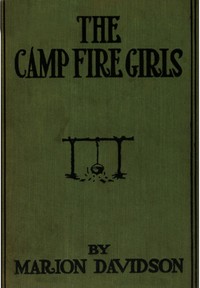
I remember circling the dining table lamp as a kid, feeling Emerald Valley’s pulse slow between captures, that odd patience before danger. It reminded me of how The Camp Fire Girls; Or, The Secret of an Old Mill — Story, Setting & Ideas held its quiet too—not rushing the mill’s shadow, just letting it breathe beside the creek’s murmur. Both trusted stillness to carry the weight.
Luke Wilson
3 weeks agoTheodore King
1 month agoSebastian Smith
4 weeks agoCarter Williams
4 weeks agoThere are no comments for this eBook.
Reader reflection
Take a moment to reflect on this book
Create a short personal record of your experience with this book.
Your progress
0
/
10
2
Did this book hold your interest?
3
Would you pass this book on to a friend?
4
How easy was the book to follow?
5
What did you appreciate most?
6
Did any part of the book feel personally relevant?
7
Could you see yourself revisiting this book?
8
How useful did the reading feel?
9
What is the main idea you are taking away?
10
Michael Clark
1 month ago