About 83 minutes
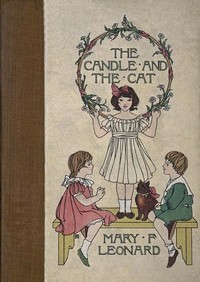
The Candle and the Cat — Text and Context
Childrens Adventures
18,898 recorded words. 11 minutes difference from this book's estimate.
View Gutenberg source #58263
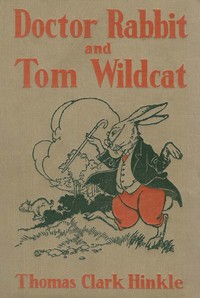
The catalog record for Doctor Rabbit and Tom Wildcat — Story, Setting & Ideas provides practical reading context through 16,398 words, 1 hr 12 min estimated reading time, and 27 detected text sections.
The text analysis averages about 17.6 words per sentence, while the detected sections provide another way to judge how the source is divided.
Project Gutenberg metadata also associates the work with “Animals -- Juvenile fiction,” connecting these edition facts with the source record’s subject description.
Explore this collection
These alternatives are selected using recorded categories and estimated reading time.
About 83 minutes
Childrens Adventures
18,898 recorded words. 11 minutes difference from this book's estimate.
View Gutenberg source #58263About 96 minutes
Childrens Adventures
22,012 recorded words. 24 minutes difference from this book's estimate.
View Gutenberg source #64988About 106 minutes
Childrens Adventures
24,296 recorded words. 34 minutes difference from this book's estimate.
View Gutenberg source #67907Search stored excerpts and compare books → Choose by your preferences →
Choices use stored catalog measurements. Estimates vary with reading speed. A shared category is a catalog label, not a claim that two books have the same argument or literary quality.
Search reads excerpt text stored with this catalog and links to its associated Gutenberg record. The connection is stored in the site database; this tool does not recheck that every excerpt is word-for-word identical to that external record. Excerpt search does not cover every chapter and does not verify historical publication dates.
Catalog snapshot checked: 2026-09-26. Coverage: 90 public books, 90 available source excerpts.
Calculated from edition completeness, EPUB availability, text structure and catalogue metadata. Not a user rating.
Total of 100 points, scaled to a 2.5-5.0 range. Editions with an empty description or a missing EPUB file are not scored.
Public-domain source text
The source text is kept in the dedicated reader, separate from this catalogue record and its commentary.
From the first Rap! rap! rap! at Doctor Rabbit's door, Thomas Clark Hinkle establishes a signature pattern: a three-beat knock that recurs throughout the excerpts, signaling intrusion and danger. The author pairs this auditory cue with a distinctive narrative voice that shifts between the rabbit's gruff interiority—"Doctor Rabbit growled a little, for he did not like to be wakened"—and a direct address to the reader: "Now, who do you suppose it was?" This blend of animal characterization and storytelling intimacy sets the tone for a work where the menace of Tom Wildcat is undercut by the doctor's cleverness and the author's playful asides.
The three-beat knock is not merely a sound effect; it becomes a structural motif. In the opening scene, the repetition of "Rap! rap! rap!" establishes urgency and the disruption of night-time quiet. Later, when Doctor Rabbit shouts "Run, Brother Woodchuck! Run! run!" the same triadic rhythm appears, now as a command for escape. Hinkle uses this pattern to create a pulse that readers can anticipate, linking moments of crisis. The knock also serves as a character cue: Tom Wildcat's polite request for salve contrasts with the aggressive knocking, revealing his deceptive nature. The author's choice to repeat the knock exactly—never varying to "tap" or "bang"—reinforces the wildcat's persistent, predatory approach.
Hinkle differentiates his animal characters through speech patterns. Doctor Rabbit's dialogue is clipped and authoritative: "What do you want at my house this time o' night?" and "Well, that doesn't interest me." Tom Wildcat, by contrast, uses flattery and evasion: "I just came over to have you put some salve on my hind foot." The wildcat's later outbursts—"Gone!" and "He's made a fool of me"—reveal his rage through exclamatory fragments. Stubby Woodchuck's wife, Sophy, speaks in worried, full sentences: "I certainly do wish we could think of some plan to get rid of him." These vocal tics allow readers to identify characters by voice alone, a technique that supports the book's read-aloud quality.
Hinkle builds humor through exaggerated physical mishaps. Tom Wildcat's sore foot leads him to rub his eye with the injured paw, transferring hot salve and causing him to "tear around so" before falling into the Murmuring Brook. The author describes the wildcat as "as wet as any rat you ever saw," a simile that deflates his menace. Doctor Rabbit's laughter—"Ha, ha, ha!"—is rendered as a repeated, breathy sound that emphasizes his glee. Stubby Woodchuck's escape involves panting, camphor, and a chair, grounding the comedy in bodily reactions. These moments rely on cause-and-effect logic: the salve burns, the eye stings, the wildcat flees. The humor emerges not from slapstick alone but from the chain of consequences that the doctor orchestrates.
The Big Green Woods are evoked through selective sensory cues: the "big round moon" shining on the knocker, the "Murmuring Brook" as a watery escape, and the "stump" where Stubby Woodchuck lives. Hinkle uses these details sparingly, letting them serve plot functions. The moon illuminates Tom Wildcat's identity; the brook cools his eye and washes away his pride. The stump becomes a refuge, its interior described only as a floor where Stubby "fell down" panting. This economy of description keeps the focus on character action rather than landscape. The author also employs sound—yowls, squawks, laughter—to animate the woods, creating an auditory backdrop that reinforces the story's tension and release.
Readers attentive to Hinkle's craft will notice how he balances menace with mirth through precise repetition, vocal differentiation, and physical logic. The knock that opens the story echoes in the commands and cries that follow, while each character's speech reveals their role in the woodland drama. The humor, rooted in bodily consequence rather than mere silliness, rewards close attention to cause and effect. This editorial note encourages you to listen for the three-beat rhythms and watch how the author turns a wildcat's sore foot into a source of both danger and delight.
That knock pattern in Doctor Rabbit and Tom Wildcat took me straight back to my grandfather’s porch, where he’d drum the same rhythm on his knee before telling a story. I felt that familiar hush again, waiting. Pep: The Story of a Brave Dog — Story, Setting & Ideas stirred the same quiet patience in me, that slow warmth of knowing something brave is about to happen.
Create a short personal record of your experience with this book.