About 126 minutes
Tamba, the Tame Tiger: His Many Adventures — Key Ideas to Explore
Childrens Adventures
28,769 recorded words. 8 minutes difference from this book's estimate.
View Gutenberg source #62505
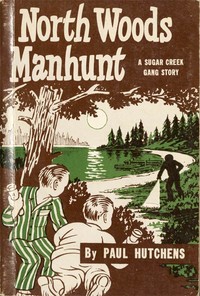
The catalog record for North Woods Manhunt (A Sugar Creek Gang Story) — Themes and Context provides practical reading context through 30,661 words, 2 hr 14 min estimated reading time, and 15 detected text sections.
The text analysis averages about 29.5 words per sentence, while the detected sections provide another way to judge how the source is divided.
Project Gutenberg metadata also associates the work with “Christian life -- Juvenile fiction,” connecting these edition facts with the source record’s subject description.
Explore this collection
These alternatives are selected using recorded categories and estimated reading time.
About 126 minutes
Childrens Adventures
28,769 recorded words. 8 minutes difference from this book's estimate.
View Gutenberg source #62505About 142 minutes
Childrens Adventures
32,574 recorded words. 8 minutes difference from this book's estimate.
View Gutenberg source #69064About 123 minutes
Childrens Adventures
28,233 recorded words. 11 minutes difference from this book's estimate.
View Gutenberg source #61450Search stored excerpts and compare books → Choose by your preferences →
Choices use stored catalog measurements. Estimates vary with reading speed. A shared category is a catalog label, not a claim that two books have the same argument or literary quality.
Search reads excerpt text stored with this catalog and links to its associated Gutenberg record. The connection is stored in the site database; this tool does not recheck that every excerpt is word-for-word identical to that external record. Excerpt search does not cover every chapter and does not verify historical publication dates.
Catalog snapshot checked: 2026-09-26. Coverage: 90 public books, 90 available source excerpts.
Calculated from edition completeness, EPUB availability, text structure and catalogue metadata. Not a user rating.
Total of 100 points, scaled to a 2.5-5.0 range. Editions with an empty description or a missing EPUB file are not scored.
Public-domain source text
The source text is kept in the dedicated reader, separate from this catalogue record and its commentary.
From its opening sentence, North Woods Manhunt establishes a breathless, colloquial voice that pulls the reader directly into the action. The narrator, Bill, speaks in run-on sentences and exclamatory phrases—"I TELL you, when you just know there’s going to be some exciting trouble in the next twelve minutes or less, you have to make your red head do some quick clear thinking"—creating an intimate, almost conspiratorial tone. This first-person style, consistent throughout the excerpts, prioritizes immediacy over polished prose, mimicking the way a boy might recount an adventure to a friend.
The narrative voice in North Woods Manhunt relies heavily on conversational tics: interjections like "Boy," "Say," and "Well"; contractions such as "’cause" and "’em"; and direct addresses to the reader ("you’ve probably read all about it"). This technique, evident in lines like "I won’t take time right now to tell you all you maybe ought to know," creates a sense of shared experience. The narrator often breaks the fourth wall, acknowledging the story’s serial nature by referencing previous books. Hutchens uses this device to build continuity across the Sugar Creek Gang series while keeping each installment self-contained. The effect is a voice that feels spontaneous, though carefully crafted to sustain a boyish, breathless energy.
Fishing scenes in the excerpts are not mere interludes but set pieces that blend suspense with slapstick. When Poetry ties a rubber balloon to a walleye’s tail and releases it, the description is precise: "with his two fat hands he made a double slip-knot around the walleye’s tail." The fish’s subsequent behavior—diving, circling, snagging—is tracked with the same urgency as a chase sequence. Hutchens juxtaposes technical details ("handle him with wet hands, and release him under the water") with absurdity (Poetry claiming "fish understand my language"). The result is a scene that advances the plot while showcasing the gang’s camaraderie and the author’s ear for dialogue, as when Dragonfly retorts, "That’s ’cause you talk like a fish."
Hutchens anchors the story in a particular geography: the "Chippewa forest of northern Minnesota" and "The Paul Bunyan Country." This is not a generic wilderness; it is a named, culturally loaded landscape. The icehouse, the lake, and the outboard motor are rendered with enough detail to feel tangible. The narrator’s aside about the "cuckoo-est places in all the world to find money" signals a self-aware humor about the setting’s improbability. Even minor characters reinforce the regional flavor: Little Snow-in-the-face speaks in "his cute Indian voice," a detail that, while dated, reflects the author’s attempt to populate the story with diverse voices. The setting is not just backdrop but an active element, shaping the gang’s actions and the story’s pace.
The excerpts reveal a writer adept at serial fiction. Hutchens opens North Woods Manhunt in medias res, with the gang already in possession of ransom money. He then backfills necessary context through quick references to a prior book, "Sugar Creek Gang Digs for Treasure," and a compressed summary of the kidnapping and capture. This economy allows new readers to follow the plot without bogging down returning ones. The narrator’s frequent time markers—"in the next twelve minutes or less," "in maybe another seven minutes"—create a countdown tension that propels the scene forward. Hutchens trusts his audience to keep up with rapid shifts between past and present action, a hallmark of experienced series writing.
Readers approaching North Woods Manhunt should expect a fast-paced, voice-driven narrative that prioritizes immediacy over introspection. The story rewards attention to its regional details and the rhythms of its dialogue. Hutchens’ choices in diction and structure—the breathless first-person, the comic fishing interludes, the efficient recaps—are best appreciated as deliberate craft rather than mere simplicity. This is a book that knows its audience and speaks their language, literally and figuratively.
That canoe ride in the Minnesota woods brought me back to the summer I first heard my grandfather talk about his own lost afternoons. I remember sitting with North Woods Manhunt and feeling that same ache—quiet, patient, unhurried. The quest of the Silver Swan: A land and sea tale for boys — A Closer Reading once gave me that identical stillness, the way a good boyhood story holds its breath just long enough to make you miss it.
Build a private reading journal entry for this title.