About 317 minutes
Jim and Wally — Reading Notes
Childrens Adventures
72,816 recorded words. 1 minutes difference from this book's estimate.
View Gutenberg source #60445
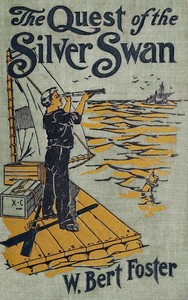
Before opening The quest of the Silver Swan: A land and sea tale for boys — A Closer Reading, the edition data offers a quick orientation: 73,034 words, 5 hr 18 min estimated reading time, and 45 detected text sections.
The text analysis averages about 16.3 words per sentence, while the detected sections provide another way to judge how the source is divided.
Project Gutenberg metadata also associates the work with “Adventure stories,” connecting these edition facts with the source record’s subject description.
Explore this collection
These alternatives are selected using recorded categories and estimated reading time.
About 317 minutes
Childrens Adventures
72,816 recorded words. 1 minutes difference from this book's estimate.
View Gutenberg source #60445About 320 minutes
Childrens Adventures
73,551 recorded words. 2 minutes difference from this book's estimate.
View Gutenberg source #60446About 307 minutes
Childrens Adventures
70,474 recorded words. 11 minutes difference from this book's estimate.
View Gutenberg source #65869Search stored excerpts and compare books → Choose by your preferences →
Choices use stored catalog measurements. Estimates vary with reading speed. A shared category is a catalog label, not a claim that two books have the same argument or literary quality.
Search reads excerpt text stored with this catalog and links to its associated Gutenberg record. The connection is stored in the site database; this tool does not recheck that every excerpt is word-for-word identical to that external record. Excerpt search does not cover every chapter and does not verify historical publication dates.
Catalog snapshot checked: 2026-09-26. Coverage: 90 public books, 90 available source excerpts.
Calculated from edition completeness, EPUB availability, text structure and catalogue metadata. Not a user rating.
Total of 100 points, scaled to a 2.5-5.0 range. Editions with an empty description or a missing EPUB file are not scored.
Public-domain source text
The source text is kept in the dedicated reader, separate from this catalogue record and its commentary.
The Quest of the Silver Swan opens not with a ship at sea but with a raft, immediately signaling the novel's preoccupation with makeshift vessels and survival. The first chapter, titled "The Raft at Sea," establishes a pattern of characters being cast adrift—physically and financially—before being drawn into a salvage operation. The narrative moves briskly from this oceanic crisis to a farm in the second chapter, introducing Brandon Tarr and his Uncle Arad. This rapid shift between settings becomes a structural hallmark: the story alternates between domestic interiors, urban offices, and the deck of a whaleback steamer, each space carrying its own set of tensions and alliances.
The novel's title object, the Silver Swan, is a derelict brig—a ship abandoned at sea. But the story is filled with other vessels that serve as both plot devices and symbols. The opening raft is a desperate construction; later, the whaleback steamer Number Three is a purpose-built salvage ship, described in technical detail by the merchant Adoniram Pepper. The contrast between the fragile raft and the industrial whaleback underscores a theme of recovery and transformation. Derelicts are not just obstacles but opportunities: Pepper's scheme to "destroy all the wrecks which are not worth saving" and tow others to port frames the ocean as a junkyard ripe for profit. The recurring image of abandoned ships—the Resolute, the Silver Swan—links the adventure to real maritime history, grounding the fantastical quest in practical salvage law.
Foster relies heavily on extended conversations to advance the plot, particularly in the middle chapters. The excerpt featuring Pepper, Caleb, and Brandon is a prime example: nearly all the information about the whaleback, the crew, and the financial arrangement is delivered through back-and-forth dialogue. Caleb's interjections—"You're a man and a gentleman, Adoniram"—and his sarcastic asides about landlubber crews add character while conveying technical details. This method keeps the exposition lively but also means that key decisions (like Brandon's appointment as second mate) happen offscreen, reported rather than dramatized. The structure favors negotiation over action, with long stretches of talk punctuated by brief bursts of physical movement, such as Brandon's stowaway episode hinted at in chapter titles.
The early chapters establish a stark divide between rural and urban settings. Uncle Arad's farm, introduced in Chapter II, represents constraint and legal wrangling—"Uncle Arad Has Recourse to Legal Force"—while New York City, where Brandon arrives in Chapter X, offers opportunity and danger. The firm of Adoniram Pepper & Co. is a hub of commerce and scheming, a world away from the farm's slow pace. Foster uses these settings to define character: Uncle Arad is tied to the land, Caleb to the sea, and Brandon moves between them. The novel's structure mirrors this journey, with the first quarter spent on land before the action shifts permanently to the water. This geographic movement gives the story a clear before-and-after shape, with the farm serving as a point of departure rather than a destination.
Foster peppers the text with specific names and numbers that create a sense of authenticity. The whaleback is called Number Three, a deliberately unglamorous designation that contrasts with the poetic "Silver Swan." Characters have evocative monikers: "Square" Holt, Caleb Wetherbee, Lawrence Coffin. The latter, a mate whose name suggests both profession and fate, is praised by Caleb as someone who could "sail the Great Eastern." These details reward close reading. The novel also uses precise nautical terminology—"whaleback," "derelict," "salvage"—not as decoration but as functional vocabulary. Readers unfamiliar with shipping will learn the terms through context, as when Pepper explains the Hydrographic Office's efforts to clear wrecks. This commitment to jargon gives the adventure a documentary texture, even as the plot veers toward melodrama.
Readers approaching The Quest of the Silver Swan should pay attention to the interplay between talk and action: the novel's most dramatic moments are often prepared by lengthy discussions of logistics. The structure favors a slow build, with the actual voyage beginning only after a third of the book has passed. The recurring image of the derelict—a ship that is neither fully lost nor fully saved—mirrors the characters' own uncertain positions between land and sea, youth and responsibility. This is a story less about treasure than about the mechanics of recovery, both maritime and personal.
There's a particular ache in Foster's tale, those abandoned ships drifting between land and sea, that I've always felt mirrors a quieter loneliness in Norah of Billabong — Story, Setting & Ideas. Both books hold their young characters in that suspended space, waiting for a tide or a season to turn, and I find that echo rather comforting on a long evening.
Create a short personal record of your experience with this book.