About 224 minutes
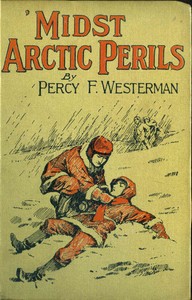
'Midst Arctic Perils: A Thrilling Story of Adventure in the Polar Regions — Context and Discussion
Childrens Adventures
51,486 recorded words. 1 minutes difference from this book's estimate.
View Gutenberg source #57798
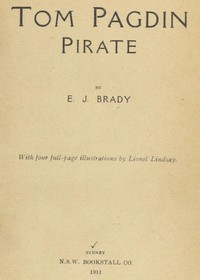
The catalog record for Tom Pagdin, Pirate — Background and Themes provides practical reading context through 51,622 words, 3 hr 45 min estimated reading time, and 6 detected text sections.
The text analysis averages about 14.0 words per sentence, while the detected sections provide another way to judge how the source is divided.
Project Gutenberg metadata also associates the work with “Australia -- Juvenile fiction,” connecting these edition facts with the source record’s subject description.
Explore this collection
These alternatives are selected using recorded categories and estimated reading time.
About 224 minutes
Childrens Adventures
51,486 recorded words. 1 minutes difference from this book's estimate.
View Gutenberg source #57798About 224 minutes
Childrens Adventures
51,410 recorded words. 1 minutes difference from this book's estimate.
View Gutenberg source #67564About 227 minutes
Childrens Adventures
52,151 recorded words. 2 minutes difference from this book's estimate.
View Gutenberg source #60345Search stored excerpts and compare books → Choose by your preferences →
Choices use stored catalog measurements. Estimates vary with reading speed. A shared category is a catalog label, not a claim that two books have the same argument or literary quality.
Search reads excerpt text stored with this catalog and links to its associated Gutenberg record. The connection is stored in the site database; this tool does not recheck that every excerpt is word-for-word identical to that external record. Excerpt search does not cover every chapter and does not verify historical publication dates.
Catalog snapshot checked: 2026-09-26. Coverage: 90 public books, 90 available source excerpts.
Calculated from edition completeness, EPUB availability, text structure and catalogue metadata. Not a user rating.
Total of 100 points, scaled to a 2.5-5.0 range. Editions with an empty description or a missing EPUB file are not scored.
Public-domain source text
The source text is kept in the dedicated reader, separate from this catalogue record and its commentary.
The opening chapter of Tom Pagdin, Pirate establishes a specific Australian riverside setting—the Broadstream punt grating on pebbles, mists lifting from creeks and reedy lagoons—before introducing the boy protagonist through a single, telling detail: Tom Pagdin, bare legs hanging over the punt rails, watches his fishing line sleepily. The narrative voice is wry and observational, noting that young Tom cut his new bamboo rod from Henry Dobie’s garden because his father was not on speaking terms with Dobie, and that the relevant commandment was “temporarily suspended.” This early passage reveals a world where adult grudges and casual rule-breaking are woven into daily life, and where the father’s political hypocrisy—pretending fealty while voting against the sitting member—is matched by his physical harshness: thrashings that left Tom “too sore to sit down.”
The excerpts set up a deliberate contrast between Tom’s small-scale transgressions and the hardened criminality of Jean Petit. Tom’s theft of a fishing rod is presented as a boyish, almost justified act within the local code; Petit, by contrast, is described in lurid, animalistic terms: “a human tiger,” “an obscene devil-worshipper,” “a wild biped.” The language escalates as Petit’s biography unfolds—apprenticed at twelve to a house-breaking gang, a “master of arts in the College of Crime” by twenty-two, an “Emperor of Thieves” in Paris. The narrator’s tone shifts from the dry humor of the opening to a grim, almost sensational register when detailing Petit’s crimes, including arson and murder. This tonal split raises questions about how the book will reconcile its two narrative strands: the domestic, river-based adventures of a boy and the violent, penal-colony history of an escaped convict.
Authority figures in the excerpts are consistently portrayed as oppressive, hypocritical, or distant. Old Tom Pagdin regards the government as “his natural enemy,” and his only satisfaction comes from secretly voting against the sitting member. The French Republic is depicted as a punitive force that “experimented” on Petit and pronounced him an “incurable criminal.” Even the gendarmes who capture Petit are described as a collective, faceless entity. For Tom, authority is embodied in his father’s beatings and the arbitrary rules of adults; for Petit, it is the system of transportation and the quarry where he is set to break stone. Both characters operate in worlds where power is exercised without fairness, and where resistance—whether through secret ballots or escape attempts—is a constant undercurrent. The excerpts do not reveal how these parallel critiques of authority intersect, but they suggest a shared skepticism toward those in charge.
The Broadstream setting is rendered with precise, sensory detail: the punt grating on pebbles, the cork floater, the bamboo rod casting “a clear shadow in the water.” Morning is personified as “gowned in silver grey, with trimmings of gold,” sleeping on a divan in the Orient East. This ornate, almost decorative prose contrasts sharply with the stark descriptions of Petit’s world: the “red eye” of the convict, the “blood-stains” left behind after the escape, the “hell here” and “hell there.” The river landscape of Tom’s adventures seems idyllic, yet it is also a place of conflict—the punt is rented from a despised government, the fishing rod is stolen, and the father’s shanty is the site of regular violence. Petit’s landscape is one of confinement: New Caledonia, the quarry, the cage. The excerpts suggest that the natural world in this book is never neutral; it is always charged with the tensions of ownership, escape, and survival.
Readers should attend to the way Brady modulates his prose between the colloquial and the melodramatic, as this shift signals the book’s dual focus. The illustrations by Lionel Lindsay—four full-page plates, including one titled “The Pirate in Purgatory”—may offer visual clues to the tone and key scenes. Given that the excerpts cover only the opening and a later chapter on Petit, the full arc of Tom’s transformation into a “pirate” and his encounter with the escaped convict remains to be discovered.
There’s something achingly familiar about Tom’s riverbank restlessness, that quiet ache between him and his father. I keep thinking how childhood holds such lonely moments. It made me remember another boy, Doodles, whose sunshine feels earned rather than given. Those old books linger because they understood that. Doodles, the Sunshine Boy — Key Ideas to Explore brings that same gentle warmth back to mind.
Build a private reading journal entry for this title.