About 224 minutes
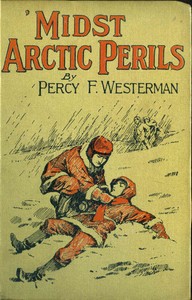
'Midst Arctic Perils: A Thrilling Story of Adventure in the Polar Regions — Context and Discussion
Childrens Adventures
51,486 recorded words. 0 minutes difference from this book's estimate.
View Gutenberg source #57798
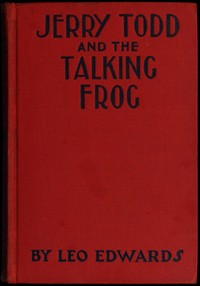
This digital edition of Jerry Todd and the Talking Frog — Inside the Classic is described by source-level measurements including 51,410 words, 3 hr 44 min estimated reading time, and 24 detected text sections.
The text analysis averages about 11.9 words per sentence, while the detected sections provide another way to judge how the source is divided.
Project Gutenberg metadata also associates the work with “Detective and mystery stories,” connecting these edition facts with the source record’s subject description.
Explore this collection
These alternatives are selected using recorded categories and estimated reading time.
About 224 minutes
Childrens Adventures
51,486 recorded words. 0 minutes difference from this book's estimate.
View Gutenberg source #57798About 225 minutes
Childrens Adventures
51,622 recorded words. 1 minutes difference from this book's estimate.
View Gutenberg source #58132About 227 minutes
Childrens Adventures
52,151 recorded words. 3 minutes difference from this book's estimate.
View Gutenberg source #60345Search stored excerpts and compare books → Choose by your preferences →
Choices use stored catalog measurements. Estimates vary with reading speed. A shared category is a catalog label, not a claim that two books have the same argument or literary quality.
Search reads excerpt text stored with this catalog and links to its associated Gutenberg record. The connection is stored in the site database; this tool does not recheck that every excerpt is word-for-word identical to that external record. Excerpt search does not cover every chapter and does not verify historical publication dates.
Catalog snapshot checked: 2026-09-26. Coverage: 90 public books, 90 available source excerpts.
Calculated from edition completeness, EPUB availability, text structure and catalogue metadata. Not a user rating.
Total of 100 points, scaled to a 2.5-5.0 range. Editions with an empty description or a missing EPUB file are not scored.
Public-domain source text
The source text is kept in the dedicated reader, separate from this catalogue record and its commentary.
Jerry Todd opens his fifth book by directly addressing readers, explaining how the title came about: his friend Scoop insisted that the talking frog was more central than the puzzle room mystery. This conversational preface sets the tone for a story that mixes fun, mystery, and adventure. The narrative voice is colloquial and immediate, with Jerry using phrases like “B-r-r-r-r!” to describe the ghost and “I’ll tell the world” to emphasize a point. The book’s structure includes a “Chatter-Box” section where author Leo Edwards speaks to his audience, creating a layered relationship between the fictional narrator, the author, and the reader.
The central mystery revolves around a brick house haunted by a ghost that walks the porches at midnight. The house belonged to a puzzle maker who met a strange death, and the boys—Jerry, Scoop, Peg, and new chum Tom Ricks—brave its perils to help Tom. The clue “Ten and ten” is described as “the Bible’s secret,” suggesting a coded message tied to the inventor’s work. The excerpts show the boys discussing the spy’s activities and the hidden fortune, but the full meaning of the clue is not revealed in the provided text. The ghost’s nightly visits and the inventor’s disappearance in Springfield, later traced to Atlanta, add layers to the puzzle.
Interspersed with the mystery is a comic subplot involving the sale of “Bubbles of Beauty” soap. The boys peddle this product for an employer at the old mill, who insists they return before dark. The soap’s miraculous claims are tested on Miss Prindle, a dressmaker whose homely face is transformed—a development that leaves Jerry “struck dumb.” The scene at her porch, where Jerry mistakes her for a beautiful woman in the same clothes, highlights the story’s blend of absurdity and observation. The soap plot also involves a kite-making scheme by Scoop, hinting at the boys’ resourcefulness in both commerce and detection.
The narrative is driven by Jerry’s first-person voice, which is colloquial and self-aware. He frequently addresses the reader, as when he says “Pinch me” to Tom to confirm he’s awake. The dialogue reveals distinct personalities: Scoop is the pragmatic leader, Tom is loyal but embarrassed by his absent-minded father (“Isn’t Pa the big dunce!”), and Jerry is observant and quick to react. The boys’ camaraderie is evident in their shared risks and Scoop’s reassurance that they understand Tom’s situation. The excerpts also show a tension between the boys’ youthful bravado and the genuine threat posed by a character named Gennor, though his role is not fully explained.
Readers should pay attention to how the comic soap-selling episodes intersect with the ghostly mystery—the same characters and settings serve both plots. The clue “ten and ten” is likely central to the resolution, but the excerpts do not reveal its solution. The book’s structure, with its direct address and layered narration, rewards attention to how Jerry’s voice shapes the story’s tone.
I’ve often thought Jerry Todd’s moonlit prowlings share a gentle root with woodland tales—that same hushed patience when the world listens. Doctor Rabbit and Tom Wildcat — Story, Setting & Ideas feels like an old friend of that midnight hour, even as dawn softens its voice. Some stories just breathe together across different shelves, and my fingers remember both.
Capture what you thought, learned, and would like to remember.