About 280 minutes
Crofton Chums — A Reader’s Guide
Childrens Adventures
64,227 recorded words. 1 minutes difference from this book's estimate.
View Gutenberg source #60894
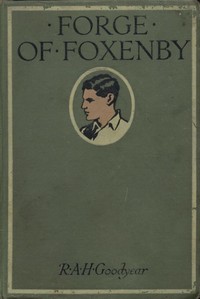
The source record for Forge of Foxenby — Story, Setting & Ideas measures this digital text at 64,410 words, 4 hr 41 min estimated reading time, and 6 detected text sections.
The text analysis averages about 14.0 words per sentence, while the detected sections provide another way to judge how the source is divided.
Project Gutenberg metadata also associates the work with “Boarding schools -- England -- Juvenile fiction,” connecting these edition facts with the source record’s subject description.
Explore this collection
These alternatives are selected using recorded categories and estimated reading time.
About 280 minutes
Childrens Adventures
64,227 recorded words. 1 minutes difference from this book's estimate.
View Gutenberg source #60894About 278 minutes
Childrens Adventures
63,847 recorded words. 3 minutes difference from this book's estimate.
View Gutenberg source #59941About 274 minutes
Childrens Adventures
62,872 recorded words. 7 minutes difference from this book's estimate.
View Gutenberg source #59967Search stored excerpts and compare books → Choose by your preferences →
Choices use stored catalog measurements. Estimates vary with reading speed. A shared category is a catalog label, not a claim that two books have the same argument or literary quality.
Search reads excerpt text stored with this catalog and links to its associated Gutenberg record. The connection is stored in the site database; this tool does not recheck that every excerpt is word-for-word identical to that external record. Excerpt search does not cover every chapter and does not verify historical publication dates.
Catalog snapshot checked: 2026-09-26. Coverage: 90 public books, 90 available source excerpts.
Calculated from edition completeness, EPUB availability, text structure and catalogue metadata. Not a user rating.
Total of 100 points, scaled to a 2.5-5.0 range. Editions with an empty description or a missing EPUB file are not scored.
Public-domain source text
The source text is kept in the dedicated reader, separate from this catalogue record and its commentary.
From the opening lines of Forge of Foxenby, the reader is thrust into the clamour of a football match, where the narrator’s voice mingles with the crowd’s cheers and the players’ quick exchanges. Goodyear’s prose is notably alert to the rhythms of spoken language, capturing the urgency of on-field commands and the banter of schoolboys. The dialogue is peppered with period slang—'Fudge!', 'younker', 'hop it'—and the characters often speak in a theatrical, mock-heroic register, as when Robin Arkness addresses a fellow student as 'thou scurvy knave'. This blend of colloquialism and playful archaism gives the text a distinctive verbal texture, one that rewards attention to the author’s choices in diction and tone.
Goodyear’s ear for the vernacular of Edwardian schoolboys is evident throughout the excerpts. The dialogue is studded with terms like 'grub', 'sneak', 'walloped', and 'frazzle', which ground the story in a specific social milieu. The author also uses contractions and elisions to mimic natural speech: 'What d’ye want, youngster?' and 'Sing out, quick; I’m busy just now.' These choices create a sense of immediacy and authenticity, though the slang occasionally requires glossing for modern readers. Notably, the narrator adopts a more formal tone in descriptive passages, creating a contrast that heightens the liveliness of the spoken exchanges.
Several characters, particularly Robin Arkness, adopt a deliberately inflated, quasi-medieval manner of speaking. Robin addresses his peers as 'thou pestiferous Squirm' and commands his 'Merry Men' with phrases like 'Soil not your honest hands with the watery blood of this rapscallion.' This theatrical language is a form of play, signalling the boys’ self-conscious adoption of roles from adventure stories. Goodyear uses this register to comic effect, as when Robin’s grandiloquence clashes with Peter Mawdster’s blunt demand: 'Oh, stop your high-falutin’ rot and give me back my grub.' The juxtaposition of styles underscores the tension between fantasy and reality in the boys’ lives.
Goodyear’s descriptive passages are often brief but pointed, focusing on physical details that reveal character or mood. In the opening chapter, the wind is described as 'buzzing across from goal to goal' and 'like running up against a house-side', a simile that conveys both force and resistance. Later, Dick Forge’s 'laughing face' is called 'a tonic to the faint-hearted ones', a metaphor that links his emotional state to physical health. The author also uses small gestures to imply inner states: Dick 'found himself breathing rather fast' when confronted with Robin’s autograph book. These details are economical, yet they accumulate to build a vivid sense of the characters’ inner lives.
The narrator of Forge of Foxenby moves between a detached, reportorial style and a more involved, evaluative tone. In the football match, the narration is brisk and focused on action: 'The first shot of the match had flashed by the upright.' But when describing Dick’s mood, the narrator becomes more reflective, noting that 'Dick grew morose and silent' and that he 'had the happy knack of turning [the picture] to the light.' This tonal flexibility allows Goodyear to shift from excitement to introspection without jarring the reader. The narrator also occasionally addresses the reader directly, as in the proverb 'it is as unwise to count a goal as it is to reckon chickens still in the shell', a device that invites shared understanding.
Readers attentive to language will find in Forge of Foxenby a rich field of verbal play, from the clipped commands of the football pitch to the mock-heroic flourishes of the Merry Men. Goodyear’s dialogue is the engine of the story, driving both plot and characterisation. The excerpts suggest a writer who delights in the sound and texture of words, and who uses them to create a world that is at once familiar and heightened. Approach the text with an ear for its cadences, and the schoolyard will come alive.
That afternoon, the rain blurred the windows while Goodyear’s narrator shifted from sharp banter to quiet unease, and I kept thinking how small moments of care surface in stories about survival. Later, I found myself reaching for The Safety First Club and the Flood — Key Ideas to Explore, wondering about the same gentle responsibility. The pages felt like familiar furniture.
Save your reaction, strongest insight, and memorable passage.