About 194 minutes
Jack Straw in Mexico: How the Engineers Defended the Great Hydro-Electric Plant — Context and Discussion
Childrens Adventures
44,565 recorded words. 0 minutes difference from this book's estimate.
View Gutenberg source #60941
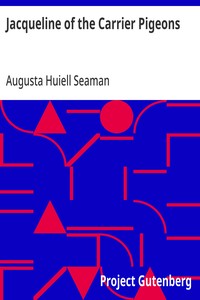
Jacqueline of the Carrier Pigeons — Edition Insights can be approached with a clearer sense of reading commitment from its source measurements: 44,394 words, 3 hr 14 min estimated reading time, and 5 detected text sections.
The text analysis averages about 16.7 words per sentence, while the detected sections provide another way to judge how the source is divided.
Project Gutenberg metadata also associates the work with “Netherlands -- History -- Eighty Years' War, 1568-1648 -- Juvenile fiction,” connecting these edition facts with the source record’s subject description.
Explore this collection
These alternatives are selected using recorded categories and estimated reading time.
About 194 minutes
Childrens Adventures
44,565 recorded words. 0 minutes difference from this book's estimate.
View Gutenberg source #60941About 195 minutes
Childrens Adventures
44,702 recorded words. 1 minutes difference from this book's estimate.
View Gutenberg source #61061About 196 minutes
Childrens Adventures
44,879 recorded words. 2 minutes difference from this book's estimate.
View Gutenberg source #62989Search stored excerpts and compare books → Choose by your preferences →
Choices use stored catalog measurements. Estimates vary with reading speed. A shared category is a catalog label, not a claim that two books have the same argument or literary quality.
Search reads excerpt text stored with this catalog and links to its associated Gutenberg record. The connection is stored in the site database; this tool does not recheck that every excerpt is word-for-word identical to that external record. Excerpt search does not cover every chapter and does not verify historical publication dates.
Catalog snapshot checked: 2026-09-26. Coverage: 90 public books, 90 available source excerpts.
Calculated from edition completeness, EPUB availability, text structure and catalogue metadata. Not a user rating.
Total of 100 points, scaled to a 2.5-5.0 range. Editions with an empty description or a missing EPUB file are not scored.
Public-domain source text
The source text is kept in the dedicated reader, separate from this catalogue record and its commentary.
The story opens during the Eighty Years' War, with the Spanish army besieging Leyden. Jacqueline, a young girl, is drawn into the city's struggle for survival. The narrative quickly establishes her role as a caretaker for the bedridden Vrouw Voorhaas and her reliance on carrier pigeons for communication. A note from an anonymous sender claiming news of her brother Gysbert forces Jacqueline to weigh caution against hope, setting the stage for a tense decision.
The excerpts show Leyden under pressure from both the Spanish army and internal threats. Jacqueline is forbidden to go out alone, yet a note lures her with promises of her brother's rescue. The text builds suspense through her internal conflict: she notes the unsigned note, the fleeing messenger boy, and the tight fifteen-minute window. The author uses Jacqueline's thoughts—"Hope, doubt and distrust reigned equally"—to highlight the precarious balance between trust and caution. The setting, with references to Hengist Hill and the Wirtemstrasse, grounds the action in a specific geography, while the recurring motif of pigeons as messengers ties directly to the catalog subject of homing pigeons.
The prose employs a formal, slightly archaic style appropriate to its 1910 publication, with phrases like "thou wouldst hear news" and "Juffrouw Jacqueline." The narrative voice shifts between omniscient description and close focalization through Jacqueline, as seen when she "flushed with joy and then turned deathly pale." The excerpts reveal a pattern of characters watching and waiting: Jacqueline reads by the sickbed, Jan hobbles off with messages, and the doctor insists on fresh air. This vigilance reflects the siege's constant threat. The catalog subject of the Eighty Years' War is not merely background but shapes every action—Jacqueline's movements are restricted, and her decisions carry life-or-death stakes.
Carrier pigeons function as both practical tools and symbols. A pigeon brings news of the fleet reaching Nord Aa, and Jacqueline is "constantly on the watch for messages." The birds enable communication across enemy lines, a necessity during the siege. The title's emphasis on pigeons is justified: they drive key plot points, such as the timing of Jan's errand to the burgomaster. However, the excerpts do not reveal the full extent of their role, leaving open questions about how many pigeons are used and whether they carry more than one message. The catalog subject of homing pigeons is thus accurately reflected, but the story's reliance on them appears more tactical than sentimental.
Readers should note that the excerpts cover only a portion of the narrative, focusing on Jacqueline's dilemma and the siege's immediate pressures. The full text likely expands on the pigeon network, the fate of Gysbert, and the broader historical context hinted at in the introduction. Pay attention to how Seaman balances historical detail with adventure, and whether the pigeons remain central or become a backdrop to other conflicts.
The rain kept time with the siege drums in Jacqueline of the Carrier Pigeons, and I lingered on how courage often arrives through small, stubborn tasks—feeding birds, mending a wound. That quiet persistence stayed with me, and later, pulling down Jimmy Kirkland of the Cascade College Team — Themes and Context, I found the same unflashy steadiness in a different jersey, and the afternoon softened into a longer, gentler story.
Use these questions to collect your thoughts before moving on.