About 195 minutes
Og—Son of Fire — Context and Discussion
Childrens Adventures
44,702 recorded words. 1 minutes difference from this book's estimate.
View Gutenberg source #61061
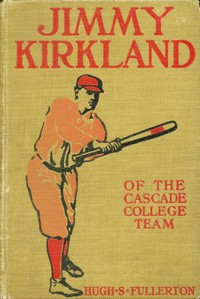
Before opening Jimmy Kirkland of the Cascade College Team — Themes and Context, the edition data offers a quick orientation: 44,879 words, 3 hr 16 min estimated reading time, and 6 detected text sections.
The text analysis averages about 15.6 words per sentence, while the detected sections provide another way to judge how the source is divided.
Project Gutenberg metadata also associates the work with “Baseball -- Juvenile fiction,” connecting these edition facts with the source record’s subject description.
Explore this collection
These alternatives are selected using recorded categories and estimated reading time.
About 195 minutes
Childrens Adventures
44,702 recorded words. 1 minutes difference from this book's estimate.
View Gutenberg source #61061About 194 minutes
Childrens Adventures
44,394 recorded words. 2 minutes difference from this book's estimate.
View Gutenberg source #57466About 194 minutes
Childrens Adventures
44,565 recorded words. 2 minutes difference from this book's estimate.
View Gutenberg source #60941Search stored excerpts and compare books → Choose by your preferences →
Choices use stored catalog measurements. Estimates vary with reading speed. A shared category is a catalog label, not a claim that two books have the same argument or literary quality.
Search reads excerpt text stored with this catalog and links to its associated Gutenberg record. The connection is stored in the site database; this tool does not recheck that every excerpt is word-for-word identical to that external record. Excerpt search does not cover every chapter and does not verify historical publication dates.
Catalog snapshot checked: 2026-09-26. Coverage: 90 public books, 90 available source excerpts.
Calculated from edition completeness, EPUB availability, text structure and catalogue metadata. Not a user rating.
Total of 100 points, scaled to a 2.5-5.0 range. Editions with an empty description or a missing EPUB file are not scored.
Public-domain source text
The source text is kept in the dedicated reader, separate from this catalogue record and its commentary.
The novel opens with a vivid tableau of Cascade College's student body: "Brown, yellow, black, red and white" shouting greetings in California sunshine. This multicultural gathering—including Chinese, Japanese, Hawaiian, and East Indian students—is presented without comment, as a natural part of the setting. The narrator quickly narrows focus to baseball, but the initial breadth signals that the story will move beyond the diamond. Readers should note how this inclusive backdrop contrasts with later tensions among teammates, particularly the rivalry between Larry Kirkland and Harry Baldwin.
The first chapter introduces Cascade College through a bustling registration day. The prose lingers on details: "Mask-faced Chinese youths in the severest of black clothing," Nipponese students "who wore the clothing of Americans as if they had crept into the garments," and boys from ranch, mountain, desert, and vineyard. This description, occupying several paragraphs, establishes a setting where diversity is ordinary. The narrator does not moralize; instead, the variety is simply part of the landscape, like the "semi-tropical garden" that was once a "wooded wilderness." For a first-time reader, this opening suggests that the novel will engage with cultural difference, though the excerpts do not reveal how deeply. The baseball plot emerges gradually, with the first chapter's title "The New Man at Cascade" hinting at the protagonist's arrival.
Around the middle of the novel, a subplot involving a stolen pig injects farce. The pig, originally intended for a biology professor's germ cultures, is kidnapped by students. The recovery scene is comic: the pig is "trussed upside down on the table" while the professor "gloated over the discovery that his precious germs not only were intact, but that the cultures had developed amazingly." This episode, spanning several chapters, serves as a break from baseball tension. It also reveals character: Harry Baldwin is implicated, and the quartette of Larry, Katsura, Winans, and Trumbull forces a confession. The pig's return is handled with secrecy, and the professor's reaction undercuts any moral seriousness. Readers should watch how this lighthearted thread intersects with the main plot—the excerpts suggest it affects team dynamics but do not specify lasting consequences.
The later excerpts focus on the baseball team's internal struggles. Larry Kirkland, playing third base, becomes a deciding factor in victories. His rival, Harry Baldwin, initially quarrels with the coach and loses standing. Baldwin apologizes and works to regain favor, while Larry "purposely had called to Baldwin to practice at third" and hit fungos for fielders. This generosity wins sympathy from veterans, but Baldwin's return to "scornful superiority" suggests the conflict is unresolved. The excerpts also introduce Katsura, a Japanese pitcher with a slow curve that puzzles batters, and a group of players who discuss Krag's theories of baseball. The narrative balances on-field action with off-field relationships, and the reader should note how Larry's leadership develops through these interactions.
Fullerton's prose is direct and journalistic, with occasional bursts of color. The opening paragraph uses short, breathless sentences: "Boys, young men, men advanced in years but not in spirit, laughed, shouted greetings, pounded each other upon backs and gripped hands." Dialogue is rendered in colloquial bursts: "Oh you Big Bill!" "Did the mine pan out?" The narrator often steps back to describe group scenes, then zooms in on individuals. Notably, the pig episode is told with deadpan humor, while the baseball sections are more earnest. The author, a sportswriter, brings a reporter's eye for detail—the way players move, the tension of a game. Readers may notice that the novel shifts between broad comedy and sincere sportsmanship, a tonal range that keeps the story unpredictable.
This novel rewards attention to its layered structure: the multicultural campus, the pig farce, and the baseball rivalry are not separate threads but intertwined. As you read, note how the opening's diversity recedes or resurfaces, and whether the pig episode has lasting effects on the team's morale. The excerpts leave many questions open—how the final game unfolds, what becomes of Baldwin, and whether Katsura gets his chance to pitch. Trust the details Fullerton provides; they are specific enough to guide you without giving away the ending.
Sitting with Jimmy Kirkland, I noticed how the boys’ squabbles over a stolen pig slowly softened into loyalty—that gentle shift from chaos to affection. It reminded me of another old story, Doctor Rabbit and Tom Wildcat — Story, Setting & Ideas, where a similar unlikely friendship creeps up on you. Some tales simply whisper that trust grows best in quiet, unexpected corners.
A brief reflection can help important ideas stay with you longer.