About 194 minutes
Jacqueline of the Carrier Pigeons — Edition Insights
Childrens Adventures
44,394 recorded words. 0 minutes difference from this book's estimate.
View Gutenberg source #57466
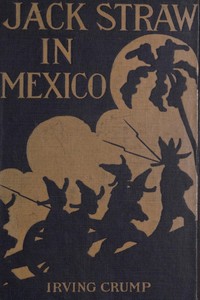
The catalog record for Jack Straw in Mexico: How the Engineers Defended the Great Hydro-Electric Plant — Context and Discussion provides practical reading context through 44,565 words, 3 hr 14 min estimated reading time, and 5 detected text sections.
The text analysis averages about 18.4 words per sentence, while the detected sections provide another way to judge how the source is divided.
Project Gutenberg metadata also associates the work with “Adventure stories,” connecting these edition facts with the source record’s subject description.
Explore this collection
These alternatives are selected using recorded categories and estimated reading time.
About 194 minutes
Childrens Adventures
44,394 recorded words. 0 minutes difference from this book's estimate.
View Gutenberg source #57466About 195 minutes
Childrens Adventures
44,702 recorded words. 1 minutes difference from this book's estimate.
View Gutenberg source #61061About 196 minutes
Childrens Adventures
44,879 recorded words. 2 minutes difference from this book's estimate.
View Gutenberg source #62989Search stored excerpts and compare books → Choose by your preferences →
Choices use stored catalog measurements. Estimates vary with reading speed. A shared category is a catalog label, not a claim that two books have the same argument or literary quality.
Search reads excerpt text stored with this catalog and links to its associated Gutenberg record. The connection is stored in the site database; this tool does not recheck that every excerpt is word-for-word identical to that external record. Excerpt search does not cover every chapter and does not verify historical publication dates.
Catalog snapshot checked: 2026-09-26. Coverage: 90 public books, 90 available source excerpts.
Calculated from edition completeness, EPUB availability, text structure and catalogue metadata. Not a user rating.
Total of 100 points, scaled to a 2.5-5.0 range. Editions with an empty description or a missing EPUB file are not scored.
Public-domain source text
The source text is kept in the dedicated reader, separate from this catalogue record and its commentary.
The story opens not in Mexico but in a rain-soaked Vermont dormitory, where five members of the “D” club mope over a canceled baseball championship. This domestic disappointment gives way to a mission that will drop Jack Straw into the Mexican Revolution, where he must help American engineers protect a hydro-electric plant. The shift from schoolboy frustration to armed vigilance is abrupt, and the narrative carries that tension forward.
Irving Crump structures the adventure as a series of physical and strategic challenges: crossing rivers infested with alligators, outwitting customs inspectors, and reinforcing a weakened garrison. The excerpts show a pattern of movement—from campus to ship, from customs house to secret service interrogation, and finally to the dam itself—each scene introducing a new obstacle that tests Jack’s resourcefulness.
The opening chapter establishes a rhythm that repeats throughout: a quiet, almost mundane setting is disrupted by a sudden call to action. In the dormitory, the rain that cancels the baseball game is a minor disappointment; but the same weather system, or its equivalent, will later become a tactical factor at the dam. Jack’s transition from student to operative is handled through a series of threshold crossings—boarding a ship, facing customs inspectors, and being taken for a spy. Each crossing escalates the stakes.
The structure relies on these abrupt scene shifts. The reader is never given time to settle; just as Jack adapts to one environment, he is thrust into another. This keeps the narrative pace high and mirrors the unpredictability of revolutionary Mexico. The excerpts show that the authors use physical movement—from room to ship, from ship to train, from train to river—as the primary engine of plot advancement.
One of the most striking recurring images is the alligator. In the excerpt, Jack encounters alligators while crossing a river with engineer Mr. Ryder. The reptiles are described with precise detail: “scaly backs and heads,” “fully ten feet long,” and a “death struggle” after Jack shoots one. The alligator serves multiple functions: it is a genuine threat, a test of Jack’s marksmanship, and a symbol of the untamed environment the engineers must control.
But the alligator is not merely decorative. It appears in a scene that also includes a native messenger, a pack train, and a ford—elements that together establish the setting as both exotic and dangerous. The engineers’ work is contrasted with this wildness: they build dams, string wires, and improvise searchlights. The recurring image of the alligator, then, underscores the tension between human engineering and natural chaos.
The river crossing scene is the most fully developed in the excerpts, and it reveals how the authors use geography to structure conflict. The ford is a liminal space: it connects two banks, but it also exposes characters to danger. The native messenger wades across after scaring away alligators, but his dog is attacked. Jack’s quick shooting saves the dog, earning the gratitude of the messenger—a moment that will likely pay off later in the story.
This scene is typical of the book’s method: a simple act of crossing becomes a set piece. The river is not just a backdrop; it is an active element that forces characters to react. The engineers’ work at the dam involves controlling water, but here water is uncontrolled. The contrast between the tame river at the village and the wild river at the dam is a structural motif that the excerpts hint at but do not fully develop.
The book’s subtitle promises a defense of a “Great Hydro-Electric Plant,” and the excerpts show that the engineers rely on ingenuity rather than brute force. Jack’s revolver is used not only against alligators but presumably against human threats. The chapter titles hint at improvised searchlights, crippled generators, and a weakened garrison—all problems that require technical and tactical solutions.
The narrative structure favors scenes of problem-solving over extended combat. Jack and the engineers must repair machinery, set traps, and maintain communication lines. This emphasis on engineering under fire gives the book a distinctive texture: it is an adventure story that respects the practical details of keeping a power plant running. The excerpts do not reveal the outcome, but they establish a pattern of resourcefulness in the face of breakdown.
Readers should pay attention to the way the story moves between quiet moments of observation—like the description of the alligators sunning themselves—and sudden bursts of action. The authors use these contrasts to build suspense without relying on constant violence. The book rewards attention to the physical details of the setting: the ford, the pack trains, the generators. These are not just background; they are the materials out of which the adventure is built.
There’s something about the engineers’ stubborn, methodical work in Jack Straw in Mexico — the way they hold the dam not with heroics but with patience and repair — that stayed with me. It reminded me of the quieter patience in Jim and Wally — Reading Notes, where small moments of fixing and waiting carry their own sort of weight. I keep thinking about both of them, the way one does with old friends.
Use these questions to collect your thoughts before moving on.