About 72 minutes
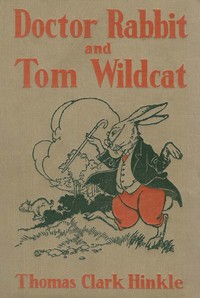
Doctor Rabbit and Tom Wildcat — Story, Setting & Ideas
Childrens Adventures
16,398 recorded words. 11 minutes difference from this book's estimate.
View Gutenberg source #57469
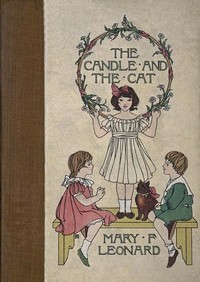
The Candle and the Cat — Text and Context can be approached with a clearer sense of reading commitment from its source measurements: 18,898 words, 1 hr 23 min estimated reading time, and 14 detected text sections.
The text analysis averages about 17.2 words per sentence, while the detected sections provide another way to judge how the source is divided.
Project Gutenberg metadata also associates the work with “Conduct of life -- Juvenile fiction,” connecting these edition facts with the source record’s subject description.
Explore this collection
These alternatives are selected using recorded categories and estimated reading time.
About 72 minutes
Childrens Adventures
16,398 recorded words. 11 minutes difference from this book's estimate.
View Gutenberg source #57469About 96 minutes
Childrens Adventures
22,012 recorded words. 13 minutes difference from this book's estimate.
View Gutenberg source #64988About 106 minutes
Childrens Adventures
24,296 recorded words. 23 minutes difference from this book's estimate.
View Gutenberg source #67907Search stored excerpts and compare books → Choose by your preferences →
Choices use stored catalog measurements. Estimates vary with reading speed. A shared category is a catalog label, not a claim that two books have the same argument or literary quality.
Search reads excerpt text stored with this catalog and links to its associated Gutenberg record. The connection is stored in the site database; this tool does not recheck that every excerpt is word-for-word identical to that external record. Excerpt search does not cover every chapter and does not verify historical publication dates.
Catalog snapshot checked: 2026-09-26. Coverage: 90 public books, 90 available source excerpts.
Calculated from edition completeness, EPUB availability, text structure and catalogue metadata. Not a user rating.
Total of 100 points, scaled to a 2.5-5.0 range. Editions with an empty description or a missing EPUB file are not scored.
Public-domain source text
The source text is kept in the dedicated reader, separate from this catalogue record and its commentary.
The story opens with a precise, almost still-life portrait of the cat Trolley sunning himself on a stone pillar at the entrance to a theological seminary. His “golden eyes were almost closed” and his “small aristocratic ears” betray his alertness—a detail that signals the careful observation of domestic life that runs through the book. The title itself pairs a candle (a source of light and ritual) with a cat (a creature of comfort and independence), hinting at the interplay between the ordinary and the significant that Leonard cultivates.
From the first chapter, the narrative establishes a world bounded by seminary grounds, a nailed-up orchard gate, and the quiet routines of Caro, a girl whose curiosity and energy push against these limits. The excerpts show a story built on small, concrete pleasures: roasting corn, playing word games, and keeping secrets. The tension between what is permitted and what is discovered—between the invalid Walter’s cautious world and Caro’s eager one—forms the story’s quiet engine.
Trolley is not merely a pet but a figure of composure and independence. In the opening paragraph, he sits “sunning himself” with a “handsome coat” that “glistened like satin,” his paws tucked and tail hanging—a posture of self-contained dignity. The narrative gives him small, telling actions: the movement of his ears is the only sign he is awake. This attention to feline behavior suggests that Trolley will be a quiet observer of the human drama, perhaps a catalyst or a confidant. The dedication “To the memory of Trolley” further implies that the real cat inspired the story, grounding the fiction in lived experience.
Later, when Caro and Marjorie plan the secret picnic, the cat is absent from the scene, but his earlier presence lingers. The book’s title places him on equal footing with the candle, an object of light and ceremony. Readers may watch for moments when Trolley’s perspective or actions intersect with the human plot—whether he is a silent witness or an active participant in the story’s small adventures.
The excerpts revolve around a central tension: what is allowed versus what is hidden. Caro and Marjorie delight in keeping a secret from Tom, teasing him with hints of “something awfully nice.” The picnic itself takes place in the Grayson garden, a space that carries history—Walter and Charlie built fires there “in days gone by”—and present restrictions. Walter worries about what his sister or the Barrows will think if they discover he has been “entertaining the children in the garden.” The nailed-up gate between the properties symbolizes a barrier that the children’s adventure temporarily opens.
Leonard builds suspense through small, concrete details: the forgotten salt, the cook’s suspicious question, the “plank supported on bricks” that serves as a seat. The children’s games—“I have a word that rhymes with—” and “My ship comes sailing”—are period-appropriate and reinforce the theme of coded communication. The secret is not a grand conspiracy but a fragile, joyful conspiracy against adult expectations. This pattern of permission sought, granted, and worried over gives the story its emotional texture.
Walter, the invalid boy, is introduced through his relationship to the garden and to memory. He is wheeled by Thompson, his attendant, and his participation in the picnic is that of an observer and host rather than an active player. The narrative notes that “the sight and sound of the crackling flames was like a tonic to the spirits”—a phrase that applies as much to Walter as to the children. His past, when the gate was open and “merry girls and boys ran back and forth,” is contrasted with his present, limited mobility.
Caro’s interest in Walter is genuine; she asks about the girl in the chapel window—the Good Shepherd—and is told she resembles her. This connection between a stained-glass figure and a living child suggests a theme of likeness and legacy. Walter’s decision to host the picnic is a small act of rebellion and generosity, and his doubts afterward (“What would his sister think?”) show the constraints of his illness. The story seems to explore how an invalid can still shape the world of children, even from a chair, and how children can bring life back to a sealed-off garden.
Readers will find that the story’s pleasures lie in its small, precise details: the glint of a cat’s fur, the taste of roasted corn, the weight of a secret kept among friends. The title objects—candle and cat—may serve as symbols of light and companionship, but the narrative never overexplains them. Pay attention to how Leonard uses the physical setting—the seminary pillars, the orchard gate, the garden paths—to map the boundaries of Caro’s world and the quiet dramas that unfold within them. The book rewards a slow, attentive reading that mirrors the patient observation of its feline protagonist.
That rainy afternoon, The Candle and the Cat left me thinking about how quietly Caro’s kindness shifted Walter’s world, small gestures blooming into trust. I closed it, restless, and my hand drifted to a shelf of forgotten travelogues. The next thing I knew, I was inside Kak, the Copper Eskimo — Inside the Classic, watching a different kind of solitude, and felt that same patient warmth return.
Answer a few questions and save a private reflection on this device.