About 106 minutes
Robinson Crusoe, Told to the Children by John Lang — A Reader’s Guide
Childrens Adventures
24,296 recorded words. 10 minutes difference from this book's estimate.
View Gutenberg source #67907
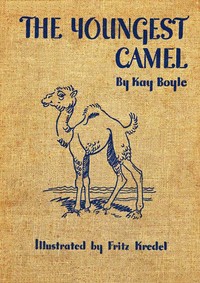
The Youngest Camel — Story, Setting & Ideas can be approached with a clearer sense of reading commitment from its source measurements: 22,012 words, 1 hr 36 min estimated reading time, and 10 detected text sections.
The text analysis averages about 21.4 words per sentence, while the detected sections provide another way to judge how the source is divided.
Project Gutenberg metadata also associates the work with “Animals -- Juvenile fiction,” connecting these edition facts with the source record’s subject description.
Explore this collection
These alternatives are selected using recorded categories and estimated reading time.
About 106 minutes
Childrens Adventures
24,296 recorded words. 10 minutes difference from this book's estimate.
View Gutenberg source #67907About 107 minutes
Childrens Adventures
24,608 recorded words. 11 minutes difference from this book's estimate.
View Gutenberg source #65308About 83 minutes
Childrens Adventures
18,898 recorded words. 13 minutes difference from this book's estimate.
View Gutenberg source #58263Search stored excerpts and compare books → Choose by your preferences →
Choices use stored catalog measurements. Estimates vary with reading speed. A shared category is a catalog label, not a claim that two books have the same argument or literary quality.
Search reads excerpt text stored with this catalog and links to its associated Gutenberg record. The connection is stored in the site database; this tool does not recheck that every excerpt is word-for-word identical to that external record. Excerpt search does not cover every chapter and does not verify historical publication dates.
Catalog snapshot checked: 2026-09-26. Coverage: 90 public books, 90 available source excerpts.
Calculated from edition completeness, EPUB availability, text structure and catalogue metadata. Not a user rating.
Total of 100 points, scaled to a 2.5-5.0 range. Editions with an empty description or a missing EPUB file are not scored.
Public-domain source text
The source text is kept in the dedicated reader, separate from this catalogue record and its commentary.
The youngest camel begins his first caravan journey without a bell or a load, following his mother through flowered regions and villages where boys sell fruit. The early passages establish a contrast between the caravan's orderly progress and the camel's playful, self-assured skipping. But the tone shifts when the caravan enters the badlands: older camels spit, scream, and totter, and the heat blazes like a fire. The youngest camel's initial confidence—he thinks he can never get tired—is tested as his mother complains of the heat and the landscape turns hostile.
Boyle's prose moves between lyrical description and sharp, almost comic menace. The vultures Annie and Mabel, who appear after the camel becomes lost, speak with a matter-of-fact cruelty that undercuts the pastoral opening. Their conversation about the sun's unreliable direction and their frank assessment of the camel's meatiness introduces a tension between innocence and predatory reality that runs through the excerpts.
The vultures' claim that the sun changes direction daily—"yesterday it was going from north to south, just for the fun of it, and today ... it's going from east to west"—strips the camel of his last navigational certainty. This moment crystallizes a pattern in the excerpts: fixed points (the mother, the caravan, the sun) prove unstable. The camel's earlier confidence in his own strength and his poetic compositions gives way to a desperate attempt to write a letter to his mother in verse, but he finds that "nothing sounded right to him, neither the sonnet form, nor rondos, nor madrigals." The loss of poetic fluency mirrors his physical disorientation.
Boyle uses the sun not as a symbol of constancy but as a capricious actor. The camel's education is not just about survival but about learning that the world does not conform to his expectations—a lesson reinforced by the vultures' casual dismissal of truth-telling: "It would have been better for your sake if you hadn't told the truth this time."
The vultures Annie and Mabel speak in a colloquial, almost domestic register—"My name's Annie and my sister's name is Mabel"—that makes their predatory intent more unsettling. They discuss the camel's meat with the same practicality they apply to slicing a hare's heart "into neat roast-beef-like portions." Their laughter, described as "chortling," follows the camel as he flees, and the sound becomes a marker of his vulnerability.
In response, the camel turns to poetry, but his attempts at sonnets, rondos, and madrigals fail. The letter he composes mixes self-reproach ("I've made a fool of myself with every bird that flies") with a poignant closing couplet: "Love, invisible it's true, / Still has the shape and smell of you." This line, the most lyrical in the excerpts, suggests that poetry remains a fragile anchor even when it cannot save him. The absence of his harp—"the fact that he did not have his harp with him made the biggest difference"—underscores how his artistic identity depends on external tools now lost.
The opening description of the caravan emphasizes sound: all forty camels wear "several little silver-tongued bells attached to the harness." The youngest camel is the only one without a bell, a detail that sets him apart from the collective rhythm. Later, when the older camels scream "like humans" at sundown, the noise becomes a sign of distress rather than order. The camel's own voice—his laughter, his poetry, his scream of terror—alternates with silence: he "said nothing at all, but simply followed in her footsteps" early on, and after fleeing the vultures he walks quietly, hoping to calm his heart.
This pattern of sound and silence reflects a broader tension between belonging and isolation. The caravan's bells create a communal identity, but the youngest camel's lack of a bell marks him as an individual—one who must find his own way when lost. The vultures' cackling replaces the caravan's music, and the desert offers no reassuring chime.
Readers attentive to Boyle's language will notice how she embeds philosophical questions—about truth, art, and survival—within a seemingly simple animal adventure. The camel's poetic aspirations are not whimsical decoration but a central thread: his failure to compose satisfactory verse is as significant as his physical peril. The excerpts leave the camel's fate unresolved, but the tensions they establish—between trust and deceit, lyricism and brute fact, the caravan's order and the desert's chaos—give the story its distinctive edge. Approach the text as a fable that resists easy moralizing, where even the sun cannot be relied upon.
In The Youngest Camel, the desert’s silence teaches how a lone voice—even a misstep—can become its own truth. Years later, I found that same stubborn, quiet seeking in The quest of the Silver Swan: A land and sea tale for boys — A Closer Reading, though one sails on water and the other on sand. Both felt like old friends, patient with their secrets.
A brief reflection can help important ideas stay with you longer.