About 106 minutes
Robinson Crusoe, Told to the Children by John Lang — A Reader’s Guide
Childrens Adventures
24,296 recorded words. 1 minutes difference from this book's estimate.
View Gutenberg source #67907
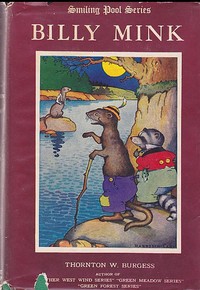
For Billy Mink — A Closer Reading, the stored edition analysis reports 24,608 words, 1 hr 47 min estimated reading time, and 4 detected text sections.
The text analysis averages about 15.9 words per sentence, while the detected sections provide another way to judge how the source is divided.
Project Gutenberg metadata also associates the work with “Friendship -- Juvenile fiction,” connecting these edition facts with the source record’s subject description.
Explore this collection
These alternatives are selected using recorded categories and estimated reading time.
About 106 minutes
Childrens Adventures
24,296 recorded words. 1 minutes difference from this book's estimate.
View Gutenberg source #67907About 109 minutes
Childrens Adventures
24,896 recorded words. 2 minutes difference from this book's estimate.
View Gutenberg source #65360About 110 minutes
Childrens Adventures
25,160 recorded words. 3 minutes difference from this book's estimate.
View Gutenberg source #61888Search stored excerpts and compare books → Choose by your preferences →
Choices use stored catalog measurements. Estimates vary with reading speed. A shared category is a catalog label, not a claim that two books have the same argument or literary quality.
Search reads excerpt text stored with this catalog and links to its associated Gutenberg record. The connection is stored in the site database; this tool does not recheck that every excerpt is word-for-word identical to that external record. Excerpt search does not cover every chapter and does not verify historical publication dates.
Catalog snapshot checked: 2026-09-26. Coverage: 90 public books, 90 available source excerpts.
Calculated from edition completeness, EPUB availability, text structure and catalogue metadata. Not a user rating.
Total of 100 points, scaled to a 2.5-5.0 range. Editions with an empty description or a missing EPUB file are not scored.
Public-domain source text
The source text is kept in the dedicated reader, separate from this catalogue record and its commentary.
Billy Mink opens with a couplet warning that “the stranger and the unknown must / Be always looked on with distrust,” a motto that governs the entire narrative. The story is built around Billy’s suspicion: first of a human trapper’s metal traps, then of a gang of rats who have taken over a big barn. Burgess structures the plot as a series of investigations, each triggered by Billy’s sharp senses—his eyes, ears, and especially his nose. The setting shifts from the Laughing Brook and Green Forest to the farmyard, the henhouse, and finally the farmhouse itself, creating a layered geography of danger and discovery.
The narrative moves through distinct territories, each with its own rules. Early chapters place Billy along the Laughing Brook, where he is the keenest observer of all the little people. When he discovers a trap, the action shifts to the human farm. The barn becomes a new world: a “queer fence” (a wire trap) and a rat gang that operates like a robber band. Burgess marks each transition with a change in Billy’s behavior—he becomes more cautious, more calculating. The snow that falls in chapter 23 erases all tracks, forcing Billy to rely on memory and guesswork. This geographical layering gives the story a clear, episodic structure while maintaining a single thread of pursuit.
Burgess uses sensory details—especially smell and sound—to drive the plot. Billy’s “wonderful nose” is his primary tool; he follows trails, detects hidden rats, and recognizes danger by scent alone. When the rats vanish, the snow covers their footprints and “there was no scent for Billy to follow.” The absence of sound is equally telling: in the empty barn, Billy hears “not the squeak of a single voice.” These sensory cues create a rhythm of presence and absence, guiding both Billy and the reader. The recurring image of the “spotlessly white” snow blanketing the landscape emphasizes how quickly a trail can be lost, and how easily enemies can hide.
Unlike Billy, who acts alone, the rats are a coordinated group led by a “wise, gray old leader.” Burgess portrays them as a “gang of robbers” who are “ugly, dirty, and of no account.” They plan collectively, hold meetings, and decide to fight or flee as a unit. Their movement from barn to farmhouse is a strategic retreat, calculated to exploit Billy’s fear of humans. This collective antagonist contrasts with Billy’s solitary, improvisational style. The rats’ ability to organize makes them a persistent threat, and their leader’s cunning—knowing that Billy “would hesitate a long time about actually entering the house”—adds a layer of psychological tension to the chase.
Initially, the farmer is an offstage figure whose traps threaten Billy. But as the rats invade the farmhouse, the farmer becomes a witness and then an ally. In chapter 28, “The Farmer Guesses the Truth,” he begins to understand that Billy is hunting the rats. By chapter 29, he actively makes friends with Billy, offering food and shelter. This shift transforms the human world from a place of danger to a source of aid. Burgess keeps the farmer’s perspective limited—we see only his actions, not his thoughts—but his presence changes the stakes. Billy’s wariness of man is overcome by the greater threat of the rats, creating an uneasy but effective partnership.
Readers will notice that Burgess rarely lets Billy pause. The story is built on movement: from brook to barn, from barn to henhouse, from henhouse to farmhouse. Each chapter ends with a decision to go somewhere else. Pay attention to the couplets that open each chapter—they often foreshadow the moral or outcome. The illustrations by Harrison Cady, though not reproduced here, originally reinforced the sense of place and action. This is a story best read as a chase, with Billy’s nose as the compass.
That rainy afternoon, I kept returning to Billy Mink’s patient tracking of scent trails through snow and stranger doorways. It made me think how animals navigate human spaces, and humans navigate wild ones—which is how I stumbled onto The Bird Boys' Aeroplane Wonder; Or, Young Aviators on a Cattle Ranch — Edition Insights, almost without deciding to. Same quiet watchfulness, just lifted off the ground.
Use these questions to collect your thoughts before moving on.