About 111 minutes
Pep: The Story of a Brave Dog — Story, Setting & Ideas
Childrens Adventures
25,315 recorded words. 1 minutes difference from this book's estimate.
View Gutenberg source #59909
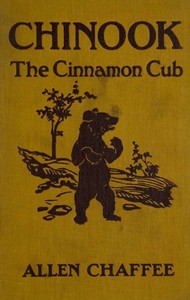
This digital edition of Chinook, the Cinnamon Cub — Text and Context is described by source-level measurements including 25,160 words, 1 hr 50 min estimated reading time, and 25 detected text sections.
The text analysis averages about 21.8 words per sentence, while the detected sections provide another way to judge how the source is divided.
Project Gutenberg metadata also associates the work with “Animals -- Juvenile fiction,” connecting these edition facts with the source record’s subject description.
Explore this collection
These alternatives are selected using recorded categories and estimated reading time.
About 111 minutes
Childrens Adventures
25,315 recorded words. 1 minutes difference from this book's estimate.
View Gutenberg source #59909About 109 minutes
Childrens Adventures
24,896 recorded words. 1 minutes difference from this book's estimate.
View Gutenberg source #65360About 113 minutes
Childrens Adventures
25,926 recorded words. 3 minutes difference from this book's estimate.
View Gutenberg source #63029Search stored excerpts and compare books → Choose by your preferences →
Choices use stored catalog measurements. Estimates vary with reading speed. A shared category is a catalog label, not a claim that two books have the same argument or literary quality.
Search reads excerpt text stored with this catalog and links to its associated Gutenberg record. The connection is stored in the site database; this tool does not recheck that every excerpt is word-for-word identical to that external record. Excerpt search does not cover every chapter and does not verify historical publication dates.
Catalog snapshot checked: 2026-09-26. Coverage: 90 public books, 90 available source excerpts.
Calculated from edition completeness, EPUB availability, text structure and catalogue metadata. Not a user rating.
Total of 100 points, scaled to a 2.5-5.0 range. Editions with an empty description or a missing EPUB file are not scored.
Public-domain source text
The source text is kept in the dedicated reader, separate from this catalogue record and its commentary.
Allen Chaffee’s Chinook, the Cinnamon Cub opens with a June dawn in an Oregon gulch, where “dewdrops gleamed like diamonds on every flower and fern.” The prose immediately establishes a close third-person perspective that shifts between the cubs’ sensory world and a human observer’s vocabulary. Chaffee uses precise verbs—Chinook “wriggles his nose,” “crunches” sugar, and “snaps it up”—to convey bear behavior without anthropomorphizing beyond the cub’s limited understanding. The dialogue is minimal; instead, the narrative reports internal states: “he realized that he was famished” or “he asked himself.” This technique keeps the animal protagonist believable while allowing young readers to infer emotions.
Chaffee’s word choices consistently filter the world through a bear’s senses. The cub does not see a boy; he “eyed the blue-overalled biped with not a little suspicion.” The phrase “blue-overalled biped” is a child-friendly abstraction that mimics how an animal might categorize a human by color and shape. Similarly, sugar is a “delicious smelling tidbit” and later “the goody”—terms that reflect Chinook’s limited but eager vocabulary. The narrator uses “roly-poly” and “roguish face” to describe the cubs, blending endearment with observational accuracy. When Mother Bear returns, she “grunted a harsh ‘Come on!’” The grunt is a plausible bear sound, but the quotation marks give it a quasi-verbal quality, a deliberate choice that straddles naturalism and storytelling convention.
Human dialogue in the excerpt is sparse and functional. The Ranger calls “Quick! Inside!” and later asks “Could I cut him loose?” The Boy’s line “Now he’ll wear a collar” is met with the Ranger’s “Don’t you believe it!” These exchanges advance the plot without explaining the animals’ motives. More striking is the absence of dialogue between the cubs. Instead, Chaffee uses body language: Chinook and Snookie “wrestled like two boys, standing up on their short hind legs to pummel one another.” The simile likens them to human children, but the action remains purely physical. When Chinook “assured his mother” with a thought, the narrative slips into indirect discourse: “Aw, it’s all right!” This is not spoken aloud but presented as a bear’s internal conviction, a technique that preserves the animal’s silence while conveying meaning.
Chaffee’s descriptive passages alternate between broad landscape and minute detail. The opening paragraph moves from “slant bars” of light between pines to “dewdrops gleamed like diamonds” on individual ferns. This zooming effect mirrors a bear’s attention: first the environment, then the immediate object. The author repeats sensory cues: “delicious smelling,” “inquiring pink tongue,” “mouth watered.” These phrases anchor the reader in taste and smell, the primary bear senses. The setting is not merely scenic; it functions as a stage for the cub’s discoveries. When the Boy throws sugar, the narrative slows: “Softly, slowly and ever so unalarmingly, the Boy came a few steps nearer.” The triple adverb emphasizes the careful pacing, a rhythm that contrasts with the earlier wrestling and galloping.
The chapter’s central scene—the Boy feeding the cub—is structured as a series of tentative advances and retreats. Chaffee builds tension through Chinook’s internal conflict: “Why not consider the Boy a friend?” The question is posed as the cub’s own reasoning, though it is clearly the narrator’s device. The scene is bookended by Mother Bear’s appearances: first as a distant threat, then as a rescuer gnawing the rope. The rope itself becomes a symbol of the boundary between wild and tame. The Boy’s wish to be friends is undercut by the Ranger’s remark about National Parks, a quiet acknowledgment that this trust is fragile. The excerpt ends with the cub freed, but the reader senses the encounter is a temporary truce, not a resolution.
Readers attentive to Chaffee’s craft will notice how she uses the cub’s limited perspective to teach about bear behavior without sacrificing narrative momentum. The author’s restraint in dialogue and her reliance on sensory description make the animal world feel immediate yet distinct from human experience. This edition invites young readers to observe how words can shape a creature’s point of view—a skill as valuable as tracking footprints in the Oregon woods.
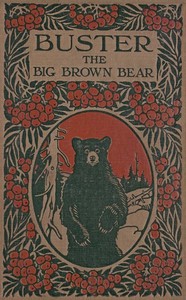
There’s a tenderness in how Chaffee lets Chinook linger between cub and child, those little hesitations before a pounce that feel almost like memory. I found myself thinking of Buster the Big Brown Bear — Themes and Context afterward, the same quiet ache of wild things learning gentleness. Some sentences just stay, like paw prints on a porch.
Capture what you thought, learned, and would like to remember.