About 110 minutes
Chinook, the Cinnamon Cub — Text and Context
Childrens Adventures
25,160 recorded words. 1 minutes difference from this book's estimate.
View Gutenberg source #61888
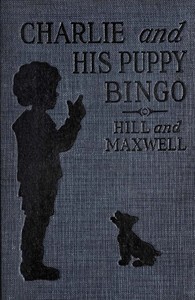
The source record for Charlie and His Puppy Bingo — Reading Notes measures this digital text at 24,896 words, 1 hr 49 min estimated reading time, and 18 detected text sections.
The text analysis averages about 21.5 words per sentence, while the detected sections provide another way to judge how the source is divided.
Project Gutenberg metadata also associates the work with “Dogs -- Juvenile fiction,” connecting these edition facts with the source record’s subject description.
Explore this collection
These alternatives are selected using recorded categories and estimated reading time.
About 110 minutes
Childrens Adventures
25,160 recorded words. 1 minutes difference from this book's estimate.
View Gutenberg source #61888About 111 minutes
Childrens Adventures
25,315 recorded words. 2 minutes difference from this book's estimate.
View Gutenberg source #59909About 107 minutes
Childrens Adventures
24,608 recorded words. 2 minutes difference from this book's estimate.
View Gutenberg source #65308Search stored excerpts and compare books → Choose by your preferences →
Choices use stored catalog measurements. Estimates vary with reading speed. A shared category is a catalog label, not a claim that two books have the same argument or literary quality.
Search reads excerpt text stored with this catalog and links to its associated Gutenberg record. The connection is stored in the site database; this tool does not recheck that every excerpt is word-for-word identical to that external record. Excerpt search does not cover every chapter and does not verify historical publication dates.
Catalog snapshot checked: 2026-09-26. Coverage: 90 public books, 90 available source excerpts.
Calculated from edition completeness, EPUB availability, text structure and catalogue metadata. Not a user rating.
Total of 100 points, scaled to a 2.5-5.0 range. Editions with an empty description or a missing EPUB file are not scored.
Public-domain source text
The source text is kept in the dedicated reader, separate from this catalogue record and its commentary.
The catalog subjects for Charlie and His Puppy Bingo include “Conduct of life -- Juvenile fiction” and “Farmers -- Juvenile fiction,” but the excerpts reveal a more specific focus: the stories are built around direct instruction in practical skills and social roles. The foreword states that the authors wrote in “informal English, using frequent repetitions” to hold a child’s attention, and this method is evident in the text. For example, when Charlie delivers mail, the stage driver explains the entire farm-to-city supply chain, and Charlie responds by declaring he will become “a stage driver or a fireman.” The narrative does not simply depict good behavior; it models how children can participate in adult work.
The foreword explicitly describes the authors’ technique: they use “frequent repetitions” and italicize words for emphasis. This is not just a stylistic choice but a pedagogical one. In the mail-delivery episode, the stage driver repeats the pattern of “first by the stage driver and then by the train” for apples, wheat, and vegetables. The narrative then has Charlie echo the lesson: “I will take things to the country people that they need and bring back things to the city people that they need.” This repetition reinforces the concept of interdependence between city and country, a theme that aligns with the catalog subject “Farmers -- Juvenile fiction” but is executed through a structured, almost catechistic dialogue.
The catalog subject “Conduct of life -- Juvenile fiction” might suggest moral tales, but the excerpts show adults guiding Charlie through specific tasks rather than abstract lessons. The stage driver gives Charlie a real job: delivering mail and blowing a whistle. Charlie’s mother plays along when he pretends to be a postman, asking, “Good afternoon, Postman, have you a letter for me?” The lesson in conduct is embedded in role-playing and practical responsibility, not in admonishment. Similarly, when Charlie receives a sailboat, his father teaches him nautical terms like “mainsail,” “jib,” and “bowsprit,” emphasizing that “nobody ought to own a ship who does not know these things.” Conduct here means competence and proper terminology.
The catalog lists “Farmers -- Juvenile fiction” and “Families -- Juvenile fiction,” but the excerpts depict rural life as a backdrop for structured learning experiences. Charlie’s family moves to the country, and his father visits on Saturdays, bringing gifts that prompt lessons. The mail-delivery scene takes place on a stagecoach, and the driver explains how farms supply the city. The setting is not idyllic or pastoral; it is a working environment where Charlie observes and participates in the economy. The chapter titles—such as “Charlie Delivers Mail for the Stage Driver” and “Charlie Makes a Pool and Sails His Boat”—indicate that each chapter centers on a specific activity that teaches a skill or concept, from traffic laws to boat construction.
Readers approaching Charlie and His Puppy Bingo through the catalog subjects should note that the book’s treatment of conduct and farming is concrete and activity-based. The stories reward attention to detail: the italicized words, the repeated phrases, and the precise vocabulary all serve a deliberate instructional purpose. This is a book that teaches by doing, not by telling, and its value lies in the specific, step-by-step modeling of how a child can engage with the world.
That old Charlie book made me recall evenings on my grandfather’s porch, where every story circled chores and quiet work. The gentle repetition of lessons felt like a second language. Oddly, a different volume, Forge of Foxenby — Story, Setting & Ideas, carried the same unhurried warmth, as if the farmland itself were teaching. Some books simply settle in, like a familiar, dusty path worn soft by habit.
Use these questions to collect your thoughts before moving on.