About 224 minutes
Jerry Todd and the Talking Frog — Inside the Classic
Childrens Adventures
51,410 recorded words. 0 minutes difference from this book's estimate.
View Gutenberg source #67564
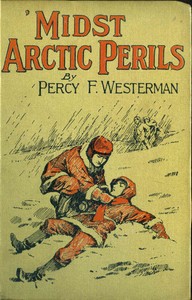
The source record for 'Midst Arctic Perils: A Thrilling Story of Adventure in the Polar Regions — Context and Discussion measures this digital text at 51,486 words, 3 hr 44 min estimated reading time, and 7 detected text sections.
The text analysis averages about 15.1 words per sentence, while the detected sections provide another way to judge how the source is divided.
Project Gutenberg metadata also associates the work with “Sea stories,” connecting these edition facts with the source record’s subject description.
Explore this collection
These alternatives are selected using recorded categories and estimated reading time.
About 224 minutes
Childrens Adventures
51,410 recorded words. 0 minutes difference from this book's estimate.
View Gutenberg source #67564About 225 minutes
Childrens Adventures
51,622 recorded words. 1 minutes difference from this book's estimate.
View Gutenberg source #58132About 227 minutes
Childrens Adventures
52,151 recorded words. 3 minutes difference from this book's estimate.
View Gutenberg source #60345Search stored excerpts and compare books → Choose by your preferences →
Choices use stored catalog measurements. Estimates vary with reading speed. A shared category is a catalog label, not a claim that two books have the same argument or literary quality.
Search reads excerpt text stored with this catalog and links to its associated Gutenberg record. The connection is stored in the site database; this tool does not recheck that every excerpt is word-for-word identical to that external record. Excerpt search does not cover every chapter and does not verify historical publication dates.
Catalog snapshot checked: 2026-09-26. Coverage: 90 public books, 90 available source excerpts.
Calculated from edition completeness, EPUB availability, text structure and catalogue metadata. Not a user rating.
Total of 100 points, scaled to a 2.5-5.0 range. Editions with an empty description or a missing EPUB file are not scored.
Public-domain source text
The source text is kept in the dedicated reader, separate from this catalogue record and its commentary.
The story opens not in the Arctic but on the Yorkshire coast, where fifteen-year-old Leslie Ward secures a week's cruise on the fishing smack Laughing Lassie from a man named Runswick. The early pages establish the two boy protagonists through contrasting physical descriptions: Leslie is "tall, broad-shouldered, and well set-up," while Guy is "a good three inches shorter" but "well-knit and wiry." Their friendship, we are told, is "cemented by peril and adventure." This domestic beginning, with its specific setting and character introductions, quickly gives way to a shipwreck and rescue, launching the boys into the polar expedition that occupies the rest of the novel.
The narrative moves with remarkable speed from a holiday cruise to a life-or-death struggle at sea. Chapter I ends with the Laughing Lassie being run down; Chapter II is titled "A Struggle for Life." By Chapter IV, the boys are aboard the Polarity, a vessel bound for the Arctic. This rapid escalation is typical of Westerman's adventure fiction: the journey from ordinary life to extreme danger is compressed into a few pages. The reader is given little time to adjust before the setting shifts from the familiar coast to the alien ice. The chapter titles themselves—"Trapped in an Iceberg," "The Sleep of Death," "The Crevasse"—function as a map of escalating perils, each promising a new crisis.
Central to the later action is the motor-sleigh Bird of Freedom, a vehicle described with the same technical precision that characterizes Leslie's mechanical aptitude. In Chapter XIII, the sleigh is shown navigating a glacier: "the surface, mottled by pieces of rock and small stones, afforded a good grip to her decapod wheels." The detail is specific and functional. Westerman does not merely name the vehicle; he shows how it interacts with the terrain. The sleigh's limited carrying capacity becomes a plot point, forcing the party to consider making two trips. This attention to practical constraints—fuel, weight, distance—grounds the adventure in a kind of engineering realism, even as the situations grow more fantastical.
Westerman uses dialogue to reveal character and advance the plot with economy. When Ranworth asks Leslie for assistance, the lad replies, "Only too pleased, sir," with "eyes sparkling with delight." Guy's response to being invited is more colloquial: "Where you go I jolly well go, too; so that settles the matter." The contrast between Leslie's formal enthusiasm and Guy's casual determination is consistent with their earlier descriptions. Later, a brief exchange about the midnight sun—"I only hope we won't have to put in a six months' night; that must be horrible"—adds a touch of humor and humanizes the characters amid the grim surroundings. These moments of lightness are sparing but effective.
The excerpts cover the opening, a middle section (Chapter XIII), and the closing Project Gutenberg boilerplate. The middle excerpt ends with the Bird of Freedom stopped by "a stretch of clear ice terminating at a ridge of large, smooth boulders." The text cuts off before the obstacle is overcome. The reader does not learn whether the dash to Observation Camp succeeds, what becomes of the injured Aubrey Hawke, or how the rescue concludes. The final chapters—"Abandoned" and "Rescued"—are listed in the contents but not excerpted. Any reading of the novel based solely on these passages must acknowledge that the resolution remains unknown. The story's trajectory is clear, but its outcome is not.
Readers approaching 'Midst Arctic Perils for the first time should pay attention to the mechanics of the sleigh and the geography of Nova Cania, as these are not mere backdrop but active elements of the plot. The novel rewards attention to how problems are solved—through engineering, teamwork, and sheer nerve—rather than through coincidence. The brisk chapter structure and frequent illustrations (listed in the contents) suggest a book designed for serial or episodic reading. Treat each chapter as a discrete incident building toward an unknown conclusion.
There’s a particular solace in ’Midst Arctic Perils, that sturdy tale of lads and their motor-sleigh, for it reminds me of the steady courage found in quiet preparation. Its brisk, mechanical confidence always brings to mind another shelf-sitter, Buster the Big Brown Bear — Themes and Context, whose own unhurried warmth offers a different, softer sort of bravery. Both hold young hearts gently, each in its own season.
Create a short personal record of your experience with this book.