About 123 minutes
Dido, the Dancing Bear: His Many Adventures — Inside the Classic
Childrens Adventures
28,233 recorded words. 2 minutes difference from this book's estimate.
View Gutenberg source #61450
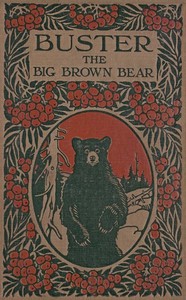
Buster the Big Brown Bear — Themes and Context can be approached with a clearer sense of reading commitment from its source measurements: 27,808 words, 2 hr 1 min estimated reading time, and 26 detected text sections.
The text analysis averages about 15.8 words per sentence, while the detected sections provide another way to judge how the source is divided.
Project Gutenberg metadata also associates the work with “Bears -- Juvenile fiction,” connecting these edition facts with the source record’s subject description.
Explore this collection
These alternatives are selected using recorded categories and estimated reading time.
About 123 minutes
Childrens Adventures
28,233 recorded words. 2 minutes difference from this book's estimate.
View Gutenberg source #61450About 126 minutes
Childrens Adventures
28,769 recorded words. 5 minutes difference from this book's estimate.
View Gutenberg source #62505About 113 minutes
Childrens Adventures
25,926 recorded words. 8 minutes difference from this book's estimate.
View Gutenberg source #63029Search stored excerpts and compare books → Choose by your preferences →
Choices use stored catalog measurements. Estimates vary with reading speed. A shared category is a catalog label, not a claim that two books have the same argument or literary quality.
Search reads excerpt text stored with this catalog and links to its associated Gutenberg record. The connection is stored in the site database; this tool does not recheck that every excerpt is word-for-word identical to that external record. Excerpt search does not cover every chapter and does not verify historical publication dates.
Catalog snapshot checked: 2026-09-26. Coverage: 90 public books, 90 available source excerpts.
Calculated from edition completeness, EPUB availability, text structure and catalogue metadata. Not a user rating.
Total of 100 points, scaled to a 2.5-5.0 range. Editions with an empty description or a missing EPUB file are not scored.
Public-domain source text
The source text is kept in the dedicated reader, separate from this catalogue record and its commentary.
From the opening line—"No you won't, Mr. Loup, for my mother will kill you first"—Buster the Big Brown Bear establishes a world where animal characters speak directly and face threats with defiance. The book, part of the Twilight Animal Series by George Ethelbert Walsh, follows Buster as he moves from the wild into a circus, where he must navigate both training and the simmering grudges of fellow performers. The excerpts reveal a narrative built on contrasts: Buster's cheerful grin versus the snarling envy of Spot the Leopard and Ocelot the Jungle Cat, and the circus's public spectacle versus the private tensions inside cages.
The excerpts repeatedly pit Buster's easygoing demeanor against the hostility of other animals. When Spot and Ocelot threaten him, Buster "sat back on his haunches and laughed." His response to their spitting and snarling is a grin and a request to "forget and forgive." This contrast is not merely comic; it defines Buster's character as one who carries "no spirit of ill-feeling." Meanwhile, the leopard and jungle cat are "nearly consumed with rage and envy," their physical pain from earlier fights dwarfed by mental suffering. Even Timber the Wolf joins the chorus, threatening to lap up Buster's blood. The Old Lion, however, offers a different note: he gives advice rather than threats, warning Buster not to let "the pride of strength deceive you." This advice, drawn from the fable of the mouse and the lion, suggests a moral framework where cleverness and humility matter as much as brute force.
Buster's relationship with the trainer Chiquita marks a shift from wild bear to circus performer. The excerpts show him growing "as fond of Chiquita as she was of him," obeying "meekly and willingly as a pet dog." His earlier ugly temper, displayed when fighting Spot in the cage, disappears entirely. Chiquita trains him for trick performances, and Buster proves "quick to pick up his new lessons," learning to jump through a hoop, skip rope, and turn somersaults. The climax of this training is a costume: Chiquita makes Buster a "wonderful dress" of red, white, and blue flannel, with a tall hat, making him look "like the cartoon of Uncle Sam." Chiquita herself appears as the goddess of liberty, and the pair walk arm in arm to applause. This transformation from a fighting bear to a patriotic clown figure underscores the book's interest in performance and identity.
The circus setting creates a backdrop of constant movement and hidden dangers. During a move, Buster finds his resting place filled with packing boxes and climbs onto a bundle of canvas, where he falls asleep and snores loudly enough to attract attendants. This moment of comic relief contrasts with the ongoing threat from Spot and Ocelot, who watch "for an opportunity to get revenge." The iron bars of their cages provide safety for their snarling, but the narrative makes clear that "right down in their hearts, however, they were afraid of him." Buster's temporary forgetfulness of the Old Lion's advice hints at future vulnerability. The circus, with its noise and confusion, is a place where alliances shift and grudges persist, and Buster's success as a trick bear does not eliminate the danger lurking in the cages.
Readers approaching Buster the Big Brown Bear will find a story that balances lighthearted training sequences with undercurrents of animal rivalry. Pay attention to how the author uses dialogue—the snarling threats versus Buster's grinning replies—to build character without lengthy description. The Old Lion's fable-like warning offers a clue to the book's moral structure, while the circus setting provides both spectacle and confinement. The excerpts suggest a work that rewards attention to recurring contrasts and the shifting dynamics among its animal cast.
That rainy afternoon, Buster the Big Brown Bear stayed with me long after the circus tents folded—not the rivalry, but the Old Lion’s quiet patience, the way wisdom waits behind bars. It made me think of gentler deliverance, and I found myself drifting to The Tale of Bunny Cotton-Tail — Edition Insights, where another caged heart learns that softness, too, can be a way out.
A brief reflection can help important ideas stay with you longer.