About 29 minutes
The Wreck of the Mail Steamer — A Reader’s Guide
Childrens Adventures
6,458 recorded words. 6 minutes difference from this book's estimate.
View Gutenberg source #67489
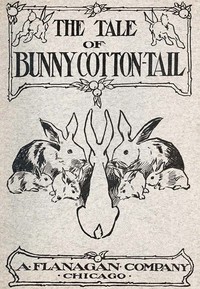
This digital edition of The Tale of Bunny Cotton-Tail — Edition Insights is described by source-level measurements including 7,868 words, 35 min estimated reading time, and 14 detected text sections.
The text analysis averages about 19.5 words per sentence, while the detected sections provide another way to judge how the source is divided.
Project Gutenberg metadata also associates the work with “Friendship -- Juvenile fiction,” connecting these edition facts with the source record’s subject description.
Explore this collection
These alternatives are selected using recorded categories and estimated reading time.
About 29 minutes
Childrens Adventures
6,458 recorded words. 6 minutes difference from this book's estimate.
View Gutenberg source #67489About 72 minutes
Childrens Adventures
16,398 recorded words. 37 minutes difference from this book's estimate.
View Gutenberg source #57469About 83 minutes
Childrens Adventures
18,898 recorded words. 48 minutes difference from this book's estimate.
View Gutenberg source #58263Search stored excerpts and compare books → Choose by your preferences →
Choices use stored catalog measurements. Estimates vary with reading speed. A shared category is a catalog label, not a claim that two books have the same argument or literary quality.
Search reads excerpt text stored with this catalog and links to its associated Gutenberg record. The connection is stored in the site database; this tool does not recheck that every excerpt is word-for-word identical to that external record. Excerpt search does not cover every chapter and does not verify historical publication dates.
Catalog snapshot checked: 2026-09-26. Coverage: 90 public books, 90 available source excerpts.
Calculated from edition completeness, EPUB availability, text structure and catalogue metadata. Not a user rating.
Total of 100 points, scaled to a 2.5-5.0 range. Editions with an empty description or a missing EPUB file are not scored.
Public-domain source text
The source text is kept in the dedicated reader, separate from this catalogue record and its commentary.
The story begins not with a moral but with a specific, tangible mistake: Bunny Cotton-Tail reads by candlelight, waves his paw too close, and burns it. His mother wraps the injury in a cabbage leaf, but Bunny eats the leaf, making the pain worse. This chain of small, impulsive decisions—reading late, eating the dressing, hiding the pain—propels him out of the house and into a night of escalating misadventures. The narrative voice is direct and conversational, often addressing the reader with questions like 'Have you ever cried so loud that you could be heard next door?'
The excerpts reveal a story built on contrasts: the safe, rule-bound home versus the strange, moonlit outdoors; the familiar cabbage patch versus the alarming scarecrow; and the comfort of a mother's hug versus the terror of mistaking her for Mr. Fox. These tensions are not resolved by simple obedience but through a series of misunderstandings that eventually lead Bunny back home, wiser but not entirely cured.
The opening chapter establishes a pattern of cause and effect that drives the entire narrative. Bunny's burned paw is not just a mishap; it is the direct result of his disobedience—reading late by candlelight, an activity his mother likely forbade. The cabbage leaf dressing, meant to soothe, becomes a temptation he cannot resist. This moment of weakness (eating the leaf) leads to worsened pain and a decision to hide his mistake by running away. The text emphasizes Bunny's fear of scolding over his physical pain: 'This time he did not cry, for he was afraid he would be scolded.'
The author uses this sequence to show how small, seemingly trivial choices can snowball. Bunny's initial disobedience is not portrayed as wickedness but as a natural, childlike lapse in judgment. The narrative does not condemn him; instead, it follows his logic step by step, making his flight understandable even as it leads to danger. The candle, the cabbage leaf, and the night air are all concrete objects that carry symbolic weight—the candle representing forbidden knowledge, the cabbage leaf representing comfort turned into temptation, and the night representing the unknown.
Once outside, Bunny's world expands into a series of misinterpretations. He encounters a scarecrow and, having never seen one, believes it is a man. His mother's warning that 'men did not like rabbits' transforms the harmless figure into a threat. The moon, too, becomes an antagonist: 'the moonlight made him dizzy, and he took the wrong road.' Bunny's fear is not irrational but based on incomplete knowledge—a key theme in the excerpts.
The hunter who captures Bunny does not harm him but takes him home as a plaything for his son Harold. This shift from wild danger to domestic captivity is abrupt. Bunny is now an object of curiosity: the family gathers to examine him, asking 'Why are his ears so long?' and making remarks about his tail. The story does not dwell on Bunny's perspective here, but the implication is clear: he is no longer a runaway but a captive, stripped of agency. Later, the climax involves Bunny mistaking his own mother for Mr. Fox when she wears the fox's coat. This moment of mistaken identity is both comic and poignant—the very person he should trust most becomes, for a moment, the embodiment of his greatest fear.
The narrator frequently breaks the fourth wall, addressing the reader directly with questions ('Have you ever cried so loud...?') and playful asides ('And what do you suppose that comical Bunny did?'). This technique creates a sense of intimacy and shared amusement, positioning the reader as a confidant rather than a passive observer. The tone is gently didactic but never heavy-handed; lessons emerge from Bunny's experiences rather than being stated outright.
The structure of the excerpts shows a pattern of escalation: each chapter introduces a new threat or misunderstanding, from the scarecrow to the hunter to the fox's coat. The resolution comes not through heroic action but through a series of coincidences and recognitions. The final line—'whether his sore paw ever got well or not, I cannot tell you, for I forgot to ask him'—is a deliberate anticlimax, undercutting any expectation of tidy closure. This narrative choice emphasizes the story's focus on the journey rather than the outcome, and it invites the reader to imagine the rest. The book's brevity (under 8,000 words) and episodic structure make it suitable for reading aloud, with each chapter offering a self-contained incident that builds on the last.
Readers may notice that Bunny's adventures are driven less by malice than by curiosity and fear—two emotions the story treats with sympathy rather than judgment. The recurring motif of misidentification (scarecrow for man, mother for fox) suggests that the world is full of things that appear threatening but are not, and that home is not always a place of perfect safety but of imperfect love. The narrative's light touch and conversational voice make it a gentle introduction to the idea that mistakes can be learning experiences, even if the lessons are not explicitly spelled out.
Reading about Bunny Cotton-Tail’s impulsive flight into the dark, I found myself thinking of another restless soul, one who traded wild freedom for a quieter, stranger contentment. There’s a particular ache in both, a loneliness borne of leaving. That memory lingers with Tamba, the Tame Tiger: His Many Adventures — Key Ideas to Explore, a fellow wanderer whose story feels like a gentler echo of the same curious heart.
Capture what you thought, learned, and would like to remember.