About 121 minutes
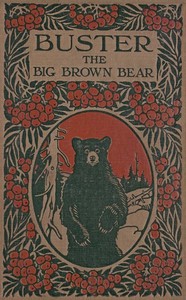
Buster the Big Brown Bear — Themes and Context
Childrens Adventures
27,808 recorded words. 2 minutes difference from this book's estimate.
View Gutenberg source #57559
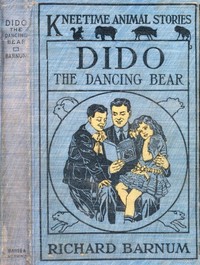
The catalog record for Dido, the Dancing Bear: His Many Adventures — Inside the Classic provides practical reading context through 28,233 words, 2 hr 3 min estimated reading time, and 13 detected text sections.
The text analysis averages about 15.0 words per sentence, while the detected sections provide another way to judge how the source is divided.
Project Gutenberg metadata also associates the work with “Animals -- Juvenile fiction,” connecting these edition facts with the source record’s subject description.
Explore this collection
These alternatives are selected using recorded categories and estimated reading time.
About 121 minutes
Childrens Adventures
27,808 recorded words. 2 minutes difference from this book's estimate.
View Gutenberg source #57559About 126 minutes
Childrens Adventures
28,769 recorded words. 3 minutes difference from this book's estimate.
View Gutenberg source #62505About 113 minutes
Childrens Adventures
25,926 recorded words. 10 minutes difference from this book's estimate.
View Gutenberg source #63029Search stored excerpts and compare books → Choose by your preferences →
Choices use stored catalog measurements. Estimates vary with reading speed. A shared category is a catalog label, not a claim that two books have the same argument or literary quality.
Search reads excerpt text stored with this catalog and links to its associated Gutenberg record. The connection is stored in the site database; this tool does not recheck that every excerpt is word-for-word identical to that external record. Excerpt search does not cover every chapter and does not verify historical publication dates.
Catalog snapshot checked: 2026-09-26. Coverage: 90 public books, 90 available source excerpts.
Calculated from edition completeness, EPUB availability, text structure and catalogue metadata. Not a user rating.
Total of 100 points, scaled to a 2.5-5.0 range. Editions with an empty description or a missing EPUB file are not scored.
Public-domain source text
The source text is kept in the dedicated reader, separate from this catalogue record and its commentary.
From its first sentence, Dido, the Dancing Bear establishes a narrator who speaks directly to a child audience. The opening chapter begins with a conditional aside—“Mind, I’m not saying for sure, but maybe”—that invites readers into a speculative, conversational space. This technique recurs throughout the excerpts: the narrator explains what a bear’s den is by comparing it to a father’s or brother’s room, and later clarifies that animals can understand but cannot answer back. These interjections slow the narrative pace, creating pauses for explanation that are characteristic of early twentieth-century children’s literature.
The narrator frequently breaks from action to address the reader directly or to clarify a point. For instance, after describing the bear family, the text adds: “I suppose, though, if a boy went on top of the mountain, and began throwing stones or sticks at the nice bears, they might have run out and scratched him to make him go away.” This hypothetical scenario is not necessary for plot advancement; it serves to manage reader expectations and to model appropriate behavior. Such asides create a rhythm of statement and qualification, giving the prose a measured, pedagogical quality. The effect is a narrative that feels less like a fast-paced adventure and more like a guided tour, with the narrator acting as a patient explainer.
When Dido performs tricks, the prose shifts to a more rapid, step-by-step description. The somersault trick is rendered in a series of short actions: “Dido leaned down, put his head on the ground, kicked his hind legs up in the air, and over he went.” The repetition of “over he went” and the command “Another, Dido!” accelerate the tempo, mimicking the briskness of a live performance. Similarly, the tree-climbing trick is broken into discrete stages: climbing, stopping, descending, and receiving a reward. These sequences contrast with the earlier explanatory passages, demonstrating Barnum’s ability to vary pace according to content. The performance scenes also include audience reactions—laughter, tossed pennies—that further quicken the narrative beat.
A notable feature of the narrative voice is its handling of animal communication. The narrator explicitly states that Dido cannot speak, yet the text includes dialogue attributed to the bear: “Don’t be afraid of me, doggies. I won’t hurt any one.” This contradiction is managed by framing the speech as a kind of interior monologue or as part of the trainer’s pretense. When George pretends to whisper in Dido’s ear and then listens for an answer, the narrator explains the ruse, preserving the boundary between reality and performance. The effect is a layered voice: one that acknowledges the fictionality of talking animals while still indulging in it. This self-aware narration adds a subtle complexity to the otherwise straightforward prose.
Readers attentive to narrative craft will notice how Barnum balances instruction with entertainment. The frequent asides and explanations may slow the story for modern tastes, but they also reveal a deliberate strategy to engage and educate a young audience. The performance sequences, by contrast, offer brisk, vivid action. Observing these shifts in pace and voice can enrich one’s reading of this early animal adventure.
Reading about Dido’s patient pacing, I remembered sitting with my grandfather, his voice slowing on the explanatory asides. That same unhurried trust in a young listener came back with Bob Hazard, dam builder — Reading Companion; it felt less like a story being told than a quiet conversation being kept between pages. A familiar warmth, simply waiting there again.
A brief reflection can help important ideas stay with you longer.