About 237 minutes
Bobby Blake in the Frozen North; Or, The Old Eskimo's Last Message — Text and Context
Childrens Adventures
54,430 recorded words. 2 minutes difference from this book's estimate.
View Gutenberg source #58718
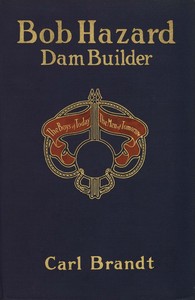
For Bob Hazard, dam builder — Reading Companion, the stored edition analysis reports 54,042 words, 3 hr 55 min estimated reading time, and 24 detected text sections.
The text analysis averages about 14.4 words per sentence, while the detected sections provide another way to judge how the source is divided.
Project Gutenberg metadata also associates the work with “Western stories,” connecting these edition facts with the source record’s subject description.
Explore this collection
These alternatives are selected using recorded categories and estimated reading time.
About 237 minutes
Childrens Adventures
54,430 recorded words. 2 minutes difference from this book's estimate.
View Gutenberg source #58718About 240 minutes
Childrens Adventures
54,986 recorded words. 5 minutes difference from this book's estimate.
View Gutenberg source #65418About 241 minutes
Childrens Adventures
55,274 recorded words. 6 minutes difference from this book's estimate.
View Gutenberg source #68749Search stored excerpts and compare books → Choose by your preferences →
Choices use stored catalog measurements. Estimates vary with reading speed. A shared category is a catalog label, not a claim that two books have the same argument or literary quality.
Search reads excerpt text stored with this catalog and links to its associated Gutenberg record. The connection is stored in the site database; this tool does not recheck that every excerpt is word-for-word identical to that external record. Excerpt search does not cover every chapter and does not verify historical publication dates.
Catalog snapshot checked: 2026-09-26. Coverage: 90 public books, 90 available source excerpts.
Calculated from edition completeness, EPUB availability, text structure and catalogue metadata. Not a user rating.
Total of 100 points, scaled to a 2.5-5.0 range. Editions with an empty description or a missing EPUB file are not scored.
Public-domain source text
The source text is kept in the dedicated reader, separate from this catalogue record and its commentary.
Carl Brandt's Bob Hazard, Dam Builder (1916) opens with a quiet conversation on a park bench in Richmond, Virginia, where seventeen-year-old Bob tells his father he wants to be an engineer, not a lawyer. The novel then shifts abruptly to the arid landscapes of a Western reclamation project, a structural leap that mirrors Bob's own transition from family expectations to the practical world of dam construction. The story moves between these two poles—the civilized East and the frontier worksite—using the tension between them to drive both plot and character development.
The narrative structure hinges on a clear geographical and emotional arc. The first chapter establishes Bob's decision in a formal, urban setting; subsequent chapters transplant him to the U.S. Reclamation Service's dam site, where the language becomes rougher and more immediate. The contrast is not merely scenic but structural: the measured dialogue of the opening gives way to urgent exchanges about labor troubles, dynamite, and sabotage. This movement is reinforced by the chapter titles themselves—"Father and Son," then "U. S. R. S.," then "When the Chief Was Away"—each step pulling Bob further from his father's world. The reader, like Bob, must adjust to a new vocabulary of engineering and danger.
The frontispiece caption—"A second later Bob was climbing through space, faster than a rocket"—introduces a motif of vertical motion that recurs throughout the excerpts. Bob is repeatedly placed in precarious positions: climbing, falling, or suspended above the worksite. This imagery reinforces the novel's preoccupation with risk and control. The dam itself is a structure that tames water by channeling it downward, and Bob's own trajectory—from a boy on a bench to a young man handling explosives—echoes that controlled descent. The illustrations listed in the contents ("Look out for falls!" and the snake-like fuse) suggest that the visual narrative also emphasizes these moments of physical peril.
The dam is not merely a backdrop but a site of conflict. The excerpts reveal multiple threats: Mexican laborers being "tampered with," cattlemen hostile to the project, and a mysterious saboteur named Jerry. The structure of the novel alternates between technical discussions of engineering and scenes of sabotage, creating a rhythm of problem-solving and crisis. The dam itself becomes a character—a massive, unfinished structure that draws both loyalty and enmity. Bob's role shifts from observer to active participant as he learns to navigate the social and physical dangers of the worksite. The recurring phrase "Uncle Sam" underscores the federal authority behind the project, adding a political dimension to the adventure.
The dialogue in the excerpts distinguishes between the formal speech of Bob's father and the colloquial, jargon-filled talk of the engineers. Bob's own voice evolves: early on he says "Yes, sir,—an engineer rather than anything else!" with careful politeness; later he uses phrases like "Gee, if the Greasers struck it would tie us up for fair." This shift in register marks his assimilation into the worksite culture. The engineers speak in a clipped, practical idiom—"I'm up against an awfully queer proposition"—that contrasts with the more elaborate descriptions of the landscape. The novel uses these vocal contrasts to signal who belongs and who does not, and to chart Bob's growing competence.
Readers approaching Bob Hazard, Dam Builder should attend to how Brandt uses physical movement—between East and West, between ground and height, between safety and danger—to structure the narrative. The dam is both a literal construction and a metaphor for the work of growing up. The novel rewards attention to its technical details, which are not mere decoration but integral to the plot's tensions.
Sometimes a story stays with you less for its plot than for its quiet scaffolding—like how that dam book keeps returning to the river’s push, the threat always just downstream. I felt something similar reading Doodles, the Sunshine Boy — Key Ideas to Explore, where the brightness isn’t simple. It’s built over something steadier, almost patient.
Use these questions to collect your thoughts before moving on.