About 235 minutes
Bob Hazard, dam builder — Reading Companion
Childrens Adventures
54,042 recorded words. 2 minutes difference from this book's estimate.
View Gutenberg source #63918
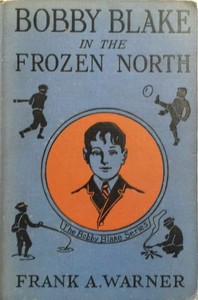
For Bobby Blake in the Frozen North; Or, The Old Eskimo's Last Message — Text and Context, the stored edition analysis reports 54,430 words, 3 hr 57 min estimated reading time, and 30 detected text sections.
The text analysis averages about 16.9 words per sentence, while the detected sections provide another way to judge how the source is divided.
Project Gutenberg metadata also associates the work with “Treasure troves -- Juvenile fiction,” connecting these edition facts with the source record’s subject description.
Explore this collection
These alternatives are selected using recorded categories and estimated reading time.
About 235 minutes
Childrens Adventures
54,042 recorded words. 2 minutes difference from this book's estimate.
View Gutenberg source #63918About 240 minutes
Childrens Adventures
54,986 recorded words. 3 minutes difference from this book's estimate.
View Gutenberg source #65418About 241 minutes
Childrens Adventures
55,274 recorded words. 4 minutes difference from this book's estimate.
View Gutenberg source #68749Search stored excerpts and compare books → Choose by your preferences →
Choices use stored catalog measurements. Estimates vary with reading speed. A shared category is a catalog label, not a claim that two books have the same argument or literary quality.
Search reads excerpt text stored with this catalog and links to its associated Gutenberg record. The connection is stored in the site database; this tool does not recheck that every excerpt is word-for-word identical to that external record. Excerpt search does not cover every chapter and does not verify historical publication dates.
Catalog snapshot checked: 2026-09-26. Coverage: 90 public books, 90 available source excerpts.
Calculated from edition completeness, EPUB availability, text structure and catalogue metadata. Not a user rating.
Total of 100 points, scaled to a 2.5-5.0 range. Editions with an empty description or a missing EPUB file are not scored.
Public-domain source text
The source text is kept in the dedicated reader, separate from this catalogue record and its commentary.
The first chapter of Bobby Blake in the Frozen North opens not on ice but on a baseball diamond, where Bobby and his Rockledge School friends trade slangy banter about pitching speed and upcoming games. The dialogue—"Gee whiz, but that was a hot one!"—establishes a tone of easy camaraderie and competitive energy. This schoolyard setting, complete with nicknames like Sparrow Bangs and Mouser Pryde, feels far removed from the Arctic adventure promised by the title. Yet the transition is swift: by the middle excerpts, Bobby is aboard a ship, receiving a whispered confession from a dying Eskimo chief named Takyak. The contrast between these two worlds—the familiar and the extreme—becomes the engine of the narrative.
The opening chapters ground the reader in the rhythms of Rockledge School: baseball practice, friendly rivalries, and nicknames that signal a close-knit group. The dialogue is colloquial and brisk, with characters like Pee Wee Wise and Jimmy Ailshine trading jabs. This domestic frame makes the later transition to the shipboard cabin all the more jarring. When Bobby first encounters Takyak, the old Eskimo is described as “strange,” his speech halting and his body wracked with pain. The cabin setting—confined, dim, urgent—replaces the open campus. The reader must adjust to a new register: whispered confidences, a gold chain, a walrus-tooth token. The shift is not gradual but abrupt, mirroring Bobby’s own sudden leap from schoolboy to treasure-seeker.
Takyak’s dialogue carries the story’s emotional and plot weight. His speech is fragmented, marked by pauses and physical struggle: “I have no time to rest—yet,” he gasps. He repeats key phrases—“the treasure is mine, mine!”—and his anger at Captain Garrish flares even as his strength fails. The walrus tooth he gives Bobby is described as “peculiarly marked,” a tangible link to the hidden wreck. Takyak’s insistence that Bobby must not let Garrish know creates immediate suspense. The reader, like Bobby, is thrust into a conspiracy with incomplete information. The old Eskimo’s voice is the only source of the treasure’s existence; his death (implied by the chapter title “Death Takes a Hand”) leaves Bobby and his chums to act on a dying man’s words. This reliance on a single, fragile testimony colors every subsequent decision.
The walrus tooth functions as both a plot device and a symbol of trust. Takyak explains that Mooloo, a native guide, will recognize it and lead Bobby to the wreck. But the tooth is described only as “peculiarly marked”—no further detail is given in the excerpts. The reader, like Bobby, must accept the token’s significance on faith. Similarly, Mooloo is introduced solely through Takyak’s words: “He knows me—is faithful to me.” The excerpts offer no scene of meeting Mooloo or verifying the tooth’s power. This gap invites the reader to wonder how the token will be tested. Will it be enough to secure Mooloo’s loyalty? The story’s middle sections, judging by chapter titles like “Mooloo, the Guide” and “Finding the Treasure,” likely resolve this, but the excerpts leave the mechanism mysterious.
Captain Garrish is mentioned only in Takyak’s warnings and Bobby’s “bitter memory of harsh treatment.” He never appears in the excerpts, yet his presence looms. Takyak’s fear is palpable: “You must never let Garrish know!” The captain is cast as a rival claimant to the treasure, someone who would steal Takyak’s share. Bobby’s own resentment—“You can bet I’d never be the one to give him anything”—aligns him with Takyak against this unseen antagonist. The reader is left to infer Garrish’s menace from the characters’ reactions. This offstage villainy creates a persistent tension: every step toward the treasure could be shadowed by Garrish’s pursuit. The story’s later chapters, such as “Balked of Their Prey” and “In Imminent Danger,” suggest that threat materializes, but the excerpts keep him a figure of hearsay and memory.
A first-time reader of Bobby Blake in the Frozen North should pay close attention to how the early baseball scenes establish the group dynamics that will be tested in the Arctic. The banter among the boys—their nicknames, their loyalties—provides a baseline against which later hardships can be measured. Takyak’s fragmented confession, delivered in a single cabin scene, is the story’s fulcrum; every subsequent event hinges on its incomplete instructions. The walrus tooth and the name Mooloo are promises the narrative must fulfill. Watch how the token is used, and whether Garrish’s offstage presence becomes a direct obstacle. The story’s structure rewards patience with its early, seemingly unrelated details.
Reading the frozen North again, I remembered my own grandfather’s whispered map—scribbled on a napkin, gone by morning. That ache of a half-told secret returned full force. It’s funny how Bobby Blake carries that same weight as The Cruise of the Gyro-Car — A Closer Reading; both linger on what a person leaves behind, not the treasure itself.
Build a private reading journal entry for this title.