About 107 minutes
Billy Mink — A Closer Reading
Childrens Adventures
24,608 recorded words. 1 minutes difference from this book's estimate.
View Gutenberg source #65308
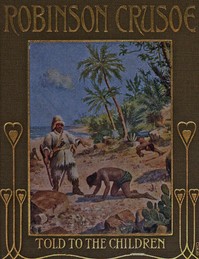
For Robinson Crusoe, Told to the Children by John Lang — A Reader’s Guide, the stored edition analysis reports 24,296 words, 1 hr 46 min estimated reading time, and 16 detected text sections.
The text analysis averages about 27.8 words per sentence, while the detected sections provide another way to judge how the source is divided.
Project Gutenberg metadata also associates the work with “Shipwreck survival -- Juvenile fiction,” connecting these edition facts with the source record’s subject description.
Explore this collection
These alternatives are selected using recorded categories and estimated reading time.
About 107 minutes
Childrens Adventures
24,608 recorded words. 1 minutes difference from this book's estimate.
View Gutenberg source #65308About 109 minutes
Childrens Adventures
24,896 recorded words. 3 minutes difference from this book's estimate.
View Gutenberg source #65360About 110 minutes
Childrens Adventures
25,160 recorded words. 4 minutes difference from this book's estimate.
View Gutenberg source #61888Search stored excerpts and compare books → Choose by your preferences →
Choices use stored catalog measurements. Estimates vary with reading speed. A shared category is a catalog label, not a claim that two books have the same argument or literary quality.
Search reads excerpt text stored with this catalog and links to its associated Gutenberg record. The connection is stored in the site database; this tool does not recheck that every excerpt is word-for-word identical to that external record. Excerpt search does not cover every chapter and does not verify historical publication dates.
Catalog snapshot checked: 2026-09-26. Coverage: 90 public books, 90 available source excerpts.
Calculated from edition completeness, EPUB availability, text structure and catalogue metadata. Not a user rating.
Total of 100 points, scaled to a 2.5-5.0 range. Editions with an empty description or a missing EPUB file are not scored.
Public-domain source text
The source text is kept in the dedicated reader, separate from this catalogue record and its commentary.
John Lang's adaptation of Robinson Crusoe opens not with the shipwreck but with a dedicatory letter that paints the island as a sapphire sea edged with pearls, where cocoa-nut palms wave and butterflies hover. This tropical palette—coral reefs, vivid fish, and chattering birds—sets a fairy-tale tone that distinguishes Lang's version from Defoe's more austere original. The narrative moves swiftly through Crusoe's early adventures, focusing on his resourcefulness and the physical details of building a home, planting crops, and crafting tools. Lang condenses the 28-year span into 16 chapters, each advancing the plot with a clear cause-and-effect rhythm, while preserving the emotional arc of solitude and hope.
Lang's adaptation reduces Defoe's sprawling narrative to a linear sequence of 16 chapters, each with a descriptive title such as “How Robinson first went to sea, and how he was shipwrecked” or “The earthquake.” This structure prioritizes action over introspection, moving from one crisis to the next without the digressions on religion or commerce found in the original. The word count of roughly 24,000 words means that each chapter covers several months or years in a few paragraphs, yet Lang retains key episodes: the wreck, the construction of the castle, the earthquake, the discovery of the footprint, and the rescue of Friday. The pacing is brisk, with transitions like “And so it went on for many years” that signal time passing without dwelling on monotony. This condensation makes the story accessible to younger readers while preserving the essential plot points that define Crusoe's ordeal.
Throughout the adaptation, Crusoe is repeatedly shown scanning the horizon from his lookout place, telescope in hand. The text emphasizes his constant watch: “he went nearly every day to his lookout-place, and swept the sea with his telescope, in the hope of seeing canoes coming.” This image of vigilance recurs after the footprint discovery and during the long wait for the cannibals' return. Lang also highlights Crusoe's fear of being seen: when he climbs to the top of the rock, he takes “great care not to show himself against the sky-line.” The threat of the savages is rendered through visual details—the dancing around a fire, the dragging of prisoners from canoes—rather than explicit violence. The dream sequence, in which Crusoe imagines rescuing a prisoner who then kneels for mercy, reinforces the theme of watching and waiting, as the dream's fulfillment depends on the actual arrival of canoes.
Lang's narrative oscillates between Crusoe's secure castle and the open sea, a tension that drives the plot. The castle is described as a fortified home with a ladder and thicket, a place of safety but also of imprisonment. Crusoe's desire to escape is expressed through repeated calculations: “How far did they come? Where was their country? What kind of boats had they?” The text notes that his mind was “utterly taken up with the one thought of getting to the mainland,” and even his dreams are of sailing. Yet the practical limitations of his frail craft keep him anchored. The turning point comes when he decides to rescue a prisoner rather than build a larger boat, shifting the focus from solitary escape to cooperative venture. This movement from isolation to alliance is mirrored in the physical journey from the castle to the shore, where the canoes land and the final rescue unfolds.
Lang incorporates a detailed dream sequence that serves as a narrative pivot. Crusoe dreams of seeing two canoes and eleven savages landing, a prisoner running to his castle, and the savage kneeling for mercy. The dream ends with Crusoe saying, “Now that I’ve got this fellow, I can certainly go to the mainland.” Upon waking, he is “more cast down than ever,” but the dream gives him a plan: to rescue a prisoner and gain a navigator. This device allows Lang to foreshadow the actual rescue without violating the realistic tone. The dream is presented as a psychological event—the result of feverish worry—rather than a supernatural omen. It also underscores Crusoe's loneliness, as his only hope for escape lies in another human being. The subsequent year and a half of watching, with no canoes appearing, heightens the tension before the eventual arrival of the five canoes and the rescue of Friday.
Lang's version is best approached as a streamlined adventure that emphasizes action and visual detail over moral reflection. Readers familiar with Defoe's original will notice the absence of Crusoe's religious meditations and the simplification of his character. The adaptation's strength lies in its pacing and its vivid, almost cinematic scenes of island life. For young readers, it offers a clear entry point into the story's central drama: one man's struggle to survive and his eventual return to human society.
I have handled John Lang’s Robinson Crusoe for many quiet afternoons, and lately, I find myself thinking of its profound loneliness alongside Norah of Billabong — Story, Setting & Ideas. One boy’s solitary shore, one girl’s wide, empty bush—both carry that curious stillness of being utterly oneself in a vast place. They never truly speak, yet they whisper to each other across my shelves.
A brief reflection can help important ideas stay with you longer.