About 318 minutes
The quest of the Silver Swan: A land and sea tale for boys — A Closer Reading
Childrens Adventures
73,034 recorded words. 2 minutes difference from this book's estimate.
View Gutenberg source #68182
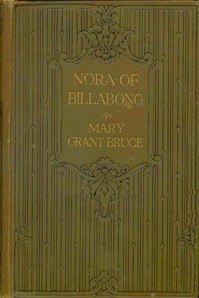
The catalog record for Norah of Billabong — Story, Setting & Ideas provides practical reading context through 73,551 words, 5 hr 20 min estimated reading time, and 9 detected text sections.
The text analysis averages about 14.5 words per sentence, while the detected sections provide another way to judge how the source is divided.
Project Gutenberg metadata also associates the work with “Australia -- Juvenile fiction,” connecting these edition facts with the source record’s subject description.
Explore this collection
These alternatives are selected using recorded categories and estimated reading time.
About 318 minutes
Childrens Adventures
73,034 recorded words. 2 minutes difference from this book's estimate.
View Gutenberg source #68182About 317 minutes
Childrens Adventures
72,816 recorded words. 3 minutes difference from this book's estimate.
View Gutenberg source #60445About 307 minutes
Childrens Adventures
70,474 recorded words. 13 minutes difference from this book's estimate.
View Gutenberg source #65869Search stored excerpts and compare books → Choose by your preferences →
Choices use stored catalog measurements. Estimates vary with reading speed. A shared category is a catalog label, not a claim that two books have the same argument or literary quality.
Search reads excerpt text stored with this catalog and links to its associated Gutenberg record. The connection is stored in the site database; this tool does not recheck that every excerpt is word-for-word identical to that external record. Excerpt search does not cover every chapter and does not verify historical publication dates.
Catalog snapshot checked: 2026-09-26. Coverage: 90 public books, 90 available source excerpts.
Calculated from edition completeness, EPUB availability, text structure and catalogue metadata. Not a user rating.
Total of 100 points, scaled to a 2.5-5.0 range. Editions with an empty description or a missing EPUB file are not scored.
Public-domain source text
The source text is kept in the dedicated reader, separate from this catalogue record and its commentary.
The opening chapter, 'Breaking Up,' finds Norah Linton leaving Beresford House school on a hot Australian December day. The description of the garden—'masses of flowers still bade defiance to the heat'—establishes a setting where nature is both beautiful and resilient. The catalog subjects list 'Australia,' 'Country life,' and 'Families,' and the excerpts indeed center on station routines: riding horses, feeding stock, and conversations among family and staff. However, the excerpts also introduce a darker element: a figure deliberately setting a fire under a kerosene tin, muttering 'I guess that’ll about fix you, Mr. David Linton!' This act of arson is not hinted at in the catalog subjects, which focus on wholesome family life. The tension between the peaceful station scenes and this deliberate threat suggests the book may balance domesticity with peril.
The excerpts show a world where daily work is woven into the narrative. In Chapter X, Norah returns from a ride and unsaddles Bosun, while her father decides which horses need 'hard feed.' The stable yard is a place of tired cheerfulness: 'Coming home was the best part of the day,' Norah says. The text includes specific horse names—Bosun, Garryowen, Monarch, Nan, Warder—and the characters’ preferences for handling their own mounts. This attention to equine detail is characteristic of the series. The domestic sphere is equally detailed: Mrs. Brown (Brownie) listens for the riders, and Hogg the gardener hunts snails with a lantern, grunting and crushing them under his boot. These small, concrete actions ground the story in a particular place and time, reinforcing the catalog subject 'Country life' through texture rather than broad statements.
Not all is calm. In Chapter IX, an unnamed figure prepares to start a bushfire: he lays tinder, lights a candle, and inverts a kerosene tin over it, peeping through a hole to check the flame. He slips a stick under the edge to admit air, then crawls through a hole in the hawthorn hedge and runs. The language is terse and menacing: 'a mean figure, slinking in the shadow of the hedge.' This arsonist targets David Linton, Norah’s father, by name. The catalog subjects do not mention crime, danger, or conflict, yet the excerpts clearly introduce a deliberate act of sabotage. The fire is not merely a natural disaster; it is planned. This discrepancy between the catalog’s benign categories and the text’s actual content suggests that the book may contain more suspense and villainy than the subjects imply. The excerpts do not reveal the arsonist’s identity or motive, but the scene is unmistakably ominous.
The excerpts showcase distinct voices that convey character without exposition. Hogg, the Scottish gardener, speaks in dialect: 'Ay. The place was free a week back—an’ noo they’re crawlin’ all through it—rapacious beasts!' His grunting and his war on snails provide comic relief, but also reveal a dour, methodical personality. Mrs. Brown uses colloquial phrases like 'scrimmagin’ in' and expresses anxiety about the young horses. Norah’s speech is direct and cheerful: 'I think you can put Bosun in the stable to-night.' Jim, her brother, is practical and helpful. The dialogue is natural and unforced, carrying the story’s emotional weight. The arsonist, by contrast, speaks only one muttered line, but it is enough to mark him as an outsider with a grudge. These vocal contrasts—between the warm, familiar banter of the station and the cold, solitary threat—create a layered narrative world where safety is fragile.
The excerpts from Norah of Billabong reveal a book that is both a pastoral family story and a suspense novel about arson. Readers should note that the catalog subjects understate the element of deliberate danger. The fire-setting scene is explicit and detailed, yet the full scope of the threat—who set it, why, and how the Lintons respond—is not shown in these passages. Approach the text expecting both the pleasures of station life and a plot that may test the family’s resilience.
I recall evenings with Norah of Billabong, that quiet trust in place and people, even when fire threatened everything. There is a similar steadying calm in Buster the Big Brown Bear — Themes and Context, a gentle reminder that courage often sits beside warmth. Both simply make you feel at home.
Your answers remain private and are stored only in this browser.