About 317 minutes
Jim and Wally — Reading Notes
Childrens Adventures
72,816 recorded words. 10 minutes difference from this book's estimate.
View Gutenberg source #60445
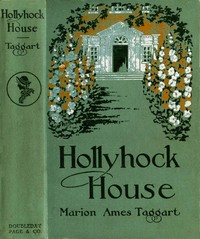
For Hollyhock House: A Story for Girls — Background and Themes, the stored edition analysis reports 70,474 words, 5 hr 7 min estimated reading time, and 25 detected text sections.
The text analysis averages about 15.2 words per sentence, while the detected sections provide another way to judge how the source is divided.
Project Gutenberg metadata also associates the work with “Girls -- Conduct of life -- Juvenile fiction,” connecting these edition facts with the source record’s subject description.
Explore this collection
These alternatives are selected using recorded categories and estimated reading time.
About 317 minutes
Childrens Adventures
72,816 recorded words. 10 minutes difference from this book's estimate.
View Gutenberg source #60445About 318 minutes
Childrens Adventures
73,034 recorded words. 11 minutes difference from this book's estimate.
View Gutenberg source #68182About 320 minutes
Childrens Adventures
73,551 recorded words. 13 minutes difference from this book's estimate.
View Gutenberg source #60446Search stored excerpts and compare books → Choose by your preferences →
Choices use stored catalog measurements. Estimates vary with reading speed. A shared category is a catalog label, not a claim that two books have the same argument or literary quality.
Search reads excerpt text stored with this catalog and links to its associated Gutenberg record. The connection is stored in the site database; this tool does not recheck that every excerpt is word-for-word identical to that external record. Excerpt search does not cover every chapter and does not verify historical publication dates.
Catalog snapshot checked: 2026-09-26. Coverage: 90 public books, 90 available source excerpts.
Calculated from edition completeness, EPUB availability, text structure and catalogue metadata. Not a user rating.
Total of 100 points, scaled to a 2.5-5.0 range. Editions with an empty description or a missing EPUB file are not scored.
Public-domain source text
The source text is kept in the dedicated reader, separate from this catalogue record and its commentary.
The Garden sisters—Mary, Jane, and Florimel—are introduced with a playful naming conceit that immediately establishes the novel's floral motif. Their mother, Lynette, is a distant figure, more concerned with her English past than her American present. The story opens in Vineclad, a town whose name itself evokes greenery, and the girls' home is called Hollyhock House. The narrative voice shifts between affectionate observation and gentle irony, as when Jane declares that Mary "looked it"—meaning she looked like a Mary—while Florimel's name is a nod to Spenserian romance. The first chapter's epigraph, "The Rosebud Garden of Girls," sets up a framework of growth and cultivation that the novel will explore through its structure of departures and returns.
The novel's early chapters establish a pattern of leaving and coming back. When Uncle Win takes Jane and Florimel to New York to buy an automobile, the narrative follows the preparations, the journey, and the anxious waiting at home. Mary, left behind, is described as an "anxious little hen in the Garden patch," a metaphor that ties her domestic worry to the farmyard. The telegram that anchors the girls in a definite location contrasts with the "space which had swallowed them up"—a phrase that captures the uncertainty of distance in 1916. This movement is not just physical; it reflects the sisters' varying degrees of independence. The automobile itself becomes a symbol of modernity and mobility, a new element entering the settled world of Hollyhock House.
Each chapter is headed by a quotation, many from poets like Tennyson or Wordsworth, that often reference gardens or nature. For example, Chapter I uses "The Rosebud Garden of Girls," and Chapter II quotes "Who Loves a Garden Loves a Greenhouse, too." These epigraphs serve as thematic anchors, linking the girls' actions to broader ideas of cultivation and growth. The novel's title and the house's name reinforce this botanical lens. The illustrations by Frances Rogers, as listed in the front matter, depict key scenes—such as the frontispiece showing the mother saying "Not such tall, tall girls, my daughters!"—which visually echo the text's emphasis on stature and development. The recurring floral imagery is not merely decorative; it structures the reader's expectations about character development.
The three sisters are distinguished by their speech patterns. Mary speaks with measured concern, Jane with playful irreverence, and Florimel with impulsive enthusiasm. When Florimel begs Mary not to mind their trip, she kneels and wraps her arms around Mary's waist, her dialogue punctuated by dashes and exclamations: "Mary, for goodness' sake, say quick you won't mind for just three days!" Jane, in contrast, turns their excitement into doggerel: "I want to dance and shriek and purr! We're going to buy a car and chauffeur." The mother, Mrs. Garden, speaks with a detached, almost petulant tone—"I should think it would be very pleasant for you to go—and an awful nuisance to Win to take you"—which reveals her emotional distance. These vocal contrasts create a dynamic family portrait without explicit authorial commentary.
Beyond the immediate family, the novel introduces a network of neighbors and relatives who shape the girls' world. Mr. and Mrs. Moulton appear as concerned friends, their dialogue overlapping with Mary's worries. Anne, the housekeeper, reacts to the girls' excitement with "annoyance relief always seems to call forth," a wry observation that hints at her role as a foil. The four girls who come to tea—Dorothy, Nanette, Gladys, and Audrey—are listed without further description in the excerpt, suggesting they may serve as a social chorus. Uncle Win, the young uncle who escorts the girls, is treated as a peer: Jane waltzes with him and takes him by the ears. These secondary figures provide texture and contrast, grounding the sisters' adventures in a recognizable community.
The narrative rhythm alternates between action and pause. After the flurry of departure, the story settles into a quieter sequence: Mary's loneliness, the tea parties, the waiting for telegrams. This pattern mirrors the novel's episodic structure, with each chapter marking a new phase. The excerpts show a clear break after the trip to New York, suggesting that the book may follow a seasonal or holiday framework. The title page lists 18 chapters, each with its own epigraph, implying a carefully balanced progression. Readers attuned to structure will notice how the novel uses these intervals to develop character relationships, particularly between Mary and her mother, whose dynamic is tested by absence.
Readers approaching Hollyhock House will find a story that rewards attention to its framing devices—the chapter epigraphs, the floral metaphors, and the careful alternation of scenes. The novel's structure, built around departures and returns, gives shape to the sisters' gradual emergence into independence. Pay particular attention to how the dialogue reveals character and how the setting of Vineclad functions as both a refuge and a stage. The book invites comparison with other early twentieth-century girls' series, but its specific use of botanical imagery and its focus on a single summer distinguish it.
There’s a particular ache in rereading Hollyhock House—that summer never quite ends, even when you close the book. I often wonder if the Garden sisters’ quiet turning toward one another echoes what I found later in Forge of Foxenby — Story, Setting & Ideas, where the place itself seems to hold time differently. Just a thought.
A brief reflection can help important ideas stay with you longer.