About 243 minutes
Pemrose Lorry, Radio Amateur — Reading Notes
Childrens Adventures
55,809 recorded words. 1 minutes difference from this book's estimate.
View Gutenberg source #62371
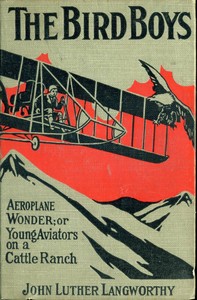
Before opening The Bird Boys' Aeroplane Wonder; Or, Young Aviators on a Cattle Ranch — Edition Insights, the edition data offers a quick orientation: 55,467 words, 4 hr 2 min estimated reading time, and 24 detected text sections.
The text analysis averages about 24.5 words per sentence, while the detected sections provide another way to judge how the source is divided.
Project Gutenberg metadata also associates the work with “Teenage boys -- Juvenile fiction,” connecting these edition facts with the source record’s subject description.
Explore this collection
These alternatives are selected using recorded categories and estimated reading time.
About 243 minutes
Childrens Adventures
55,809 recorded words. 1 minutes difference from this book's estimate.
View Gutenberg source #62371About 241 minutes
Childrens Adventures
55,274 recorded words. 1 minutes difference from this book's estimate.
View Gutenberg source #68749About 244 minutes
Childrens Adventures
56,042 recorded words. 2 minutes difference from this book's estimate.
View Gutenberg source #60370Search stored excerpts and compare books → Choose by your preferences →
Choices use stored catalog measurements. Estimates vary with reading speed. A shared category is a catalog label, not a claim that two books have the same argument or literary quality.
Search reads excerpt text stored with this catalog and links to its associated Gutenberg record. The connection is stored in the site database; this tool does not recheck that every excerpt is word-for-word identical to that external record. Excerpt search does not cover every chapter and does not verify historical publication dates.
Catalog snapshot checked: 2026-09-26. Coverage: 90 public books, 90 available source excerpts.
Calculated from edition completeness, EPUB availability, text structure and catalogue metadata. Not a user rating.
Total of 100 points, scaled to a 2.5-5.0 range. Editions with an empty description or a missing EPUB file are not scored.
Public-domain source text
The source text is kept in the dedicated reader, separate from this catalogue record and its commentary.
John Luther Langworthy's The Bird Boys' Aeroplane Wonder; Or, Young Aviators on a Cattle Ranch (1914) opens with a group of boys under a beech tree, their speech peppered with exclamations and nicknames. The dialogue immediately establishes a colloquial, energetic tone: “Was there ever such great luck, fellows?” and “Glory to goodness!” The author uses nicknames like “Elephant” for the smallest boy and “Buckskin” for a cowboy, signaling a world where identity is tied to action and humor. Langworthy's descriptive passages often serve to heighten tension, as when a second grizzly appears and the cowboy cries, “Whar’s my gun?” The prose mixes technical terms (Marlin pump-gun, kodak) with rustic dialect, creating a blend of modern invention and frontier life.
Langworthy distinguishes his characters primarily through their speech patterns. Frank Bird speaks with measured calm: “I had a pretty good idea it would end that way.” In contrast, Andy’s dialogue is excitable and focused on his camera: “Don’t let my kodak drop, Buckskin!” The cowboy Buckskin uses a heavy dialect: “I’m the boss boy with the picture machine” and “accommerdate you all that’s a-goin’.” This linguistic variety not only differentiates the characters but also reflects the social hierarchy—the ranchman speaks with “a ring of authority,” while the boys shift between schoolboy slang and earnest concern. The author rarely uses narrative tags beyond “said” or “shouted,” letting the words themselves carry personality.
In moments of peril, Langworthy’s descriptions become terse and functional. When the second grizzly charges, the narrative accelerates: “Run boys, he’s chargin’ us!” Details are limited to what is necessary for the action: the log bridge, the exhausted rifles, the “little gulf.” The author avoids lengthy exposition, instead relying on short clauses and exclamations to convey urgency. For instance, “It hardly seemed fair, and yet what else can be done when dealing with su[ch]” breaks off, leaving the reader to fill in the moral ambiguity. This technique keeps the focus on the physical struggle rather than internal reflection.
Langworthy weaves contemporary technology into the fabric of the story. The boys own a “Marlin pump-gun” and a “kodak” camera, and the plot hinges on an aeroplane. These objects are not mere props; they drive character behavior. Andy’s concern for his camera over his own safety (“really more concerned about the safety of his little camera just then than his own safety”) reveals his priorities. The author also uses technical jargon— “focus,” “finder,” “squeeze the bulb”—to lend authenticity. However, the technology is always subordinated to the demands of the adventure: the aeroplane appears only in later chapters, and the camera is nearly dropped during a bear attack.
Langworthy builds the ranch setting through scattered sensory cues rather than panoramic description. The boys anticipate “chestnuts are ripe, and walnuts are dropping,” and the “frisky cottontail” season. The landscape is implied through action: a “log bridge” over a “gulf,” a “bear” in the finder. The author relies on the reader’s familiarity with Western tropes—cattle ranches, round-ups, grizzlies—and adds specificity only when needed. For example, the cowboy’s exclamation “holy smoke!” and his reference to “pepper box” revolver evoke a rough-and-tumble environment. This selective detailing keeps the setting functional rather than ornamental.
Readers should attend to how Langworthy balances the novelty of early aviation with the established conventions of the Western adventure. The author’s choice to foreground dialogue and action over introspection gives the story a brisk, cinematic quality. The excerpts suggest a work that values ingenuity and camaraderie over psychological depth. Those interested in early twentieth-century boys’ series fiction will find here a representative example of how popular authors merged technological wonder with frontier mythology.
Watching the Bird Boys master their rickety aeroplane above the dusty ranch, I am reminded of another secret held close—the old mill where the Camp Fire Girls found their own quiet courage. Both stories share that gentle, hopeful breath of a younger America. The Camp Fire Girls; Or, The Secret of an Old Mill — Story, Setting & Ideas hums with a similar earnestness, if one cares to listen.
A brief reflection can help important ideas stay with you longer.