About 244 minutes
Boy Scouts with Joffre; Or, In the Trenches in Belgium — Reading Companion
Childrens Adventures
56,042 recorded words. 1 minutes difference from this book's estimate.
View Gutenberg source #60370
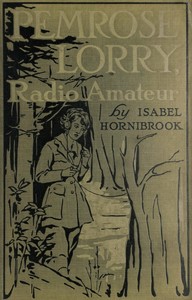
Before opening Pemrose Lorry, Radio Amateur — Reading Notes, the edition data offers a quick orientation: 55,809 words, 4 hr 3 min estimated reading time, and 32 detected text sections.
The text analysis averages about 17.8 words per sentence, while the detected sections provide another way to judge how the source is divided.
Project Gutenberg metadata also associates the work with “Camp Fire Girls -- Juvenile fiction,” connecting these edition facts with the source record’s subject description.
Explore this collection
These alternatives are selected using recorded categories and estimated reading time.
About 244 minutes
Childrens Adventures
56,042 recorded words. 1 minutes difference from this book's estimate.
View Gutenberg source #60370About 242 minutes
Childrens Adventures
55,467 recorded words. 1 minutes difference from this book's estimate.
View Gutenberg source #67185About 245 minutes
Childrens Adventures
56,257 recorded words. 2 minutes difference from this book's estimate.
View Gutenberg source #64315Search stored excerpts and compare books → Choose by your preferences →
Choices use stored catalog measurements. Estimates vary with reading speed. A shared category is a catalog label, not a claim that two books have the same argument or literary quality.
Search reads excerpt text stored with this catalog and links to its associated Gutenberg record. The connection is stored in the site database; this tool does not recheck that every excerpt is word-for-word identical to that external record. Excerpt search does not cover every chapter and does not verify historical publication dates.
Catalog snapshot checked: 2026-09-26. Coverage: 90 public books, 90 available source excerpts.
Calculated from edition completeness, EPUB availability, text structure and catalogue metadata. Not a user rating.
Total of 100 points, scaled to a 2.5-5.0 range. Editions with an empty description or a missing EPUB file are not scored.
Public-domain source text
The source text is kept in the dedicated reader, separate from this catalogue record and its commentary.
The novel opens not with its title character but with Una Grosvenor, nicknamed Jack, greeting the sunrise from a Lenox mansion steps. Her playful address to “Day-sky” and her confession of having “suffered from the sleepy fevers” establish a whimsical, personifying voice that treats nature as a companion. The garden is described as full of “Rogues O’May,” late spring flowers still sleeping, and the narrative lingers on sensory details—pale pink sky, dewy steps, the idea of gaining an hour by daylight saving. This unhurried, observant opening signals that Hornibrook’s interest lies as much in atmosphere and character as in plot.
The first chapter quickly introduces a social circle anchored by the Camp Fire Girls organization. Una is known at the Council Fire as U-te-yan, meaning Flower, while her chums call her Jack—a detail the narrator calls “a gay bit of satire.” Pemrose Lorry appears soon after, but the reader meets her through dialogue and shared banter rather than a formal entrance. The girls’ nicknames (Pemrose, Jack, Dorothy, Lura) and their references to horses named Revelation and King create a tight-knit group with its own shorthand. The Camp Fire framework provides a structure for their activities, but the excerpts show the girls acting independently, planning a birthday party for farmers and a picnic on a mountain balcony. Readers should note how these early relationships and group dynamics set the stage for later collaborative adventures, especially when radio enters the story.
In the second excerpt, a horseback ride through a mountain gap becomes a set piece that reveals both the landscape and the riders’ personalities. The trail shrinks until “there was scarcely room for two to ride abreast,” and the scenery is described with precise botanical detail: hardhack, fireweed, cardinal flowers, tumbleweed. When Revelation shies at a tumbleweed, Pemrose clings “desperately with both hands to the saddle” and later admits, “Maybe I haven’t ridden quite as much as I thought I had!” This moment of vulnerability is undercut by her practical response—pushing the horse’s nose toward the weed to desensitize him. Una, meanwhile, rides complacently, her horse taking no notice. The passage balances action with observation, and the sudden appearance of an airplane “doing stunts up there” above the Gap shifts the focus from earth to sky, hinting at the technological theme to come.
Throughout the excerpts, Hornibrook’s prose is marked by a consistent habit of giving natural phenomena human or animate qualities. The sunrise is “robed in pale pink and bluish bloom”; flowers are “Rogues O’May” that slumber; the sky is a “lamb’s wool sky.” When Una spots cardinal flowers, she calls them “another lamp to the way.” This personification extends to horses: Revelation shies at tumbleweed as if it were a “King of Terrors,” and later the narrative notes his “neck curved restively.” The effect is to make the setting feel alive and responsive to the characters’ emotions. Readers attuned to this voice will notice how it persists even in more dramatic moments, such as when the airplane appears as a “silver speck, tumbling speck” that Una’s riding crop seems to “loop” from afar. The style is consistent enough to serve as a guide to the novel’s tone throughout.
Although the title promises a radio amateur, the excerpts contain no radio equipment or technical discussion. Instead, the technological element appears obliquely: first in the airplane that performs stunts “a thousand feet above the Gap,” and later in the chapter titles listed in the contents, such as “The Call of the Air” and “The Ring.” The airplane is introduced as a visual spectacle, described as “drifting down, a fire-tail” in the illustration caption. This suggests that radio may enter the story through its connection to aviation or emergency communication rather than as a hobby pursued in isolation. The Camp Fire Girls’ outdoor activities—camping, riding, wildflower parties—provide a grounded counterpoint to the aerial and wireless themes. Readers should watch for how the narrative bridges these two worlds, especially given that the protagonist’s full name, Pemrose Lorry, appears in the title but the opening chapters focus on Una.
Because the excerpts cover only the opening chapters and a later riding scene, the full arc of Pemrose’s radio work remains unseen. The novel’s structure, with twenty-five chapters and titles like “The Wee Hour” and “Hidden Valley,” suggests a episodic, adventure-driven plot. Readers may find it useful to track how the lyrical, nature-focused opening gives way to technological elements, and whether the Camp Fire Girls’ collaborative ethos extends to the radio project. The illustrations by Nana French Bickford, mentioned in the front matter, may also offer visual cues to key scenes.
That morning mist over the Berkshires, Pemrose’s horse listening with her to the quiet—it reminded me of a summer I spent in the Bad Lands, pretending every fossil was a monster’s clue. I found that same unhurried wonder in Dick and Dr. Dan; Or, the boy monster hunters of the Bad Lands — Context and Discussion, where the dirt itself seemed to whisper old secrets. Each book let me sit still and listen.
Capture what you thought, learned, and would like to remember.