About 244 minutes
Boy Scouts with Joffre; Or, In the Trenches in Belgium — Reading Companion
Childrens Adventures
56,042 recorded words. 1 minutes difference from this book's estimate.
View Gutenberg source #60370
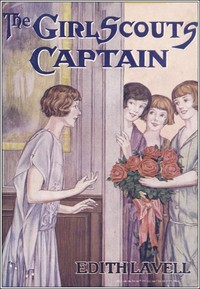
The Girl Scouts' Captain — Key Ideas to Explore can be approached with a clearer sense of reading commitment from its source measurements: 56,257 words, 4 hr 5 min estimated reading time, and 30 detected text sections.
The text analysis averages about 12.9 words per sentence, while the detected sections provide another way to judge how the source is divided.
Project Gutenberg metadata also associates the work with “Girl Scouts -- Juvenile fiction,” connecting these edition facts with the source record’s subject description.
Explore this collection
These alternatives are selected using recorded categories and estimated reading time.
About 244 minutes
Childrens Adventures
56,042 recorded words. 1 minutes difference from this book's estimate.
View Gutenberg source #60370About 246 minutes
Childrens Adventures
56,454 recorded words. 1 minutes difference from this book's estimate.
View Gutenberg source #67630About 243 minutes
Childrens Adventures
55,809 recorded words. 2 minutes difference from this book's estimate.
View Gutenberg source #62371Search stored excerpts and compare books → Choose by your preferences →
Choices use stored catalog measurements. Estimates vary with reading speed. A shared category is a catalog label, not a claim that two books have the same argument or literary quality.
Search reads excerpt text stored with this catalog and links to its associated Gutenberg record. The connection is stored in the site database; this tool does not recheck that every excerpt is word-for-word identical to that external record. Excerpt search does not cover every chapter and does not verify historical publication dates.
Catalog snapshot checked: 2026-09-26. Coverage: 90 public books, 90 available source excerpts.
Calculated from edition completeness, EPUB availability, text structure and catalogue metadata. Not a user rating.
Total of 100 points, scaled to a 2.5-5.0 range. Editions with an empty description or a missing EPUB file are not scored.
Public-domain source text
The source text is kept in the dedicated reader, separate from this catalogue record and its commentary.
The opening chapter of The Girl Scouts' Captain introduces five college friends—former members of the senior patrol of Pansy Troop—who still meet daily, parking their matching roadsters outside Turner College. The narrator notes their bobbed hair and light summer dresses, establishing a tone of youthful camaraderie. But the story quickly shifts: Marjorie Wilkinson, now a junior, is asked to captain a new troop of Girl Scouts from the local factory district. The catalog subjects list leadership and girls' clubs, but the excerpts reveal that the novel's central tension is not simply about teaching scouting skills—it is about navigating class differences, gossip, and the moral dilemmas of supervising teenagers whose lives are far removed from college privilege.
The excerpts contrast two social worlds. The college girls own roadsters and receive cake from home; the factory girls, like Gertie and Mame, arrive by trolley and speak in a rougher dialect. When Marjorie offers cake, Gertie exclaims “It’s swell!” and then quickly returns to gossip about Queenie’s secret boyfriend. The factory girls’ concerns—elopement, family disapproval, nightly dates—are presented as urgent and risky, while Marjorie’s college friends discuss car maintenance and shingle bobs. The novel’s setting is not just a backdrop but a source of conflict: Marjorie must decide whether to intervene in Queenie’s personal life, a decision complicated by the class gap between captain and scout.
Marjorie’s role as captain involves more than organizing hikes or practices. When Gertie warns that Queenie plans to elope with a man her family disapproves of, Marjorie is “startled, in spite of herself.” She considers telling Lily or Queenie’s parents, but decides instead to investigate personally: “I must plan it like a party,” she thinks, “so that Queenie won’t suspect anything.” This moment shows Marjorie treating leadership as a form of covert surveillance. She enlists her boyfriend John for help, noting “Thank goodness he’s in sympathy with my work!” The excerpts suggest that the novel’s view of leadership is paternalistic—the captain must protect her scouts from their own impulses, even if it means deception.
The dialogue in the excerpts distinguishes characters sharply. Gertie’s speech is full of slang and malice: “You sure ought a meet Sam, Miss Wilkinson. You’d get a jolt, all right.” She uses phrases like “the real dope is” and “beat it,” marking her as lower-class and aggressive. Marjorie, by contrast, speaks in measured, polite sentences: “I can’t see that it’s any affair of ours who Queenie’s friends are!” The narrator also uses free indirect discourse to show Marjorie’s internal conflict: “She assured herself that there was very little basis of truth in Gertie’s last supposition, yet she could not dismiss it entirely.” This technique gives readers access to Marjorie’s doubts, making her more sympathetic than the gossipy Gertie.
The excerpts from The Girl Scouts' Captain show a novel that uses scouting as a framework for exploring class, gender, and moral authority in the 1920s. Readers should pay attention to how the narrator handles the factory girls’ dialect and whether Marjorie’s interventions are ultimately portrayed as wise or overreaching. The incomplete text leaves open whether Queenie’s elopement threat is real or a rumor—a ambiguity that may be central to the novel’s resolution.
I kept thinking about how Marjorie’s quiet authority grew from listening, not commanding. That same gentle strength seems to float through Doodles, the Sunshine Boy — Key Ideas to Explore, where kindness unfolds in small, unforced moments. It left me with a warm ache, the way certain stories do, like remembering a friend’s patient voice long after they’ve gone quiet.
Capture what you thought, learned, and would like to remember.