About 245 minutes
The Girl Scouts' Captain — Key Ideas to Explore
Childrens Adventures
56,257 recorded words. 1 minutes difference from this book's estimate.
View Gutenberg source #64315
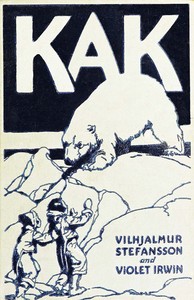
Kak, the Copper Eskimo — Inside the Classic can be approached with a clearer sense of reading commitment from its source measurements: 56,454 words, 4 hr 6 min estimated reading time, and 17 detected text sections.
The text analysis averages about 17.0 words per sentence, while the detected sections provide another way to judge how the source is divided.
Project Gutenberg metadata also associates the work with “Arctic regions -- Juvenile fiction,” connecting these edition facts with the source record’s subject description.
Explore this collection
These alternatives are selected using recorded categories and estimated reading time.
About 245 minutes
Childrens Adventures
56,257 recorded words. 1 minutes difference from this book's estimate.
View Gutenberg source #64315About 247 minutes
Childrens Adventures
56,602 recorded words. 1 minutes difference from this book's estimate.
View Gutenberg source #69037About 244 minutes
Childrens Adventures
56,042 recorded words. 2 minutes difference from this book's estimate.
View Gutenberg source #60370Search stored excerpts and compare books → Choose by your preferences →
Choices use stored catalog measurements. Estimates vary with reading speed. A shared category is a catalog label, not a claim that two books have the same argument or literary quality.
Search reads excerpt text stored with this catalog and links to its associated Gutenberg record. The connection is stored in the site database; this tool does not recheck that every excerpt is word-for-word identical to that external record. Excerpt search does not cover every chapter and does not verify historical publication dates.
Catalog snapshot checked: 2026-09-26. Coverage: 90 public books, 90 available source excerpts.
Calculated from edition completeness, EPUB availability, text structure and catalogue metadata. Not a user rating.
Total of 100 points, scaled to a 2.5-5.0 range. Editions with an empty description or a missing EPUB file are not scored.
Public-domain source text
The source text is kept in the dedicated reader, separate from this catalogue record and its commentary.
From its opening sentence, Kak, the Copper Eskimo establishes a narrative voice that moves between direct explanation and colloquial aside. The first chapter explains that the Copper Eskimos are named for their copper implements, not their skin color, and describes Kak as having skin “about the color of white boys’ skins at the end of the summer holidays.” This dual register—part ethnographic primer, part familiar address—persists throughout the excerpts. The narrator frequently breaks into second-person comments (“You would have whistled your dog off, but Eskimos cannot whistle”) and uses contractions and interjections (“Never before was such a tumult!”). These shifts create a voice that is both instructive and intimate, guiding a young reader through unfamiliar terrain while maintaining a conversational tone.
The narrative frequently steps out of the story to speak directly to the reader. When describing the dogfight, the narrator notes: “You would have whistled your dog off, but Eskimos cannot whistle. It is an unknown art up north.” This aside does more than explain a cultural fact; it momentarily aligns the reader with the narrator’s own world, then gently corrects that assumption. Similar moments occur throughout the excerpts: “Eskimo dogs are the worst watch dogs in the world: no good at all on the job.” The tone is matter-of-fact, even wry, and it treats the reader as a companion rather than a passive observer. These asides also serve to pace the action, inserting a pause for reflection or humor just when the scene becomes most chaotic.
The prose rhythm varies markedly between descriptive passages and action sequences. In quieter moments, sentences are longer and more explanatory: “Kak was not counted a poor boy though he possessed very little. Eskimos do not go in for possessions.” During the dogfight, however, the syntax fractures into short, staccato clauses: “Dogs leaped from their dreams. Dogs whirled in on every side. They barked now and bit, too. They rushed at each other and snarled and snapped and pawed and nipped.” The repetition of “Dogs” at the start of successive sentences, combined with the rapid list of verbs, mimics the sudden, chaotic energy of the brawl. This contrast between measured exposition and breathless action is a deliberate structural tool, keeping the reader alert to changes in mood and event.
The narrative often embeds ethnographic details within scenes of movement or conflict, so that information arrives as part of the story rather than as a pause. When the visitors arrive at the village, the description of the dogs’ friendliness (“they came out wagging their tails and making all sorts of friendly advances; not giving so much as one little ‘wow’ of warning”) simultaneously advances the plot and teaches the reader about Eskimo dog behavior. Similarly, the children’s reaction to the fight—“The more Puckish urged on the fight with: ‘Go it, Scruffy!’”—reveals that Eskimo children, like any others, enjoy a spectacle. This technique keeps the pace lively while still fulfilling the book’s implicit educational purpose. The reader learns about copper tools, migratory life, and social customs without ever feeling lectured.
Readers attentive to voice will notice how the narrator’s tone subtly shifts between chapters: the opening is more explanatory, while later excerpts lean into dramatic action and dialogue. The collaborative authorship—Stefansson, an Arctic explorer, and Irwin, a children’s writer—may account for this blend of firsthand knowledge and storytelling craft. Pay attention to how the narrative handles moments of danger or surprise; the pacing often accelerates through short sentences and exclamations, then slows for a clarifying aside. This rhythm is the book’s most distinctive feature, and it rewards a close reading of how language shapes the reader’s experience of the Arctic world.
That rainy afternoon, Kak, the Copper Eskimo kept drifting into quiet asides about sled dogs and seal blubber, and I found myself missing the simpler, more mischievous tone of old girls’ adventures. Later, half-dozing, I remembered Mill’s creaky wheel and the mysterious flour sacks. Somehow that led me to The Camp Fire Girls; Or, The Secret of an Old Mill — Story, Setting & Ideas, a gentler sort of mystery altogether.
Use these questions to collect your thoughts before moving on.