About 281 minutes
Forge of Foxenby — Story, Setting & Ideas
Childrens Adventures
64,410 recorded words. 1 minutes difference from this book's estimate.
View Gutenberg source #58533
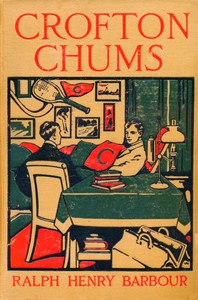
Crofton Chums — A Reader’s Guide can be approached with a clearer sense of reading commitment from its source measurements: 64,227 words, 4 hr 40 min estimated reading time, and 26 detected text sections.
The text analysis averages about 12.2 words per sentence, while the detected sections provide another way to judge how the source is divided.
Project Gutenberg metadata also associates the work with “Schools -- Juvenile fiction,” connecting these edition facts with the source record’s subject description.
Explore this collection
These alternatives are selected using recorded categories and estimated reading time.
About 281 minutes
Childrens Adventures
64,410 recorded words. 1 minutes difference from this book's estimate.
View Gutenberg source #58533About 278 minutes
Childrens Adventures
63,847 recorded words. 2 minutes difference from this book's estimate.
View Gutenberg source #59941About 274 minutes
Childrens Adventures
62,872 recorded words. 6 minutes difference from this book's estimate.
View Gutenberg source #59967Search stored excerpts and compare books → Choose by your preferences →
Choices use stored catalog measurements. Estimates vary with reading speed. A shared category is a catalog label, not a claim that two books have the same argument or literary quality.
Search reads excerpt text stored with this catalog and links to its associated Gutenberg record. The connection is stored in the site database; this tool does not recheck that every excerpt is word-for-word identical to that external record. Excerpt search does not cover every chapter and does not verify historical publication dates.
Catalog snapshot checked: 2026-09-26. Coverage: 90 public books, 90 available source excerpts.
Calculated from edition completeness, EPUB availability, text structure and catalogue metadata. Not a user rating.
Total of 100 points, scaled to a 2.5-5.0 range. Editions with an empty description or a missing EPUB file are not scored.
Public-domain source text
The source text is kept in the dedicated reader, separate from this catalogue record and its commentary.
Barbour opens Crofton Chums with a burst of football enthusiasm: “Poke” Endicott sings “In the good old football time” while smoothing new fawn-hued pants, a detail that immediately ties character to sport. The dialogue between Poke and his room-mate Gil Benton establishes a pattern of affectionate teasing—Poke’s hyperbolic claim that the trousers “will descend from generation to generation” is met with Gil’s dry “Like a mortgage.” This verbal sparring, laced with irony and mock dignity, sets the tone for a narrative driven by repartee rather than action. The opening also grounds the setting: the window frames an autumn landscape with a river “barely a stone’s throw away,” hinting at the outdoor adventures to come.
Barbour uses dialogue not merely to advance plot but to define personalities through verbal tics. Poke’s speech is a cascade of mock-heroic exaggeration: he claims to have “brought up more canoes” and delivers a mock lecture on canoe types (“canvas canoes, wooden canoes, paper canoes”). Gil counters with sarcasm (“Irony doesn’t become you”) and blunt interruptions (“shut up or get out”). Jeffrey, the quieter third boy, speaks in tentative, thoughtful phrases (“I think I’ll buy one”). The banter reveals a hierarchy of wit: Poke performs, Gil deflates, Jeff mediates. Even the stage directions—Poke “fortified himself with half a dozen cushions,” emerging “in a shower of cushions”—amplify character through physical comedy. The exchanges feel natural yet crafted, each line serving to differentiate the speakers without explicit authorial comment.
The extended discussion about buying a canoe occupies much of the excerpt, functioning as both a practical decision and a social ritual. The boys weigh costs (forty-two dollars for an eighteen-footer, thirty-five for a sixteen), debate second-hand versus new, and plan a trip to Sandford’s. Poke’s mock expertise (“I suppose there is no one in Crofton who has more knowledge of canoes than I”) is undercut by his ignorance of the builder’s name. The canoe becomes a shared project that cements the group: Jeff offers to paddle, Gil is recruited for the bow, and Hope is invited along. Barbour embeds period-specific details—train schedules, dinner at noon “on account of the game”—that anchor the story in a particular school life. The canoe is not a symbol but a concrete object around which friendship and adventure coalesce.
Though the excerpt contains no football action, the sport permeates the boys’ world. Poke’s opening song and his reverent handling of “mole-skins” signal that football is a marker of status and belonging. The mention of a game later that day (“dinner’s at twelve to-morrow on account of the game”) shows athletics structuring time. Barbour’s descriptions are precise: the pants are “fawn-hued,” the creases carefully smoothed. This attention to equipment reflects the era’s growing codification of school sports. Yet football also serves as a backdrop for character—Poke’s vanity about his trousers, Gil’s world-weary humor, Jeff’s earnestness. The sport is less a subject than a shared language, a set of references that bind the group. The excerpt suggests that identity at Crofton is partly performed through athletic affiliation, even off the field.
Barbour builds the school setting with economical sensory cues. The room has a “graveled path” outside, turf “descending gently to the rim of the little river,” and an “open casement” framing autumn landscape. The river is “placid,” the turf “smooth”—words that evoke order and tranquility. A throwaway anecdote about Joe Cosgrove, baseball captain, who once bet he could throw a stone across the river, adds local color and a sense of tradition. The interior is sketched through props: a trunk, a closet, cushions, a book. These details are never lingered upon but accumulate to create a believable environment. The atmosphere is one of comfortable routine—boys unpacking, planning, teasing—interrupted only by the promise of the canoe trip. Barbour trusts that readers will fill in the broader school picture from these fragments.
Readers attentive to Barbour’s craft will notice how much work the dialogue does: it reveals class dynamics, emotional states, and even plot direction without authorial intrusion. The canoe discussion, for instance, is both a buying decision and a negotiation of roles within the group. The football references are never explained, implying an audience already familiar with the game’s vocabulary. This economy of means—letting characters speak and act rather than telling the reader what to think—gives the story a brisk, naturalistic feel. Approach the text as a study in how boys of 1912 used language to bond, compete, and define themselves.
Reading Crofton Chums again, I lingered on those football scenes—the precise, breathless rush of it—and found myself thinking of the quieter discipline in The Girl Scouts' Captain — Key Ideas to Explore. Not the competition, but the shared trust underneath. Both books seem to understand that belonging isn’t shouted; it’s practiced, play after play, knot after knot. Odd, how one can remind me of the other.
Create a short personal record of your experience with this book.