1

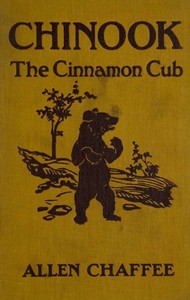
Chinook, the Cinnamon Cub — Text and Context
(6 User reviews)
928
Project Gutenberg
2020
Not confirmed
Animals -- Juvenile fiction; Bears -- Juvenile fiction; Oregon -- Juvenile fiction
Readers of public-domain and historical texts
Project Gutenberg digital edition
en
Edition facts
Words
25,160
Reading time
110 min
Text sections
25
This digital edition of Chinook, the Cinnamon Cub — Text and Context is described by source-level measurements including 25,160 words, 1 hr 50 min estimated reading time, and 25 detected text sections.
The text analysis averages about 21.8 words per sentence, while the detected sections provide another way to judge how the source is divided.
Project Gutenberg metadata also associates the work with “Animals -- Juvenile fiction,” connecting these edition facts with the source record’s subject description.
Source:
Project Gutenberg record #61888
An editorial note examining Allen Chaffee's word choices, dialogue patterns, and descriptive techniques in Chinook, the Cinnamon Cub, focusing on how the author balances animal behavior with human-like traits through specific diction and sensory details.
Editorial Edition Score
4.8/5
★★★★★
★★★★★
Calculated from edition completeness, EPUB availability, text structure and catalogue metadata. Not a user rating.
How this score is calculated
- Description quality20 pts
- Title & short description10 pts
- Source metadata20 pts
- Text length15 pts
- Chapters / structure15 pts
- EPUB file integrity20 pts
Total of 100 points, scaled to a 2.5-5.0 range. Editions with an empty description or a missing EPUB file are not scored.
Edition quality
Read the Text
e the huge fallen trunks, propped breast high to a man on their broken branches, threw long black shadows along the ground in which the cubs could hide in case of danger, when Mother Brown Bear sounded a note of warning deep down in her throat.
Someone was coming along the trail. With the fur bristling along the back of her neck, she rose to her hind legs and listened, wriggling her nose this way and that to detect what manner of creature it could be. He was certainly a noisy animal, for the fallen branches cracked under his feet. That meant that he was without fear. He must be large and ferocious. But the wind blew in the wrong direction to carry the message to her nose.
Chinook also rose to his hind legs ready to fight, and he too peered this way and that, sniffing and cocking his ears in his effort to see what it was. Snookie, though she reared up in a pose that looked like fight, preferred to take her stand behind her mother, and while Chinook genuinely hoped there would be a good scrap, Snookie privately wished there wouldn’t. For Snookie was the smaller cub, and in her bouts with her brother she always seemed to get the worst of it.
“Whoof! Who is it?” asked Mother Brown Bear under her breath. “_Whoof!_” echoed her small son aggressively, and “Whoof!” said Snookie in a wee, small voice.
Then along the trail came someone attired in blue overalls and a wide straw hat, who walked on his hind legs like a bear and carried a fishy smelling rod over his shoulder. It was the Ranger’s Boy, who meant to surprise his mother with a string of trout for breakfast.
“Grr!” warned Mother Brown Bear. “Don’t come any nearer, or I’ll do something dreadful to you.” For she was always afraid that harm would come to her wee, fuzzy children. The Ranger was in charge of these woods, and he and the man cub had never harmed her, though of course, she told herself, she was large enough to have fought off a whole family of rangers. But with her babies it was different. They had come into the world soft and helpless, and it would still be many moons before they could look out for themselves. “G-r-r!” she warned the Boy again. But he had stopped in his tracks to stare at them.
With Chinook it was far different. He felt so fine and fit that he just itched for a fight with someone beside Snookie, and he growled a “Come on!” deep down in his furry chest.
“Hello, there!” exclaimed the Boy softly from the far side of the windfall, his eyes laughing as he saw the two new little bears standing there ready for fight. He knew better than to come any nearer their mother, but he also knew there was no need to run away, so long as he kept his distance. “You’re a funny rascal,” he told Chinook. “A regular scrapper, aren’t you? I wouldn’t mind making friends with you some day,” and his voice was reassuring. Chinook understood the Boy’s tone, and his quiet attitude, better than the words.
“I’ll fight you any time,” growled Chinook, and he struck an even saucier pose, his little black eyes twinkling roguishly.
THE CUBS LEARN TO SWIM
“G-r-r! Better go on!” warned Mother Brown Bear, and at that, the Ranger’s Boy thought best to march down the trail. But some day, he promised himself, he was going to see more of that bear cub. As for Chinook, he was consumed with a great curiosity to know more of the man cub who walked on his hind legs all the way.
What an interesting world it was that lay all about him! First there had been the sour-tasting ants and buttery grubs that his mother was always finding under the fallen logs and boulders. Then there was Douglas, the red-brown squirrel he could never catch, but who was always running right across his trail till it seemed the easiest thing in the world to nab him, only that some way Douglas always managed to leap beyond reach just in the nick of time. Douglas claimed that the woods belonged to him and that the bears were trespassing on his domain, and from the safety of some limb too small for a bear cub, he would hurl jeers and insulting challenges at Chinook.
“That’s because he’s afraid of us,” Mother Brown Bear told her son. “Douglas is bluffing. He knows that bears are fond of having squirrel for supper.”
Allen Chaffee’s Chinook, the Cinnamon Cub opens with a June dawn in an Oregon gulch, where “dewdrops gleamed like diamonds on every flower and fern.” The prose immediately establishes a close third-person perspective that shifts between the cubs’ sensory world and a human observer’s vocabulary. Chaffee uses precise verbs—Chinook “wriggles his nose,” “crunches” sugar, and “snaps it up”—to convey bear behavior without anthropomorphizing beyond the cub’s limited understanding. The dialogue is minimal; instead, the narrative reports internal states: “he realized that he was famished” or “he asked himself.” This technique keeps the animal protagonist believable while allowing young readers to infer emotions.
Diction and the Bear’s Perspective
Chaffee’s word choices consistently filter the world through a bear’s senses. The cub does not see a boy; he “eyed the blue-overalled biped with not a little suspicion.” The phrase “blue-overalled biped” is a child-friendly abstraction that mimics how an animal might categorize a human by color and shape. Similarly, sugar is a “delicious smelling tidbit” and later “the goody”—terms that reflect Chinook’s limited but eager vocabulary. The narrator uses “roly-poly” and “roguish face” to describe the cubs, blending endearment with observational accuracy. When Mother Bear returns, she “grunted a harsh ‘Come on!’” The grunt is a plausible bear sound, but the quotation marks give it a quasi-verbal quality, a deliberate choice that straddles naturalism and storytelling convention.
Dialogue as Action and Silence
Human dialogue in the excerpt is sparse and functional. The Ranger calls “Quick! Inside!” and later asks “Could I cut him loose?” The Boy’s line “Now he’ll wear a collar” is met with the Ranger’s “Don’t you believe it!” These exchanges advance the plot without explaining the animals’ motives. More striking is the absence of dialogue between the cubs. Instead, Chaffee uses body language: Chinook and Snookie “wrestled like two boys, standing up on their short hind legs to pummel one another.” The simile likens them to human children, but the action remains purely physical. When Chinook “assured his mother” with a thought, the narrative slips into indirect discourse: “Aw, it’s all right!” This is not spoken aloud but presented as a bear’s internal conviction, a technique that preserves the animal’s silence while conveying meaning.
Descriptive Rhythm and Sensory Detail
Chaffee’s descriptive passages alternate between broad landscape and minute detail. The opening paragraph moves from “slant bars” of light between pines to “dewdrops gleamed like diamonds” on individual ferns. This zooming effect mirrors a bear’s attention: first the environment, then the immediate object. The author repeats sensory cues: “delicious smelling,” “inquiring pink tongue,” “mouth watered.” These phrases anchor the reader in taste and smell, the primary bear senses. The setting is not merely scenic; it functions as a stage for the cub’s discoveries. When the Boy throws sugar, the narrative slows: “Softly, slowly and ever so unalarmingly, the Boy came a few steps nearer.” The triple adverb emphasizes the careful pacing, a rhythm that contrasts with the earlier wrestling and galloping.
Structure of the Encounter Scene
The chapter’s central scene—the Boy feeding the cub—is structured as a series of tentative advances and retreats. Chaffee builds tension through Chinook’s internal conflict: “Why not consider the Boy a friend?” The question is posed as the cub’s own reasoning, though it is clearly the narrator’s device. The scene is bookended by Mother Bear’s appearances: first as a distant threat, then as a rescuer gnawing the rope. The rope itself becomes a symbol of the boundary between wild and tame. The Boy’s wish to be friends is undercut by the Ranger’s remark about National Parks, a quiet acknowledgment that this trust is fragile. The excerpt ends with the cub freed, but the reader senses the encounter is a temporary truce, not a resolution.
Readers attentive to Chaffee’s craft will notice how she uses the cub’s limited perspective to teach about bear behavior without sacrificing narrative momentum. The author’s restraint in dialogue and her reliance on sensory description make the animal world feel immediate yet distinct from human experience. This edition invites young readers to observe how words can shape a creature’s point of view—a skill as valuable as tracking footprints in the Oregon woods.
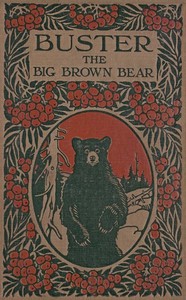
There’s a tenderness in how Chaffee lets Chinook linger between cub and child, those little hesitations before a pounce that feel almost like memory. I found myself thinking of Buster the Big Brown Bear — Themes and Context afterward, the same quiet ache of wild things learning gentleness. Some sentences just stay, like paw prints on a porch.
There are no comments for this eBook.
Reader reflection
What was your reading experience?
Capture what you thought, learned, and would like to remember.
Your progress
0
/
10
2
What was your overall reaction to the book?
3
Would you pass this book on to a friend?
4
How demanding did the text feel?
5
Did the book deliver what you hoped for?
6
How strong was your personal connection to the text?
7
How clear did the writing feel?
8
Did the book offer a fresh perspective?
9
In one sentence, what did you learn?
10
Mila Walker
1 month ago