1

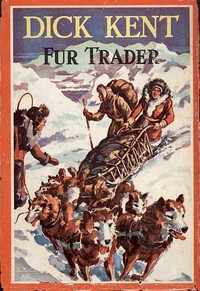
Dick Kent, Fur Trader — Themes and Context
(6 User reviews)
1105
Project Gutenberg
2016
Not confirmed
Adventure stories; Royal Canadian Mounted Police -- Juvenile fiction; Canada, Northern -- Juvenile fiction
Readers of public-domain and historical texts
Project Gutenberg digital edition
en
Edition facts
Words
51,733
Reading time
225 min
Text sections
8
Dick Kent, Fur Trader — Themes and Context can be approached with a clearer sense of reading commitment from its source measurements: 51,733 words, 3 hr 45 min estimated reading time, and 8 detected text sections.
The text analysis averages about 12.6 words per sentence, while the detected sections provide another way to judge how the source is divided.
Project Gutenberg metadata also associates the work with “Adventure stories,” connecting these edition facts with the source record’s subject description.
Source:
Project Gutenberg record #52207
In this 1927 adventure, Dick Kent aids the Royal North West Mounted Police in tracking outlaws through Canada's northern wilderness. The narrative focuses on map-making, surveillance, and rescue tactics, with dialogue-driven scenes that reveal character through tension rather than exposition.
Editorial Edition Score
4.7/5
★★★★★
★★★★★
Calculated from edition completeness, EPUB availability, text structure and catalogue metadata. Not a user rating.
How this score is calculated
- Description quality20 pts
- Title & short description10 pts
- Source metadata20 pts
- Text length15 pts
- Chapters / structure15 pts
- EPUB file integrity20 pts
Total of 100 points, scaled to a 2.5-5.0 range. Editions with an empty description or a missing EPUB file are not scored.
Edition quality
Read the Text
You don’t mind, I hope.”
The mounted policeman turned quickly and smiled into the eager face.
“Certainly not, you’re welcome to any information or nonsense you may have heard. Isn’t that the truth, Murky?”
“And may I ask you a question?” Dick persisted.
“What is Blind Man’s Pass?”
“A reality or a legend—I’m not sure which. Outside of Daddy McInnes I’d say it was a legend. We used to laugh at the old tales about it. The Indians claimed that years and years ago one of their ancestors had discovered a long, narrow pass or defile that cut Dominion range somewhere due west of here. In 1895 a party of mounted police explorers investigated the story by making a very careful, painstaking search through all the country lying between Cauldron Lake and Summit River. Nothing came of it. The party decided that the tale was a myth. Blind Man’s Pass was, until a few weeks ago, a bye-word among all the white men living in this section.”
Corporal Rand paused and favored Dick with a most engaging smile.
“And what about Daddy McInnes?” the young man inquired.
“I’ll give you the bald facts and you can draw your own conclusions. A little over a year ago Daddy McInnes left us. For years it had been his ambition to trap on the other side of the Dominion Range in what is commonly known as the Caribou Hills country. As the crow flies, Caribou Hills are less than three hundred miles away. It wouldn’t have been much of a journey if McInnes could have gone straight there, crossing the mountains. But, of course, he couldn’t. He chose instead the more sensible and longer route by way of the Yellowhead Pass, which, as you know, is many hundred miles south of here. It took Daddy the greater part of one summer to make the trip.”
Corporal Rand rose slowly to his feet and walked over to a window, gazing somberly out across a bleak, snow-streaked meadow that extended west and north to meet the encroaching woodland. He swung about presently, and continued:
“But Daddy came back. What motive prompted him, I have no way of finding out. All I know is that he did come back—but not by the Yellowhead route! I came upon his dead body less than a week ago. It was lying in a sheltered spot near a little knoll, less than a hundred yards from the banks of Run River. It was easy to determine the cause of his death. He died of starvation and exposure. McInnes is an old, old man and this last trip had proved too much for him.”
“And you don’t think that he had contrived somehow to cross over the range?” queried Dick.
“Absolutely, utterly impossible.”
“If he didn’t come by the Yellowhead route, or cross the mountains—”
“The only possible solution is Blind Man’s Pass,” interrupted Corporal Rand.
“But you can’t find it.”
“I haven’t yet. But I have every hope that we will in a very short time. The best scout and woodsman who ever enlisted in a service of the R. N. W. M. P. is out there now looking for it—a man called Malemute Slade.”
“Malemute Slade!” shouted Dick, clapping his hands in glee. “Why, corporal, I know him. He’s a friend of mine.”
“I’m glad to hear that. I knew that Slade was well acquainted with Factor MacClaren’s nephew, Sandy. Are you by any chance the Dick Kent, who accompanied Sandy last summer to Thunder River in search of a gold mine?”
“Yes,” answered Dick.
Corporal Rand laughed as he extended his hand.
“I guess that we’ll shake on that. The mounted police haven’t forgotten the incident. Time and time again, before a crackling fire, when we happened to meet on patrol, Sergeant Richardson entertained me with the history of your exploits.”
“We had a lot of trouble with the Henderson gang,” stated Dick.
“So I heard. Fortunately they’re wiped out. They were the worst band of outlaws that ever infested the North. By the way, what ever became of that young Indian lad, Toma, who used to accompany you on so many of your expeditions?”
“He’s out with Sandy right now on a hunting trip,” Dick replied. “I’m expecting them back today.”
Murky Nichols rose lazily, yawned, and stretched himself to his full length.
“Well, I guess I’ll toddle along,” he announced. “Hope yuh find that pass, corporal.”
With a friendly nod to Dick in passing, Nichols strode over to the counter before which a small group of half-breed men, women and children chatted volubly.
The opening chapter of Dick Kent, Fur Trader immediately establishes a problem-solving atmosphere: Dick leans over a rough pine table in the trading room of Fort Good Faith, watching Murky Nichols sketch a map on packing-case paper. The conversation between Nichols and Corporal Rand centers on locating Blind Man’s Pass, a route that a deceased prospector allegedly used to cross the Dominion Range. The dialogue is precise and practical, with Rand drawing a straight line on the map and saying, “This line…”. The scene avoids scenic description in favor of focused discussion about geography and evidence, setting the tone for a story driven by deduction and physical action.
Map-Making and Verbal Clues
The excerpts show that the plot advances through characters studying and discussing hand-drawn maps. Nichols uses “irregular lines, dots and scrawls” to explain his theory, while Rand corrects and refines the sketch. The pass is described as “something more than a myth—a mere Indian legend,” indicating that the story treats local knowledge as a puzzle to be solved. This reliance on cartographic reasoning is a structural feature: the narrative does not simply describe travel but presents characters actively interpreting spatial information. Readers are given enough detail to follow the logic, such as the line drawn “near the center of the map” and the mention of Placer Lake and the Dominion Range.
Tension Through Restricted Information
When Sergeant Richardson disappears, the characters react with physical symptoms of fear: Dick is “shaking as if from the ague,” with “drops of moisture” on his forehead, and Sandy stands “shaking like a leaf.” The narration reports their internal states without authorial commentary, using dialogue and action to convey panic. Rand’s whispered report—“Gone as completely as if the earth had swallowed him up”—creates a sense of immediate threat. The plan that follows is detailed and tactical: Rand assigns positions, forbids shooting unless necessary, and emphasizes stealth. The scene demonstrates how the story builds suspense by limiting what characters (and readers) know, then revealing information through careful reconnaissance.
Voice and Characterization in Dialogue
Characters are distinguished by their speech patterns. Nichols speaks in a colloquial, eager manner: “I want to show yuh… where I think ol’ Daddy McInnes crossed.” Rand uses measured, authoritative language: “Sounds reasonable… In fact, that’s exactly the way I had it figured out myself.” Sandy’s lines are often exclamatory or hesitant, as when he “poured out his plaint—a sort of wail.” Toma, a supporting character, speaks in broken English: “You bet! Fight ’em all same like mad wolf.” These vocal differences create a clear hierarchy and personality without relying on physical description. The dialogue also carries the plot forward, as each exchange reveals new information or shifts the group’s strategy.
Setting as a Constraint
The northern Canadian setting is not merely decorative; it imposes practical limitations. Darkness forces the characters to move without flashlights, snow muffles footsteps, and the cold causes physical discomfort. Dick notes that “the darkness shadowed his face” and that he crept “on hands and knees” through exposed areas. The cabin’s “twinkling lights” serve as a beacon and a hazard. The environment is described in terms of what it prevents or allows—visibility, silence, warmth—rather than through scenic beauty. This functional treatment of setting aligns with the story’s focus on survival and tactical movement.
Readers should pay attention to how the narrative parcels out information through dialogue and map references. The excerpts do not reveal whether Blind Man’s Pass is real or how the rescue mission ends, but they establish a pattern of problem-solving that rewards careful reading. The story’s interest lies less in the outcome than in the step-by-step reasoning and physical risks that precede it.
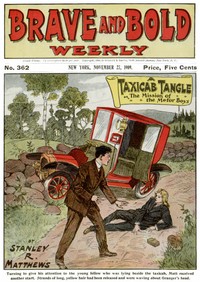
There’s something about that old Dick Kent story—the quiet way tension builds through every conversation, no grand speeches, just people revealing themselves under pressure. I kept thinking how that reminds me of A Taxicab Tangle; or, The Mission of the Motor Boys — Edition Insights, where the same unhurried dialogue seems to carry all the weight. It’s a feeling that stays, soft and lingering, long after the pages close.
There are no comments for this eBook.
Reader reflection
How did this book work for you?
Your answers remain private and are stored only in this browser.
Your progress
0
/
10
2
Did this book hold your interest?
3
Would you encourage someone else to read it?
4
How demanding did the text feel?
5
Could you follow the author’s main argument?
6
How useful did the reading feel?
7
Did any part of the book feel personally relevant?
8
Was the book what you thought it would be?
9
In one sentence, what did you learn?
10
Sebastian Hall
2 weeks ago